Arthur Fils: “I can produce incredible matches, but it can cost me in the match that follows”
After a strong run at the Masters, the 21-year-old Frenchman reflects on his serve troubles against Jiri Lehecka, the mental toll of big matches, and why he believes the best is still to come.
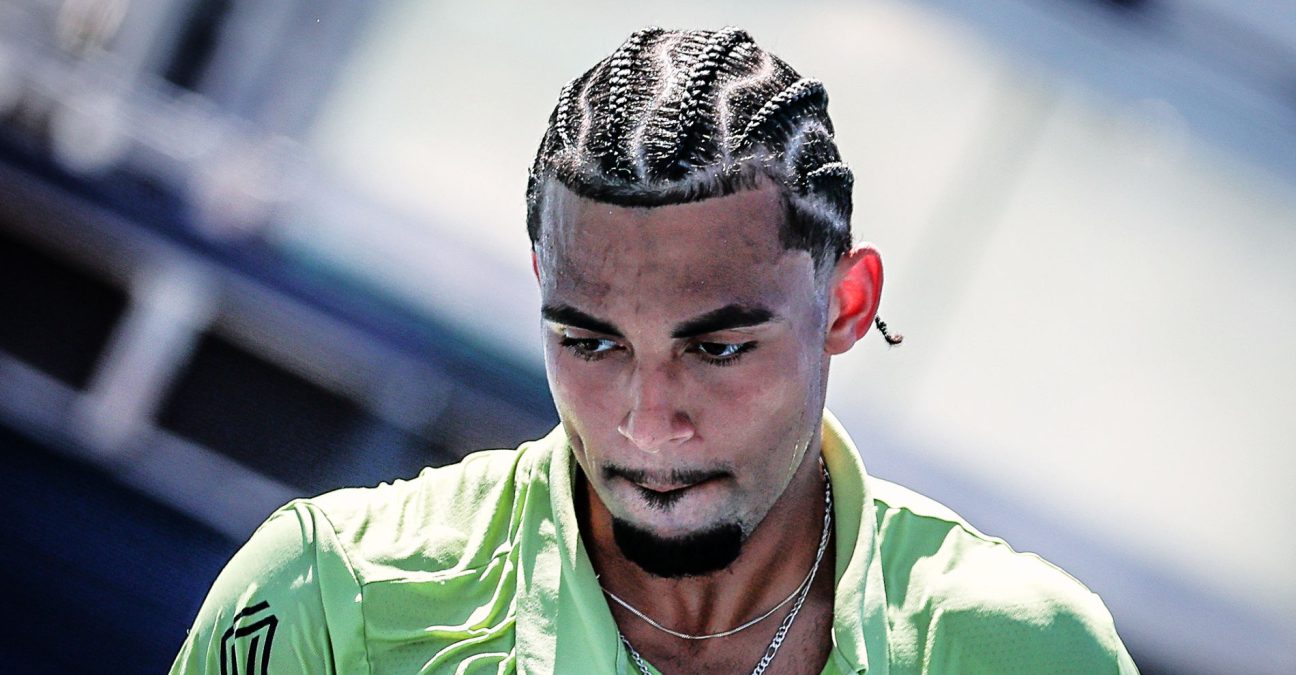 Arthur Fils, Miami 2026 | © PsNewz
Arthur Fils, your serve had been virtually untouchable all week – no breaks conceded, constantly getting you out of trouble. Today it looked different. What happened?
Arthur Fils: A few kilometres per hour less, a little less precise on the target zones – that’s really all it was. But it was enough for him to return more comfortably. I was a bit more readable. He could see where I was serving, and I was less able to disguise it. They’re small details, nothing dramatic on paper, but on court they make an enormous difference. In the end, there were four breaks today, whereas there hadn’t been a single break all week. So yes, when you add it all up, that’s a lot.

Was playing Jiri here very different from Doha? And did the physicality of the match against Paul play into today at all?
Arthur Fils: Jiri did a great match today, he’s a very good player. Like you said, it was completely different from Doha. In Doha I came in fresh, everything was fresh, and the court was a bit slower. Today was faster, he played some great shots and served well. It was tough for me to find my rhythm and I was a bit off. Some days it happens. I wish it hadn’t happened today, of course, but it’s part of the journey.
Was there some fatigue left over from the other night? And what does that tell you about where your fitness needs to be heading into the Grand Slams, where you play three hours, take a day’s rest, and have to come back ready to do it again?
Arthur Fils: It’s not really fitness. Physically I feel great – if you put me on a treadmill right now, I could run for six hours, no problem. It’s more mental fatigue. I need to find something that helps me give more in the important matches – the quarters, the semis, the finals – when I need that extra push. I need to find the energy and find a way to access it when it counts. I’m still 21, so we have a lot of time to work on this with the team. Last week it happened in the quarterfinals against Sasha, this week in the semifinals. If I keep improving like this every week, I think that’s genuinely a good sign.
I know I need a lot of energy to play my best tennis, but do I need quite that much? I’m not sure.
You spend an enormous amount of energy getting yourself into the zone – the crowd during the Paul match fed into that. Do you think that energy expenditure cost you today? How do you find your intensity without burning too much in the early rounds?
Arthur Fils: That’s exactly it. It’s a balance that’s not easy to find. I know I need a lot of energy to play my best tennis, but do I need quite that much? I’m not sure. It can produce incredible matches, but it can also cost me in the match that follows. I need to talk it over with the team and find solutions. I don’t want to change who I am. I just need to improve.
There are still a lot of positives to take from this swing, aren’t there?
Arthur Fils: Absolutely. It’s been a great run. Since Doha, a lot of matches won. It’s already better than last year, and last year was already very good, so this is even better. Today I gave everything I had. I fought. I just came up against a very good player on a day when I was a bit off. These things happen. I’ll talk it over with the team and we’ll find solutions so it doesn’t keep recurring as my career goes on.
Some players take a very long time to find themselves on court again after a long absence. You’ve come back remarkably quickly. What does that say about you?
Arthur Fils: I think I found it pretty fast: the rhythm, the feel on court. When I step on court at 100%, I can play great tennis. I’ve known this for a long time, and the team has too. The next step is finding a way to win even when I’m not at my very best – to make matches difficult for the opponent rather than losing quickly. That’s what we’re going to work on. It’s a long process, it’ll come week after week, but I know I’ll get there.
Four months ago, when you were just getting back into it – if someone had told you that you’d reach your first Masters semifinal here, what would you have said?
Arthur Fils: I would have signed for that, no question. It’s been a tough journey, as I’ve said. But I try to see the positives. I’m very happy with what we’ve built as a team over the past few months. I think we’ve done great work. Today wasn’t our day, but it happens. I’m at peace with it, and I’m already looking forward to the clay.
And the long-term goal — what does finding that next level look like for you?
Arthur Fils: I need to play more quarterfinals, more semifinals, more finals. That’s how you find the balance, by living those moments again and again until they become normal. It’s not easy, but it’s something I’m going to find. I have no doubt about that.