“There is no way I lose it”: How Sabalenka turned her most painful final into a Sunshine Double
Two months ago in Melbourne, Aryna Sabalenka squandered a 3-0 lead in the Australian Open final and walked off court with a towel over her head. On Saturday in Miami, she completed the Sunshine Double without flinching when the second set slipped away. What changed? In her own words: everything, and nothing.
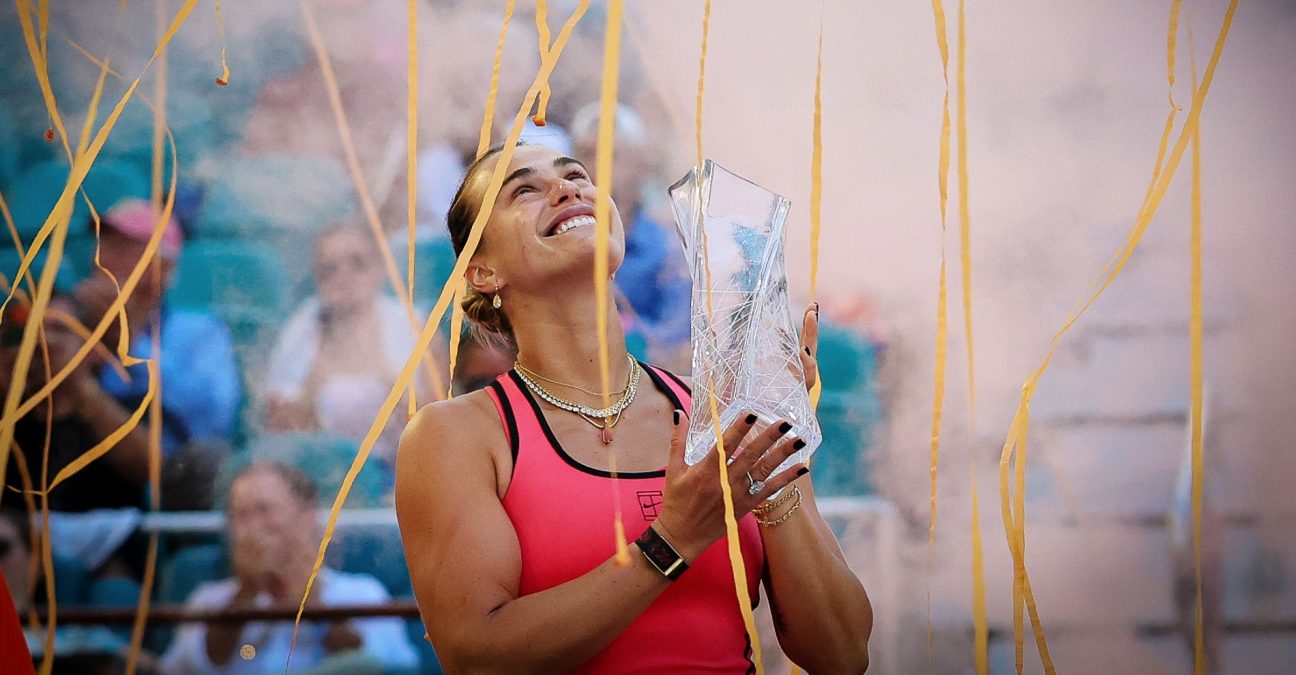 Aryna Sabalenka, Miami 2026 | © Zuma / PsNewz

Melbourne, January 2026. Elena Rybakina defeats Aryna Sabalenka 6-4, 4-6, 6-4 to win the Australian Open. Sabalenka had gone 3-0 up in the final set. Then, in what felt like seconds, it was 3-4, and she was broken. A white towel covering her head, she sat on her changeover chair while Rybakina shared hugs with her team.
It was the third Grand Slam final Sabalenka had lost in the previous twelve months. She had already fallen to Madison Keys at the 2025 Australian Open and to Coco Gauff at Roland Garros, and despite winning the US Open, had repeatedly referenced those defeats, her loss of composure, and vowed to learn from them. Melbourne 2026 felt like the moment all of that unfinished business crystallised into something unbearable – because this time, she had been winning.
The question that followed her all the way through the American hard court swing was a simple one: had something broken in Aryna Sabalenka, or had something finally clicked?
Sabalenka: “I hate losing”
It starts there, actually. Not with tactics, not with preparation, not with any of the mental coaching language that surrounds elite sport. Just that.
“As soon as I left the Australian Open, I sort of forgot all that, Sabalenka said. “We talked with my team and we made some mental adjustments to our approach to finals.”
“I hate losing. I hate that feeling when you lose the match. I cannot sleep, I dream tennis, I hate myself for making several mistakes that might cost me a match, so I hate that feeling. Just because of that, whenever I go out there, I just really try my best and I try to do everything that is possible and possible to get the win.”
Which is exactly what makes the 2026 Australian Open final such a specific kind of wound. She didn’t lose it. She gave it away. And she knew it immediately.
“This year, yeah, I think I just screw up myself,” she said in Miami, cutting through any diplomatic ambiguity. “That Australian Open was kind of the last straw. I felt like I was playing really excellent tennis. I felt that at that point in the match, Elena lacked confidence, and I felt like I basically handed her that final.”
In the immediate aftermath in Melbourne she had already been just as precise: “She lost her focus. I was 3-love. I lost my focus. It was like 3-4. She did a better job in handling that pressure moment, for sure.”
The answer that sounds easy and isn’t
Six weeks later in Indian Wells, the rematch with Rybakina arrived – and with it, the first test of whatever had been recalibrated. Sabalenka lost the first set, fought back to win the second, then faced a championship point against her in the deciding tiebreak before hitting a backhand winner to stay alive – and won 3-6, 6-3, 7-6(6).
“I think the whole idea going into this match was to be mentally strong, to stay strong, no matter what, to show with the body language that I’m here, I’m fighting,” she said on court afterwards. “With so many finals that I have lost, they also teach me a lot of things that basically the game is never done till it’s done. I guess that’s something that I learned to be mentally strong no matter what.”
My mentality really going into this final, like there is no way I lose it.
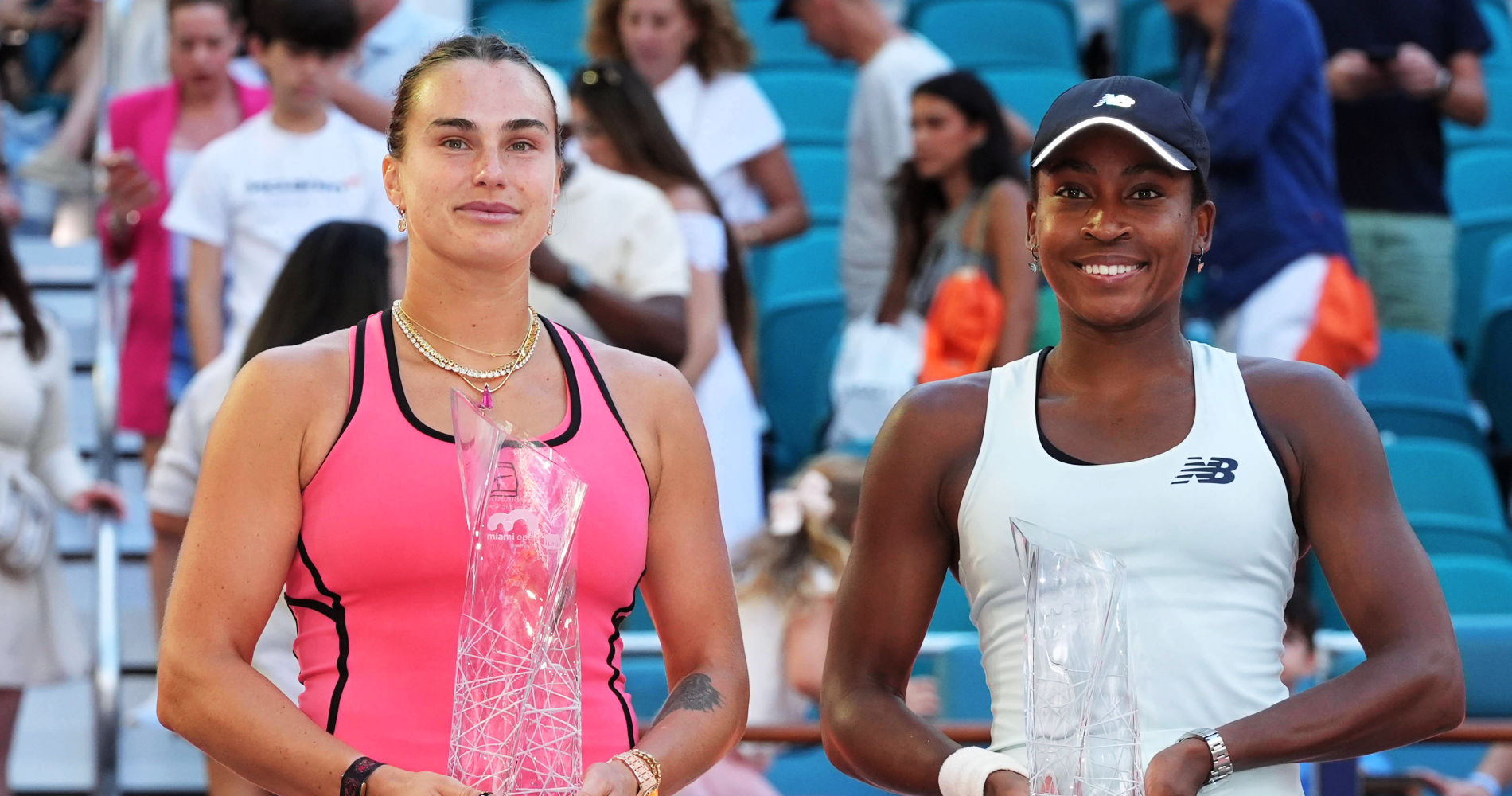
Then came Miami, and the final against Gauff, 6-2, 4-6, 6-3. When the second set went, there was no towel over the head, no visible fracture. She broke in the first game of the third and didn’t look back. In the press conference, before anyone even asked about the mental side of the match, she put it on the table herself – matter-of-factly, almost impatiently, as if she’d been waiting to say it out loud:
“Well, it’s a deep one, and it’s going to sound super easy, but my mentality really going into this final, like there is no way I lose it, trying to bring this tough mentality that I’ll be there fighting for every point, there is no way I’ll let anything get to me, and I’ll be staying focused, I’ll be fighting for every point, I’ll be trying to find solution if needed or I’ll be just, like, I’ll keep constantly remind myself how strong I am and that I got it.”
She acknowledged the paradox at its core: “That’s been working really well, and it’s so easy but so tough at some point, like when you get emotional and then you forget everything. And in the last couple of finals, I have just been really strong inside and really positive mentally.”
The preparation is what gives that mental resolve its ground to stand on: “I worked so hard. So whenever I felt like doubting my ability, I was, like, bringing myself back and reminding myself, No, no, no, no, no. You’re strong enough to get this.”
Across the Miami fortnight, Sabalenka did not drop a single set before the final, won 73% of her first-serve points and faced just two break points all the way to the final. “I’m super happy how well I handled my emotions, and yeah, how well I stayed focused from the very beginning till the very end.”
Staying in the moment, back to back
Sabalenka is now only the fifth woman in history to complete the Sunshine Double – joining Iga Swiatek (2022), Victoria Azarenka (2016), Kim Clijsters (2005) and Steffi Graf (1994, 1996). Asked how she manages to keep winning the same tournament year after year without the weight of expectation derailing her, she gave the answer that ties everything together:
“I think what’s really been working for me in the past is not really focusing on the past and just like staying in the moment. And going into this tournament, I didn’t really think about, like, defending title or something. I was just trying to take it one step at a time. I think staying in the moment, that’s been a key for me to be that consistent.”
The woman who couldn’t stay in the moment in Melbourne learned to hate that feeling more than she feared the next final. In Melbourne, hours after the defeat, she had already set the tone: “Today you’re loser; tomorrow you’re winner. Hopefully I’ll be more of a winner this season than a loser.” She wasn’t wrong.