“A dead person’s Achilles in my arm”: The Kokkinakis comeback no one in tennis had done before
Thanasi Kokkinakis, after an unprecedented surgery involving a deceased donor’s Achilles tendon, fought back from 2-5 down in the fifth set to win in Paris. Still learning to read his body daily, he has set a deadline of the Australian Open to decide if his challenging comeback is sustainable.
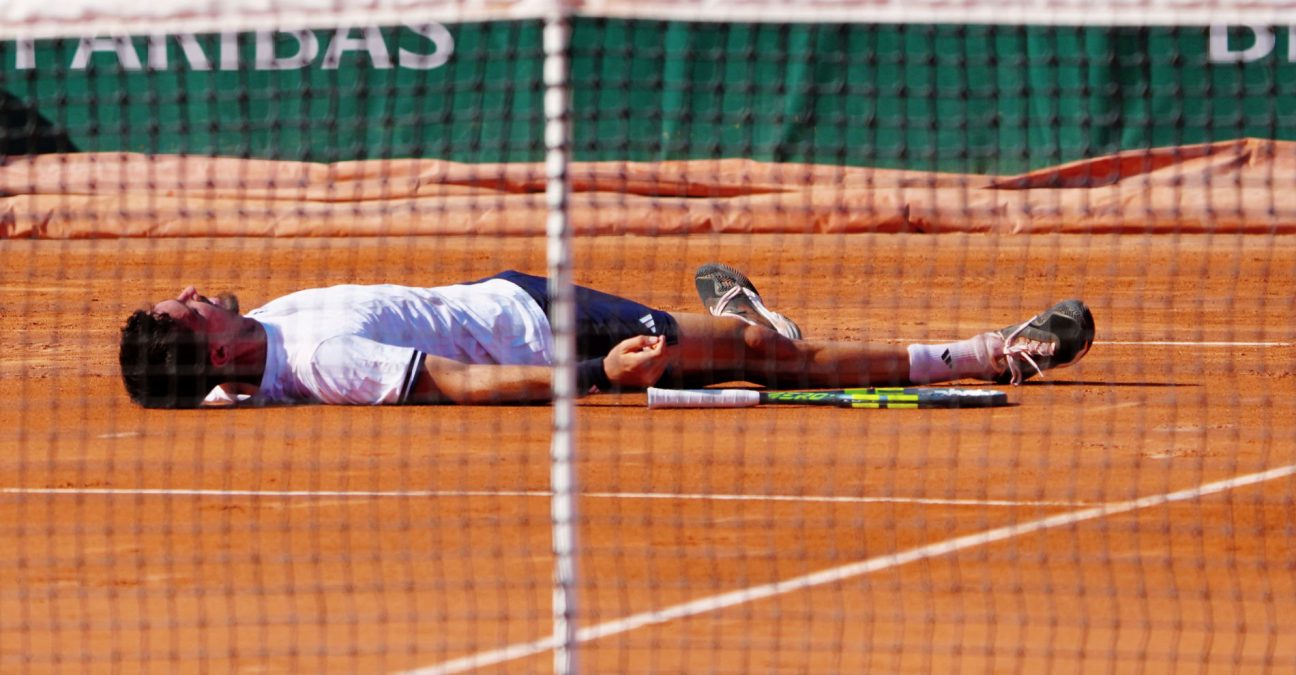 Thanasi Kokkinakis, Roland-Garros 2026 | © Javier Garcia/Shutterstock/SIPA

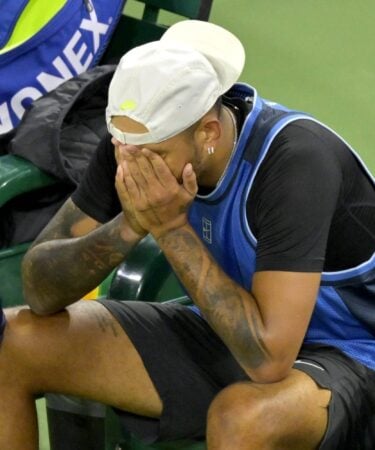
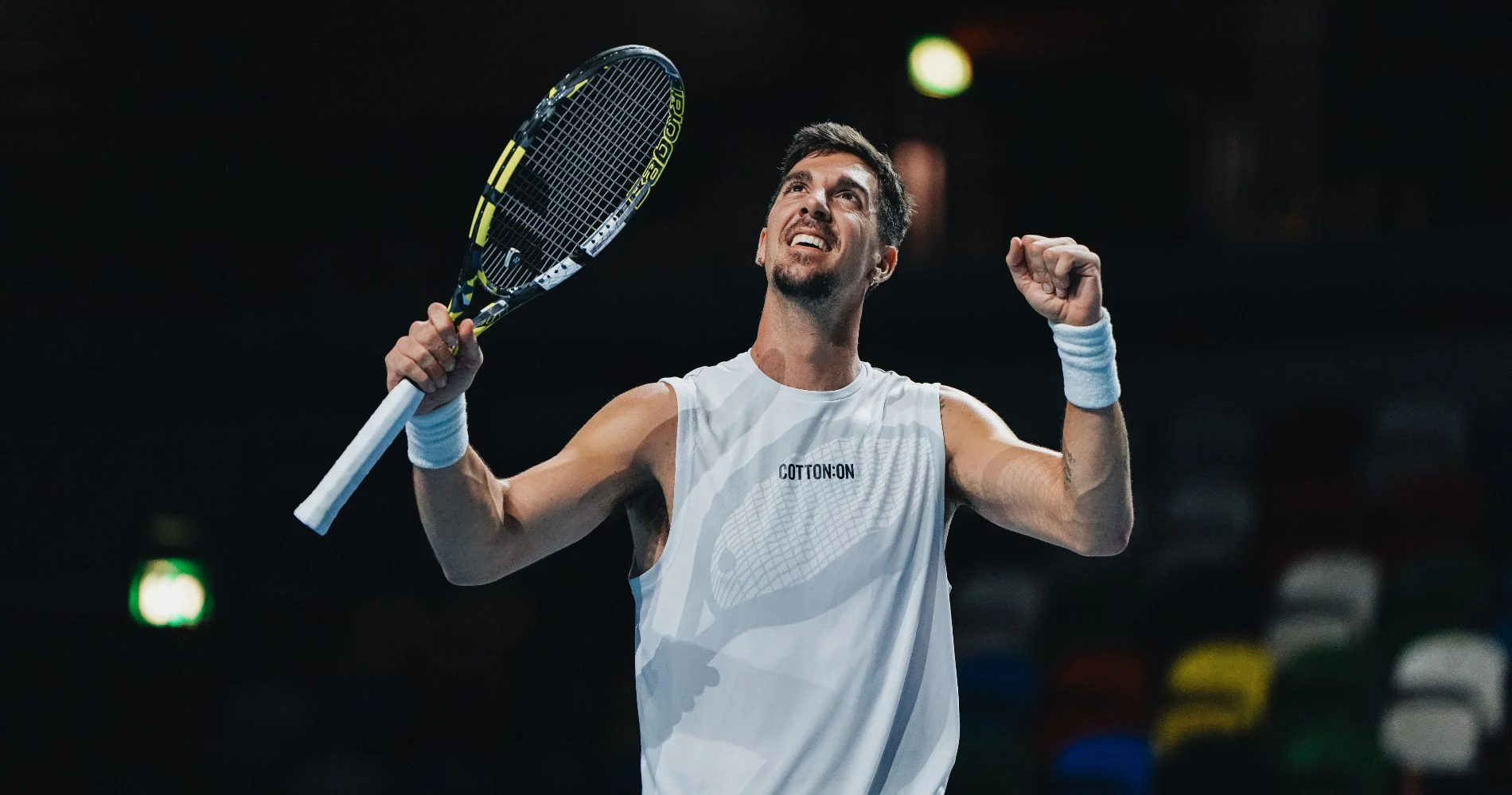
Eighteen months out, a procedure no tennis player had ever had, and a body he is still learning to read every morning. Thanasi Kokkinakis came back from 2-5 down in the fifth to beat Térence Atmane in Paris on Monday – and revealed he has set himself a deadline of the Australian Open to decide whether the comeback is worth continuing.
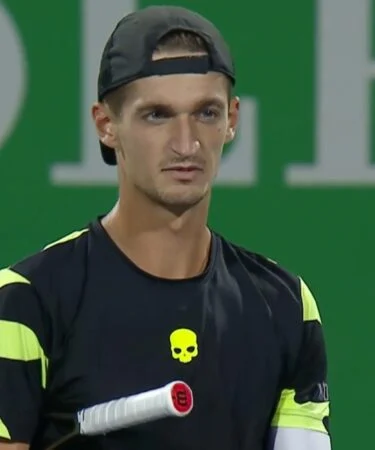
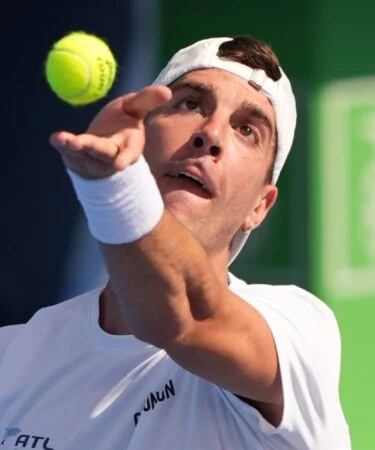
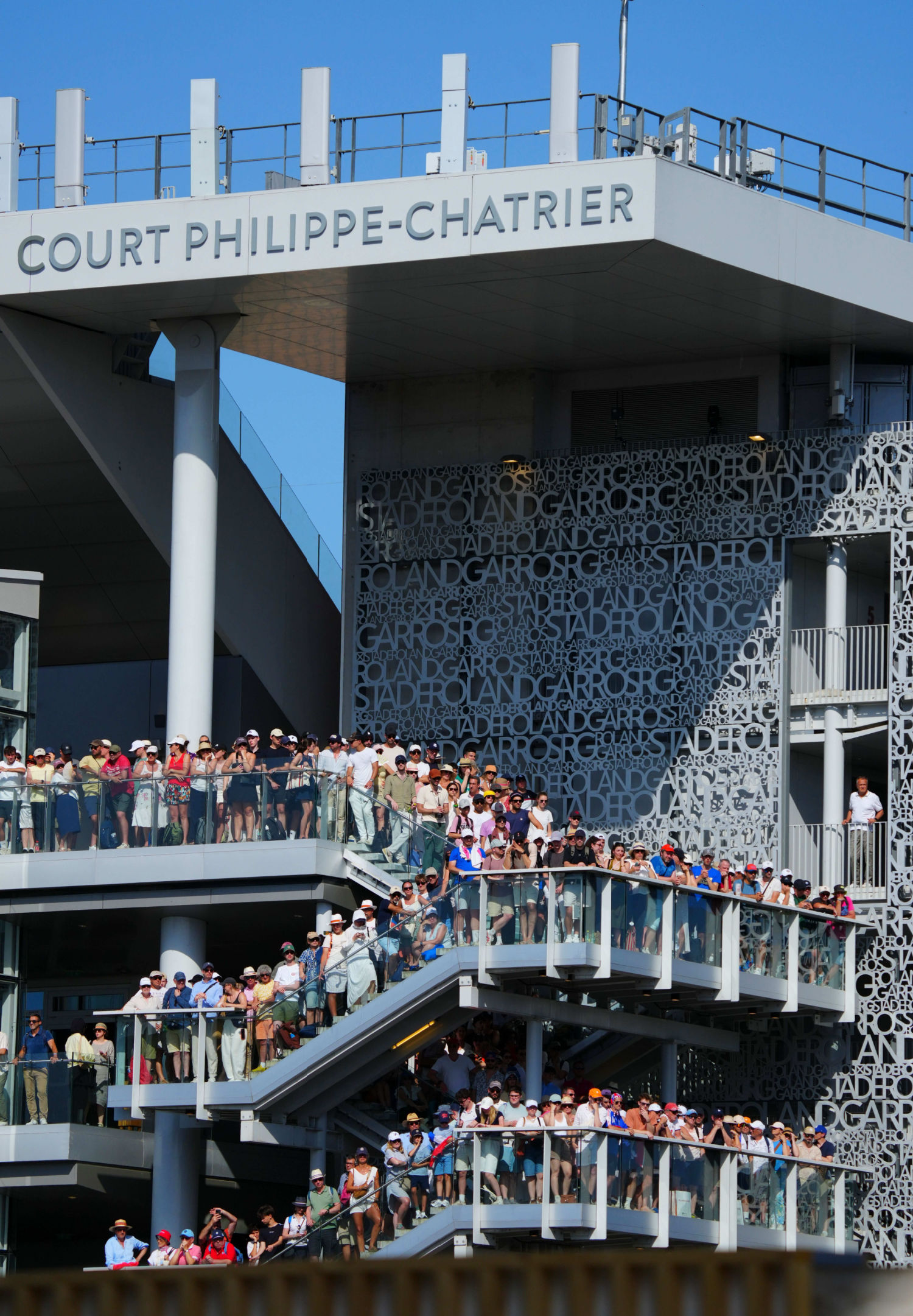
It was four hours and 38 minutes into a first-round match no one expected him to win, on a side court the crowd had already decided belonged to someone else, when Thanasi Kokkinakis broke serve to make it 5-5 in the fifth set. Térence Atmane, his French opponent, had been serving for it at 5-2. The Frenchman had played the first four sets with the noise that French crowds reserve for their own – the kind that puts a man thirty centimetres behind your shoulder, screaming in your ear between serves.
The temperature had sat above 30 degrees most of the afternoon. Kokkinakis had barely hit a ball in three days. Some of the people he had wanted to fly to Paris to watch him, he had told to stay home. He hadn’t been sure he would even take the court.
He broke. He held. Kokkinakis won 6-7, 6-2, 4-6, 6-3, 7-5.
Then he walked into the press room, smile wide, and gave the most affecting account anyone has given at this tournament – including the veterans saying goodbye, Gaël Monfils and Stan Wawrinka among them.
“It’s weird going into a match and just thinking, the opponent is the afterthought. I’m, like, how do I get there somewhat 100% and give it a crack?”
The Unprecedented Surgery
For four to five years before the 2025 Australian Open, Kokkinakis had been playing on a pectoral muscle that wasn’t properly attached to his shoulder. He has said he could feel something wrong as far back as 2019, hitting a forehand in qualifying against Peter Polansky. He played on. He won a Grand Slam doubles title with Nick Kyrgios at his home Open in 2022. He climbed to world No. 65 in 2023.
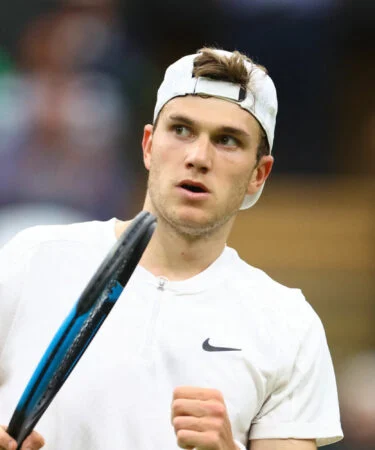
The pec held, mostly, until a five-set loss to Jack Draper in the second round of the 2025 Australian Open, when it didn’t.
In February 2025 he had surgery in Melbourne. The surgeon, Greg Hoy, used an Achilles tendon – taken from a deceased donor – as a graft to reattach the pectoral to his shoulder. Several specialists Kokkinakis consulted before the operation refused to perform it. The procedure had never been done on a tennis player. Even Rafael Nadal‘s doctor, Kokkinakis said in Paris on Monday, told him he had never seen the injury before.
Kokkinakis described it more plainly when he first spoke about it on his return to doubles in Brisbane in January: “Essentially I have an Achilles allograft, or a dead person’s Achilles, in my arm trying to attach my pec to my shoulder.”
A Recovery Without a Map
The hardest part of the recovery, he said on Monday, hasn’t been the rehab. It has been the absence of a map.
“I didn’t really have anyone to speak to as far as they’ve had the surgery, this is what you should be feeling.” He has compared the procedure to something a bodybuilder might need, in a slightly different spot, “but no tennis player has done it. »”
Every soreness he wakes up with is a question with no precedent. Is this the body learning a new normal, or is this the alarm before something tears? He is, in his own words, “learning stuff every day.”
“It’s the first thing I think when I wake up in the morning, to be honest. It does consume my life.”
A Career Defined by Injury
To understand why a first-round win on a side court in Paris matters as much as it does, you have to widen the frame.
The pec was the climax, not the start. Kokkinakis’s career has been a long run of shoulder, groin, back, knee and elbow problems, capped by a bout of glandular fever that hospitalised him before the 2020 Australian Open.


At his lowest he dropped 14 kilograms, had his tonsils and adenoids removed, and weighed 68 kilograms on a 193-centimetre frame. He has spoken openly about the depression and anxiety that followed, walking into cafés and feeling his heart race, contemplating retirement at 21. He beat Roger Federer at the 2018 Miami Masters when Federer was world No. 1, then did not win another tour-level match for 492 days.
He is 30 now. And he said something on Monday that, in any other player’s mouth, would sound strange.
“There’s a lot of guys many years younger, but they’ve played almost double, triple the matches I have. Even when I was younger, I never really played a full season, I think, ever.”
Then this: “That’s one thing I always want to try and do at least one year before I’m done. I want to try and play a full schedule and see what happens, if my body will allow me.”
The Australian Open Deadline
There was news inside the answers, too, for anyone listening.
Kokkinakis has set himself a deadline. He told his team he will play until the next Australian Open. After that, if the arm hasn’t held, it shall be the end of it.
“I said to my team, I’m going to play until Aussie Open next year. If stuff is not going well and my arm doesn’t feel great, then that will probably be it for me. Days like today give me a lot of hope that that’s probably not going to be it.”
Eight months. One last attempt to find out what a healthy version of his career might have looked like.
His return to the tour has been broken too. After a comeback win over Sebastian Korda at home in Adelaide – followed by a withdrawal – he pulled out of the Australian Open singles with a right shoulder issue and did not play another match until a Challenger in Zagreb earlier this month, where he won two before withdrawing again. He arrived in Paris on a protected ranking of 84, with a current world ranking in the 800s – his lowest since 2017. The rankings have caught up with what his body has put him through.
The serve, at least, is back. Twenty-four aces on Monday. He has a court in Melbourne where he can test his speeds on a radar. “It’s close to where I was a few years back,” he said. “If I have no pain, my serve speeds are good. So that was a big tick coming back.”
The “if” is doing all the work in that sentence.
Late in the press conference, somebody asked Kokkinakis what days like today give him, what, in other words, was the point of all this, of the surgery no one had done and the recovery no one could guide and the matches he could barely train for.
He thought about it for a beat. “For me it’s the little wins and the small victories, stuff like today. That’s the reason I kept trying to come back from these injuries, to have moments like that on court. When I’m retired, nothing will really compare to that.”
He was 2-5 down in the fifth set, on a court where the crowd was against him, in a body that has spent the last 18 months becoming a stranger to him. He came back to win.
Then someone asked if he had a message for anyone, and Kokkinakis laughed – the way you laugh when you’ve already said the only thing there is to say.
“I don’t have messages. Keep supporting me. Thank you. It’s been a long ride.”
Tuesday morning he will wake up and find out what his body has to say about the four hours and 38 minutes he asked it for. He has eight months left to find out the rest.