Roland-Garros under a heat dome: the draw is bending, and we have seen nothing yet
Roland-Garros has turned surreal in a record May heatwave: Rybakina is already out, Djokovic laboured through four sets in Wednesday’s furnace, and with the heat forecast to break only on Sunday, Patrick Mouratoglou warns the weather is the one rival nobody in the draw can out-rank – Sinner’s lone vulnerability included.
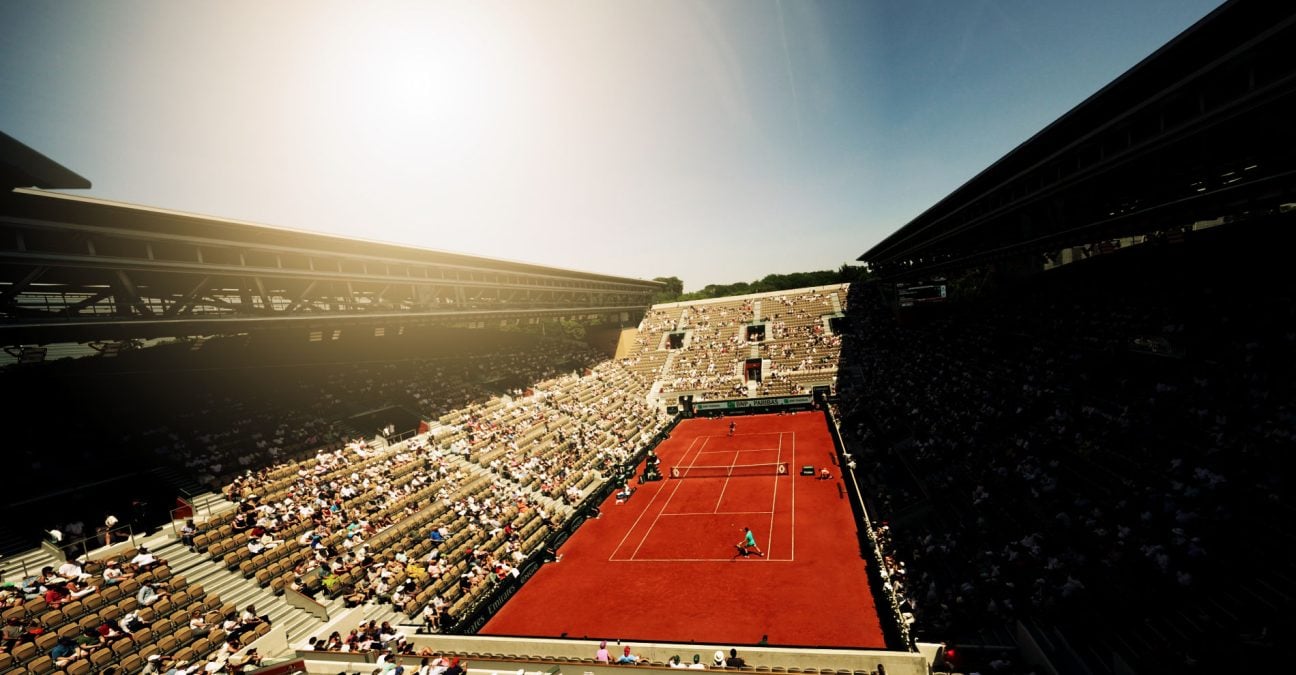 Sunny Roland-Garros 2026 | © PsNewz / Tennis Majors

Five days in, the clay has already produced images that do not belong to Roland-Garros. A player, Gabriel Diallo, walking to the net to retire against James Duckworth on the opening Sunday, telling reporters afterwards it was heatstroke, plainly stated, no euphemism: “I wasn’t prepared before the match for something like this.” A ball girl on the Rublev court receiving medical attention. Casper Ruud, two sets and a break to the good, suddenly moving “like a zombie almost” and privately certain he was beaten.
On Wednesday, Novak Djokovic, the most economical big-match operator the sport has produced, walking off Court Philippe-Chatrier after four sets against a man ranked 74th in the world and saying he felt as if he had played “for two weeks”.
34 degrees (93°F), locally 35 (95°F)
None of this is how the tournament is supposed to look in its first week. Roland-Garros is the slow major, the patient one, the fortnight where the cold and the damp usually make the heavy ball the problem to solve. Instead the opening days delivered the hottest May day France has recorded since measurements began, by Météo-France’s account, with new monthly highs logged at hundreds of weather stations and a national death toll attributed to the heat. The tennis is being played inside a continental heat dome, and the draw sheet is starting to bend under it. What makes the next three days the real test is that the heat is not leaving, and then it is.
The forecast is unusually legible. Thursday is the peak, with Météo-France putting Paris and three neighbouring departments under an orange heat alert from midday and highs pushed to 34 degrees (93°F), locally 35 (95°F). Friday holds near 32 (90°F) as the sky thickens. Saturday stays muggy at around 31 (88°F) with the threat of violent afternoon thunderstorms. Then, on Sunday, the break: a widespread cool-down to roughly 26 degrees (79°F) under light rain, the alert lifted, the air mass finally moving on.
Melbourne and New York climate on clay?
The players who reach the second week will have been asked to win matches in two different tournaments, the furnace and the aftermath, inside the same draw. It is precisely the scenario Iga Swiatek named after her own win, almost to the day: whoever copes with both sets of conditions, she said, will be the one left standing. And the surface itself is part of the equation, because clay is a living thing that changes hour by hour. Heat dries it out and speeds it up, the ball skidding and kicking higher off a baked court in a way it never does in the cool, so that the same patch of ground rewards a different game in the afternoon than it did in the morning.
To grasp how far this sits outside the norm, it helps to put numbers against the comparison the players keep reaching for. A normal late-May day in Paris tops out near 21 degrees (70°F). The courts this week are running some 13 degrees above that, very close to the two hard-court Slams known for their sometimes extreme conditions.
The humidity is not as tough”
Melbourne in the second half of January, when the Australian Open is played, averages highs around 26 to 28 degrees (79 to 82°F) and spikes well past that, but it is dry: relative humidity sits in the mid-forties.
New York for the US Open, across late August and early September, is the sticky one, hot in the high twenties (low 80s°F) but humid at 65 per cent and often far more, the air thick enough to make recovery between points a separate battle. Paris this week is hot like New York and dry like Melbourne. The on-court humidity has been sitting around 35 per cent, which is why the most accurate read of the conditions came, quietly, from the World No. 1. Jannik Sinner, who has handled the punishing version of heat before, said the Paris air is less brutal than what Melbourne or New York can throw up: “The humidity is not as tough”.
“The most difficult combo of the year” (Mouratoglou)
Asked who could cause a surprise in a draw that otherwise looks settled, Patrick Mouratoglou answered with one word in an Instagram post. Referring to Sinner’s theatrical dominance, he said there is one player who can still make a huge surprise: the weather. Heat plus clay plus five sets is, in his words, “the most difficult combo of the year,” and it arrived without warning, players stepping off cool, damp weeks in Rome, Hamburg and Geneva straight into a furnace with no time to acclimatise. Alejandro Davidovich Fokina came from “10 degrees” (50°F) in Hamburg into 22 more in Paris and admitted he had thought about walking away.
His evidence was Ruud, a two-time finalist and, in Mouratoglou’s estimate, the most confident clay player in the draw after Sinner, cruising at two sets to love and 5-3, 40-love, then losing eleven games in a row and surviving only because his opponent broke down first. “This can happen to anyone,” he said. “And Casper practises in Spain. He’s used to more heat than others.” The night session, he added, is now “the best present you can give to anybody” – and the tournament cannot hand it out every round. By Mouratoglou’s own count, Djokovic, Sinner and Zverev have each had one so far.
His tactical conclusion is the part that should worry the favourites. Against the biggest names, Mouratoglou argued, a lesser player now has one mission: make every point last as long as possible, every single one, and wait for the body to break. “You’re gonna suffer, but the other guy is gonna suffer too. And there is a big chance that somebody’s gonna crack.”
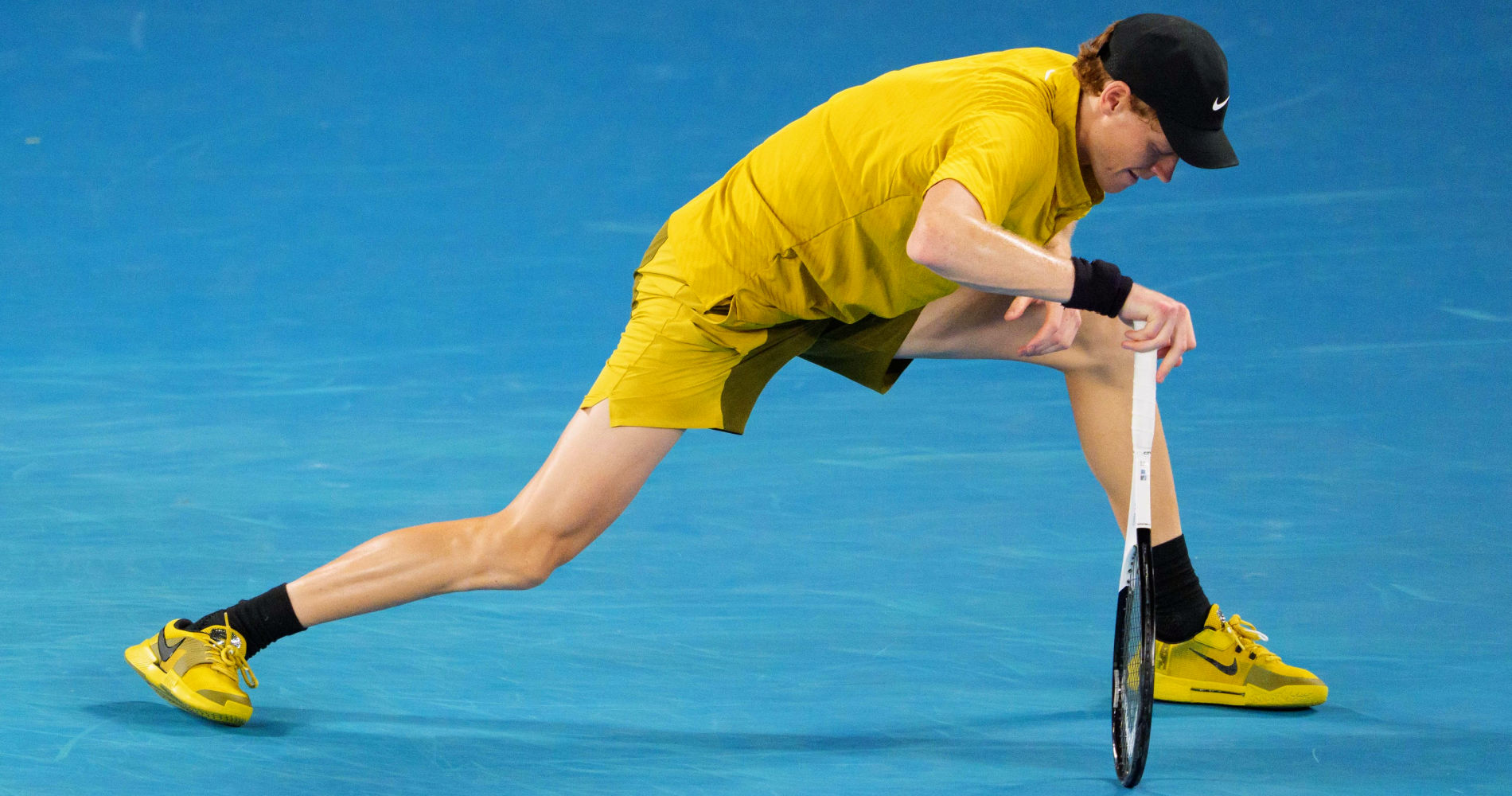
There is a precedent both Ruud and Mouratoglou cite without prompting, and it checks out. At this year’s Australian Open, on a 36-degree day (97°F) in Melbourne, the extreme-heat policy was triggered, the roofs were closed, and Sinner – cramping, trailing Eliot Spizzirri – was given the cover that let him regroup and win. Paris has two roofs, on Chatrier and Lenglen, and a great many outer courts with none.
Whoever draws the day session on an exposed court, against an opponent willing to turn every rally into a war of attrition, is exposed in a way that ranking does not protect against. Sinner’s vulnerability, if it exists at all this fortnight, lives there and almost nowhere else.
The ball is bouncing off the court faster, so that gives you more advantage
So the open question, with the heat forecast to hold through Saturday and break on Sunday, is simply: what happens now, and to whom?
To this point, a number of seeds have cast themselves as great adapters. Sinner is the calmest of them: “I handled the heat very well in Indian Wells, was very hot this year, so I didn’t have issues there. Different heat here, but the humidity is not as tough as maybe in Australia or U.S.” Swiatek describes trading power for touch as the same court speeds up: “Now you need much more touch, and you can’t go too much. The ball is bouncing off the court faster, so that gives you more advantage.” Mirra Andreeva was simply, by her own account, prepared.
Then there are the converts, who turn their origins into a weapon: Hailey Baptiste, whose kick serve and heavy forehand jump higher and who, after beating Barbora Krejcikova, called the heat “a part of the reason why I won”; Alex de Minaur, who loved the cold Hamburg week and loves the hot Paris one just as much, letting the conditions do the work; Belinda Bencic, untroubled – “for me, it’s perfect.”
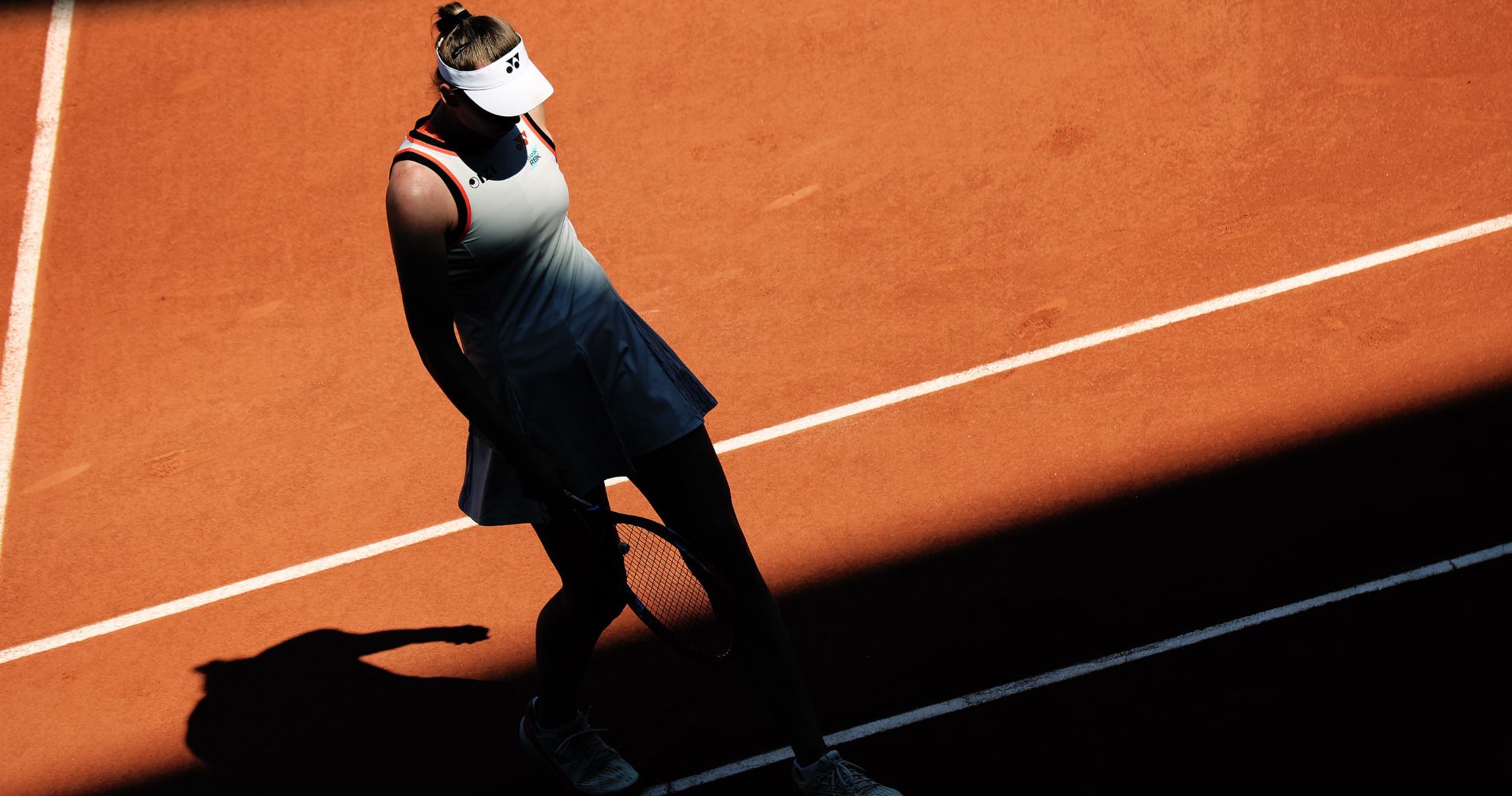
And then there is the danger, clearest in Rybakina, the aggressor the heat actually beat, who knew exactly what the day demanded and could not deliver it: “the ball is flying everywhere.”
That the World No. 2 and reigning Australian Open champion exited in the second round tells you the draw protects nobody. We are, as Mouratoglou put it, on uncharted territory, even for the best players in the world. This Roland-Garros is exceptional from every point of view in terms of conditions – and, with 15 seeds gone in the first round alone, three of them top-10 men in Medvedev, Fritz and Bublik, and Rybakina following in the second, the results have already begun to match. We have seen nothing yet.