Alcaraz defends his Monte-Carlo crown and clay master reputation – with the world No. 1 ranking on the line too
Alcaraz arrives on clay having lost just once in two years on the surface. Sinner arrives having spent exactly as many weeks at world No. 1 as his opponent: 66. Only one of them leaves with the right to add a 67th.
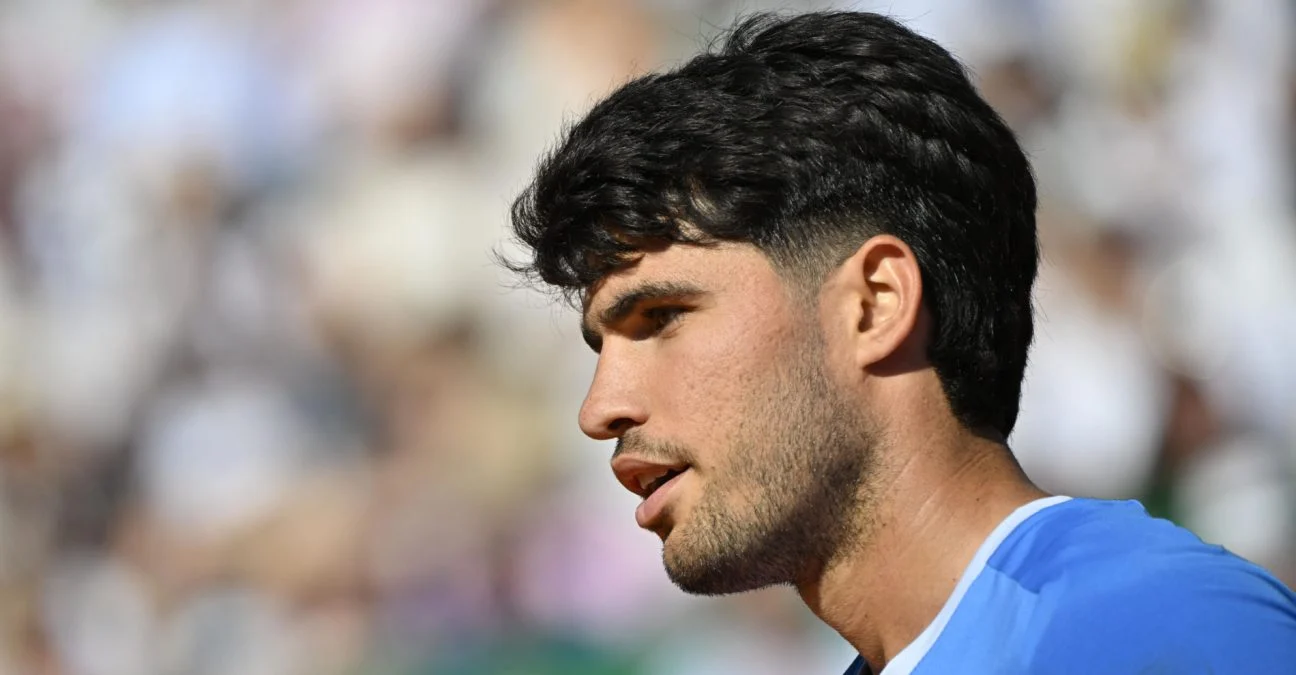 Carlos Alcaraz, Monte-Carlo 2026 | © Chryslène Caillaud / PsNewz

There are finals, and then there are Finals. Sunday’s encounter between Carlos Alcaraz and Jannik Sinner at the Monte-Carlo Country Club belongs firmly in the second category – and it is Alcaraz who arrives with the most to defend.
The reigning world No. 1 has spent exactly 66 weeks at the top of the rankings over his career. So has Sinner. The symmetry is almost absurd. When they walk onto Court Rainier III, it won’t just be a trophy at stake: it will be the right to call yourself the best player on the planet, settled one point at a time on red clay.
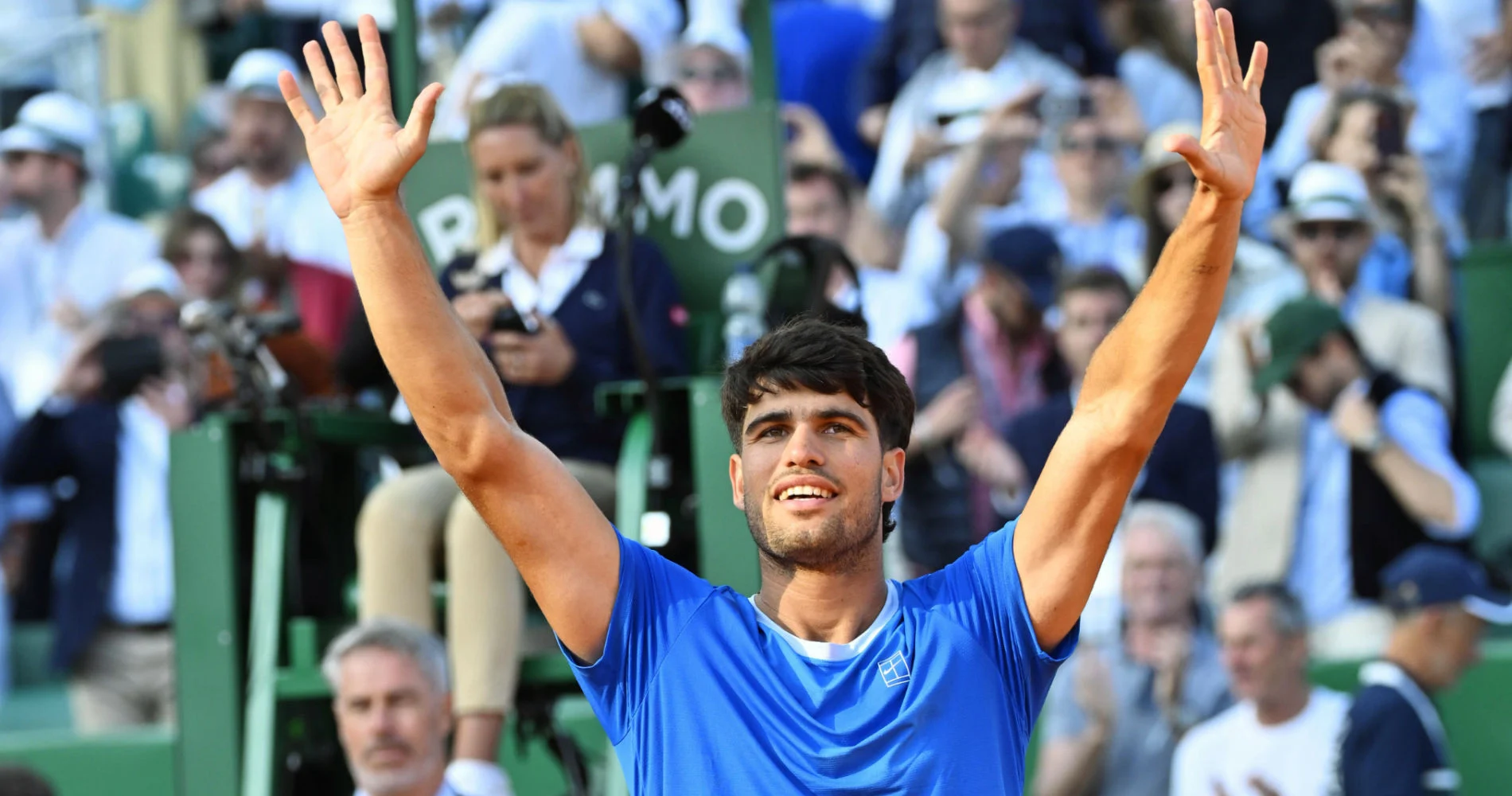
For Alcaraz, winning means extending his current streak of 22 consecutive weeks at No. 1, and doing so on his favourite surface, where he has lost just once since the start of 2025, against Holger Rune in Barcelona in 2025. For Sinner, it means ending that streak and returning to the summit for the first time since November last year. The champion leaves Monte-Carlo on Monday morning as world No. 1. The loser has to wait.
The rivalry between these two has been the defining storyline of men’s international tennis in recent years. Alcaraz leads their head-to-head 10-6, and that advantage stretches to 4-1 on clay (Challengers included) – but those numbers don’t fully capture how tight things have become on the dirt.
Sinner pushed him to the absolute limit
Last year’s Roland Garros final, their most recent clay-court meeting, went the full five hours and 29 minutes before Alcaraz prevailed 4-6 6-7(4) 6-4 7-6(3) 7-6(2). Sinner pushed him to the absolute limit. That’s where they left us.
The tournament statistics illuminate what Sunday’s battle will hinge on. Alcaraz has been the more explosive presence all week, firing 107 winners – 25 more than Sinner’s 82. But the Spaniard has also been the less disciplined one, committing 109 unforced errors against Sinner’s remarkably lean 77. When Alcaraz is on, he is virtually unplayable, especially on pressure points. When he gives Sinner openings, the Italian tends not to waste them.

Sinner’s serve has been a near-immovable object: 80% of first-serve points won, 95% of service games held across the tournament. Alcaraz’s answer lies in his return game and a staggering 46% “steal score” – the metric for winning points when the opponent is already in a dominant position. That capacity to conjure something from nothing is what makes him so dangerous even when things aren’t going his way.
And then there is history, pressing down on both of them. A win for Alcaraz would make him only the seventh player in the Open Era to win back-to-back Monte-Carlo titles – joining a list that begins with Nadal’s extraordinary eight consecutive victories between 2005 and 2012.
It would also give him nine Masters 1000 titles from his first ten finals, a record he would share with Nadal alone. Sinner, for his part, is hunting a fourth consecutive Masters 1000 crown – a feat only Djokovic (three times, including a run of four straight in 2015) and Nadal (2013) have managed.
Sixty-six weeks each. One afternoon on clay. Monte-Carlo has seen some memorable finals – but few have carried quite this much weight into the first game.