Can a brave decision stop Tsitsipas’ freefall?
Now ranked outside the top 70, the Greek is struggling for confidence and while his father remains in his coaching camp, things are unlikely to change
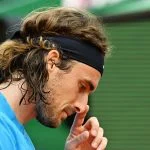
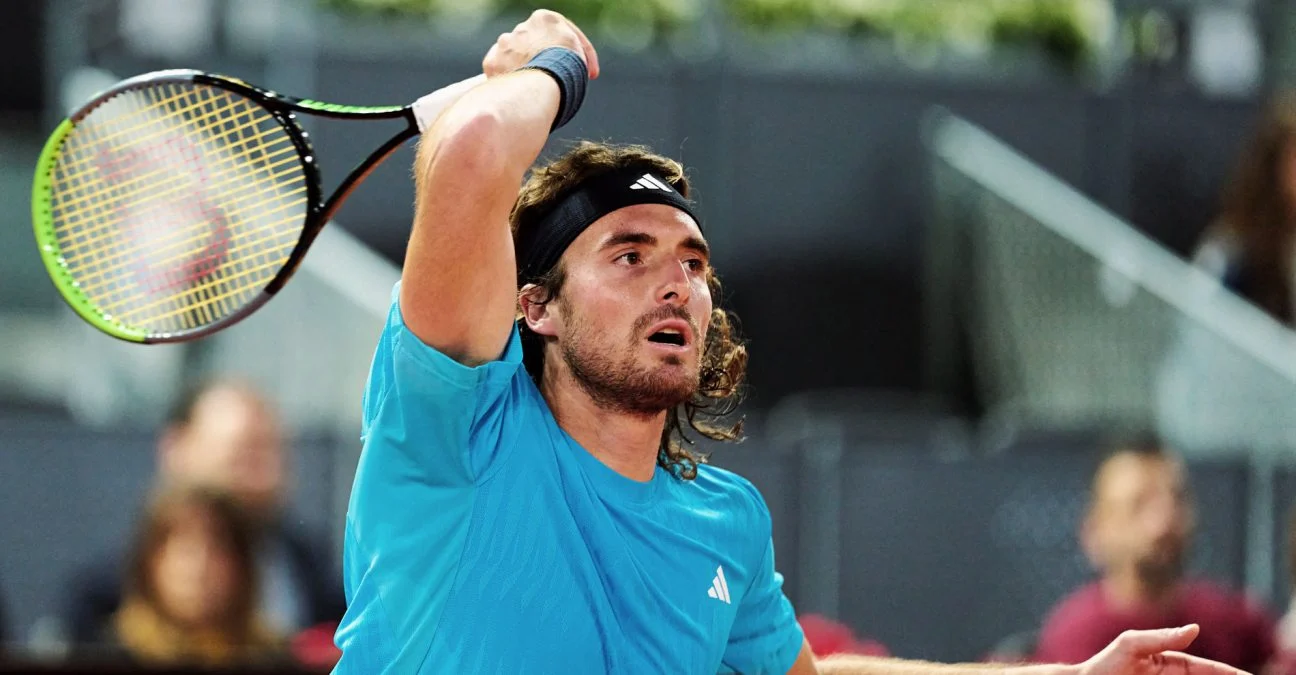 Stefanos Tsitsipas, 2026 | © Madrid Trophy Position

A year can be a long time in the life of a tennis player.
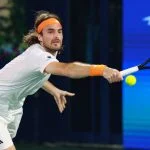
Twelve months ago, Stefanos Tsitspas arrived at the Monte-Carlo Masters with a spring in his step. One year on, after a first-round defeat there, in Munich and in Rome, he looks lost, unsure what to do, how to play, where to go.
It’s all so different from how he sounded a year ago, all the more disappointing when you consider his words, and briefly his deeds, in 2025.
2025 changes were good, but didn’t last
After years of procrastinating, he had made two fundamental changes in his life.
First, he had switched to a bigger-headed racket that produced an instant improvement, giving him more margin for error on returns, more confidence on the court. Secondly, and even more fundamentally, he removed his father from his coaching team, something observers had been calling for him to do for many years.
Victory in Dubai in February 2025 was instant reward for his courage – it’s not easy to make big changes midway through a career, especially when they concern family – and he seemed to be playing with freedom for the first time in ages. Certainly he was speaking with freedom, telling me in an interview – on the eve of the 2025 Monte-Carlo Masters – that he was finally making decisions for himself.
“I won’t deny that my father was a good influence on me, and he obviously tried his best, but I feel like most of the decision making in terms of the stuff that was related to my tennis career was being taken by him,” Tsitsipas said at the time.
“Of course, I did have a say, because I’m the player, but I (feel) like I (am) in full control now. I’m open to change, and I’m open to trying new things, much more than I was before, and I don’t blame my father for it. It’s just that he’s learned his ways. I guess the older you grow, the more you’re used in your own ways, and the more superstitious you become your own ways. And that’s how it worked with him. So I did seek for that change. Finally, I feel like I’m in control of exactly what I want in my career and what I want out of my life.”
Back in the top 10, he sounded upbeat, eager to get out there and work hard, to achieve the kind of things he had threatened to do when he burst onto the scene as a teenager. Three times the champion in Monte-Carlo, and twice a Grand Slam finalist, in recent years, he had been overtaken by the new kids, Jannik Sinner and Carlos Alcaraz. But here, there was genuine optimism that he was on the way back.
Father-son bond to strong for him to break free
It took just a week for all that optimism to disappear. Though he reached the quarters in Monte-Carlo, his father, Apostolos, was back in the fold the following week, the bond too strong, it seems, for Stefanos to keep him away.
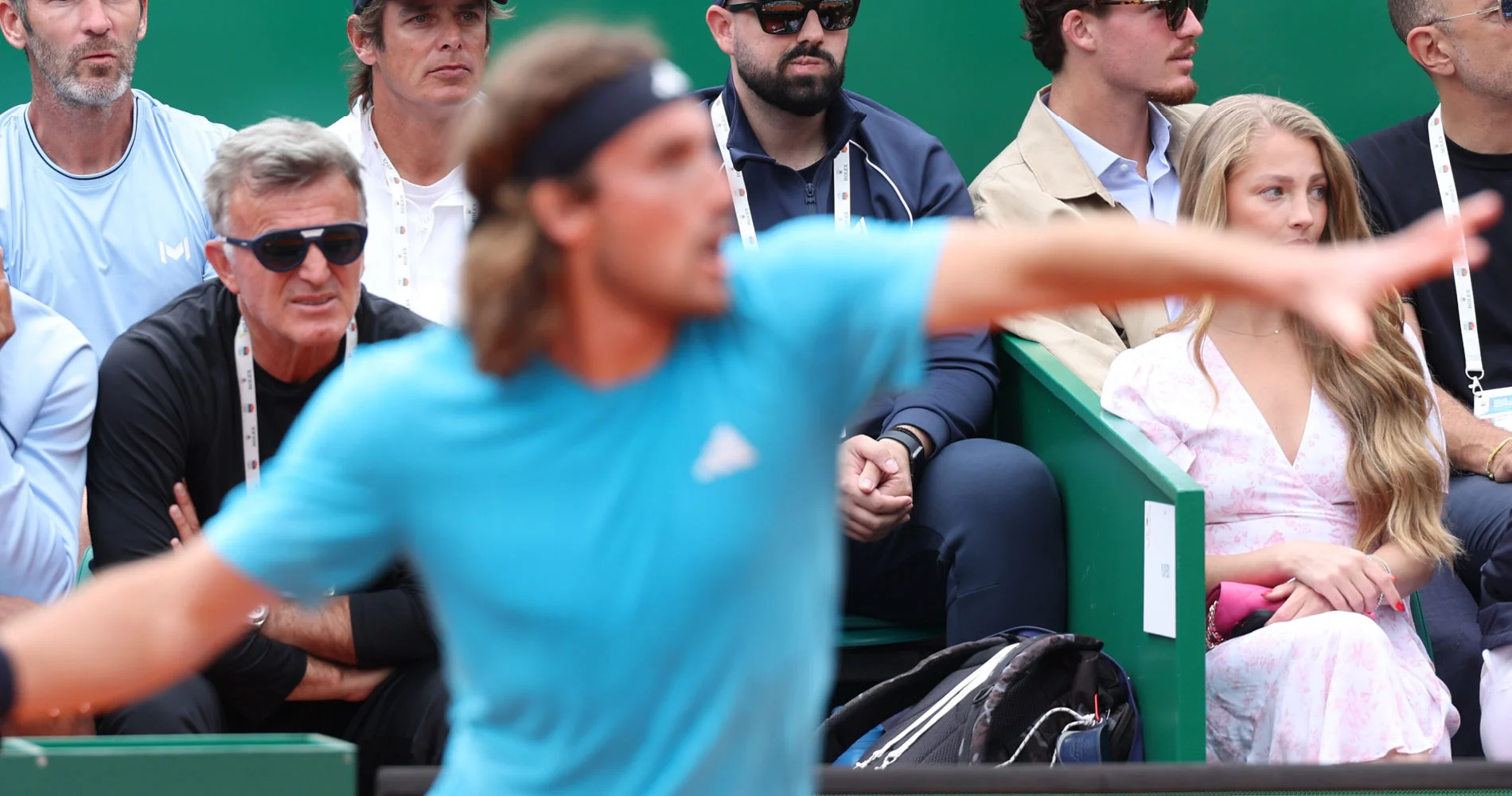
And that’s a big problem. While Apostolos obviously helped his son make it as a professional – together with his wife, the former pro Julia Salnikova (herself a junior champion in Monte-Carlo) – their relationship has not exactly been smooth. Stefanos has tried to cut ties a few times, but failed, while Apostolos sits courtside, talking non-stop, mostly to his son, but generally to anyone who will listen, or who doesn’t tell him to be quiet.
Judy Murray – the mother of Andy and Jamie Murray – often talks about the need for a parent to know when it’s time to step away. But for every parent who understands that, others find it hard to let go, to the point where their presence becomes detrimental. Think of Mary Pierce’s father, Jim, or Caroline Wozniacki’s father, Piotr, for example. Jelena Dokic’s career was effectively destroyed by her abusive father, Damir.
Greek journalist Vicky Georgeatou told me that when he was 12 or 13, Tsitsipas promised his father that they would win a Grand Slam together. The bond cannot be permanently broken, it seems.
Monte-Carlo defeat in 2026 a real concern
Watching Tsitsipas close up in Monte-Carlo was a sad experience. He looks lost, short of motivation. There were a number of balls he didn’t chase down and his body language was woeful. A good win over Alex de Minaur in Miami had offered hope (although he owns that head to head) but then he won just one game against Felix Auger-Aliassime in the following round.
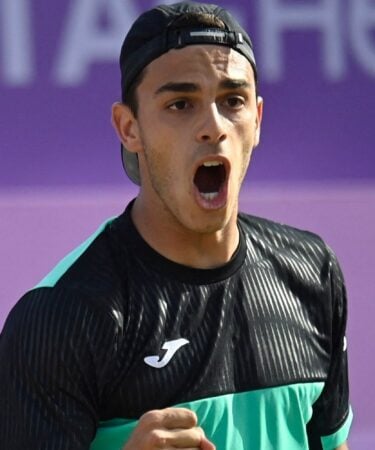
In Monte-Carlo, he was beaten by Francisco Cerundolo. The Argentinian is a fine player but Tsitsipas never looked like he believed he could win.
Is he fully fit? Last summer, Tsitsipas quit during his first-round match at Wimbledon, citing a serious back injury. His coach at the time, Goran Ivanisevic – who seemed like the ideal man for the job – realised within two days that Tsitsipas’s father was the problem and cast doubt on the injury. He aired his feelings in some honest interviews, which Tsitsipas didn’t appreciate. They parted ways soon after Wimbledon.
At the time, Tsitsipas said he wouldn’t have surgery but couldn’t say where he would play next. He won just three more matches all year and called time on 2025 in September, after Davis Cup. This year has been hugely underwhelming; he lost in the second round of the Australian Open and has yet to get to a semi-final anywhere.
An early defeat in Munich to Fabian Marozsan will have hurt, after he held match point but there were good signs in Madrid, where he beat Alexander Bublik on his way to the last 16, only to lose out to Casper Ruud in a superb match, where two more match points went begging.
That should have put him in good spirits going into Rome, but on Thursday, he fell in straight sets to Czech Tomas Machac. Losing to Machac is no great shame, of course, and again there were glimmers of hope as he fought from a break down to level at 5-5. But he was outplayed in the tiebreak and another early loss means he will go into Roland-Garros ranked in the high 70s, grasping for form and consistency.
In freefall for two years
The cold facts are that Tsitsipas has been in freefall for a while. Since reaching the quarters in Paris in 2024, he’s won just four matches in seven majors. His returns are still an issue – he takes huge cuts at the ball on his one-handed backhand, which is so difficult to do – and he’s not getting the free points on serve that he used to, although it did look better in Madrid and Rome.
From the outside, it’s clear that something has to change, and that something is getting a new coach and moving his father into the background. Patrick Mouratoglou, who played a big role himself in getting Tsitsipas to this level, was sat behind Apostolos in Monte-Carlo. A penny for his thoughts.
When he quit in his first-round match at Wimbledon last summer, it seemed Tsitsipas was at rock bottom, “I’m just absolutely left with no answers. I don’t know what to do,” he said at the time.
Strangely, he looked happy enough off the court in Monte-Carlo and he has sounded upbeat in his posts on social media. It’s on the court that is the problem. He’s at his lowest ranking since 2018. This will be a huge test of his resolve, his desire and motivation, not to mention his willingness to put in the work.
Above all, though, he needs to find a way to forge a path on his own. His father no doubt wants the best for him, but even he must know that the best thing to do is for him to step back. If he does it, then his son has a chance. He has not suddenly become a bad player overnight.
If not, then the fear is that Tsitsipas will be stuck like a mouse on a treadmill, going nowhere.