The machine’s second spark: Adrian Mannarino and the art of fueling confidence
After a grueling nearly five-month drought that saw him tumble down the rankings, 37-year-old Adrian Mannarino has rediscovered his “velvet touch” in Montpellier, anchored by a uniquely detached and resilient mindset.
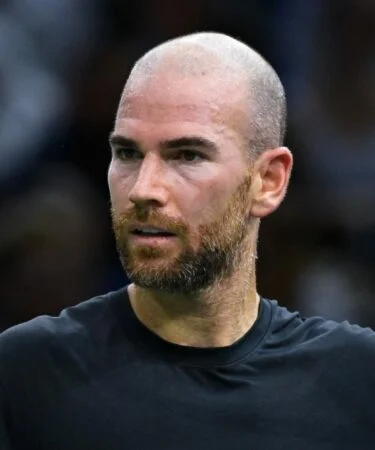
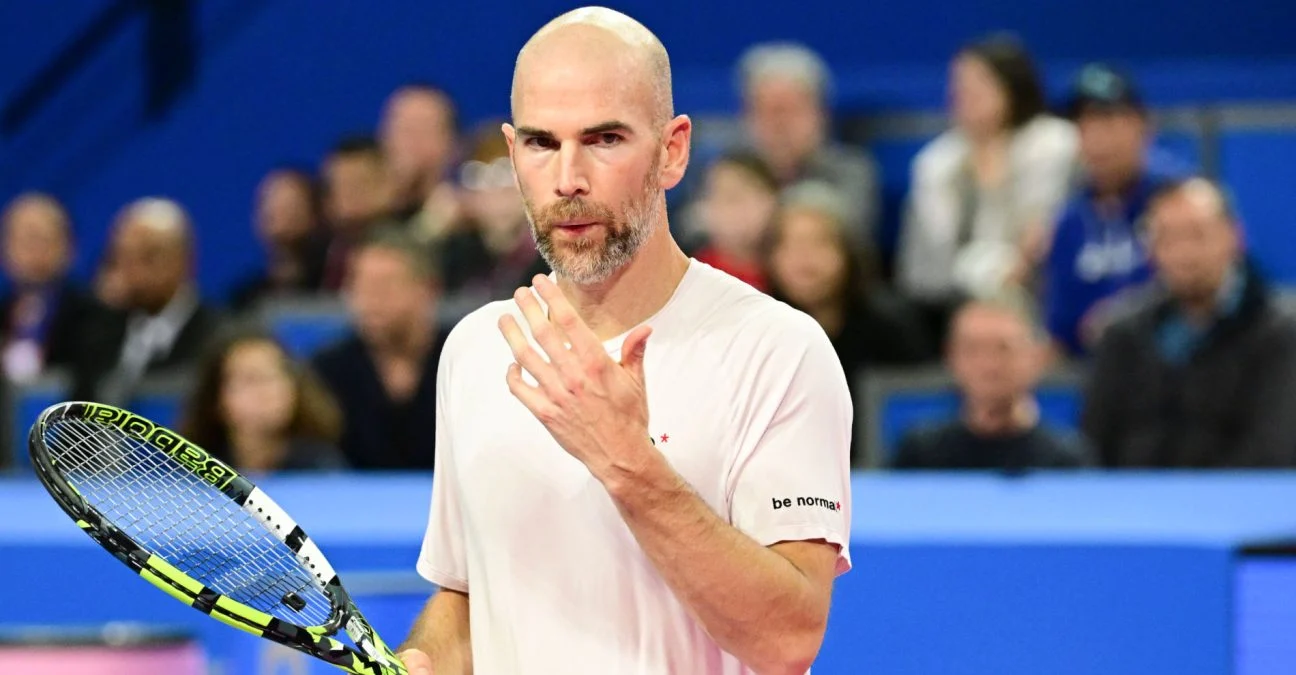 Adrian Mannarino, Montpellier 2026 | © JB Autissier / Open Occitanie

Confidence in professional tennis is rarely a steady flame; it is a machine that requires constant maintenance and, occasionally, a jump-start from the most unlikely places. For Adrian Mannarino, currently the world No. 70, the road to the 2026 Montpellier final has been paved with the kind of results that would shatter a younger player.
Entering the tournament, the Frenchman was reeling from a ‘disette” – a famine of results that stretched back to the 2025 Asian swing. After a solid win against Matteo Berrettini (7-5, 7-6⁵) in Shanghai last September, the wheels appeared to come off. He suffered straight-set losses to Francisco Cerundolo (6-7³, 6-7⁴), followed by a qualifying exit in Basel to Remy Bertola (1-6, 2-6) and another in Paris to Yannick Hanfmann (3-6, 2-6). By the time he reached Metz in November, falling to Arthur Cazaux 3-6, 6-7⁴, the veteran seemed stuck in a loop of early exits.
The turn of the year offered no immediate relief. Yet Mannarino’s 2026 season began with four consecutive losses across three continents. In Hong Kong, he fell to Marin Cilic 3-6, 2-6. In Auckland, he was dispatched by Eliot Spizzirri 4-6, 3-6. The low point came at the Australian Open, where he exited in the first round to Rinky Hijikata in a crushing 3-6, 3-6, 1-6 defeat. Even a tactical drop to the Quimper Challenger resulted in another loss to Remy Bertola (6-7, 4-6).
It is always surprising when you have just lost many matches in a row in the first round, to arrive in the final
“I am a little bit surprised,” Mannarino admitted after his semifinal win. “Yes, it is always surprising when you have just lost many matches in a row in the first round, to arrive in the final”.
The turnaround began not on the court, but on the telephone. “It is a discussion that I had with my coach (Erwann Tortuyaux, editor’s note) on the phone when I arrived here,” Mannarino explained. “And he told me: Honestly, you must not put yourself in the hole more than that. The level of play, it is very good in training. It is not so bad in matches ».
This external validation proved crucial for a player whose game relies on feel rather than raw power. His coach’s message was simple: “You are just missing maybe a victory or two to launch the machine. To take a bit of confidence because it is often that which blocks in fact, it is the confidence, quite simply”.
Manna’s philosophy
In his semifinal against the hard-hitting Damm, the Frenchman had to shift the momentum against a powerful opponent that had dominated at ease, using his well-down tactical skills to push the opponent to commit the mistakes.
Beyond the tactics, Mannarino’s longevity is fueled by a philosophy of life that sustains the level of intensity in every aspect. “I try to take a bit of a step back, not necessarily to be as serious as all the players, because it’s true that when you keep a rigor pushed to the maximum, it’s hard to hold over time,” he said. At 37, he refuses to let age dictate his limits: “I’ve 37 years old now, but I don’t put too many barriers on the years”.
It is a bit cliché to say that, but it is a lot in the head.
This “relaxed rigor” has allowed him to navigate the darkest moments of the last six months. Even when losing, he maintains a pragmatic detachment. “When I sat down on the chair at the end of the first set, I found it only logical to lose the set given how my opponent was playing at that moment, so I didn’t feel much frustration”.
The reward for this mental fortitude is tangible. By reaching the final in Montpellier, Mannarino has effectively erased the nightmare of his 0-4 start to 2026. On Monday, his ranking will reflect this resurgence, rising to at least world No. 51. As he puts it: “There are times where one dares to commit in the shots, times one does not dare. Times one doubts, one asks oneself questions. Finally, it is a bit cliché to say that, but it is a lot in the head”. In Montpellier, the questions have finally stopped, and the machine is running once again.