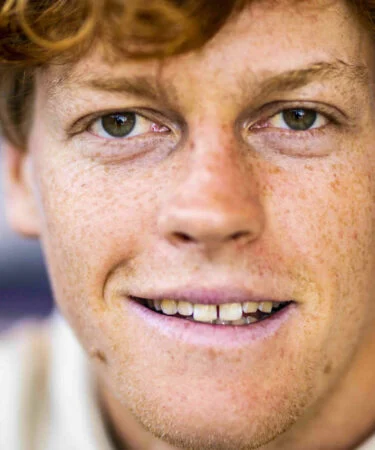
In the biggest moments, Jannik Sinner’s mind is free. All the work has been done
After winning his second Wimbledon title, the Italian struggled to explain how he did it but his work ethic, after disappointment in Paris, was crucial.
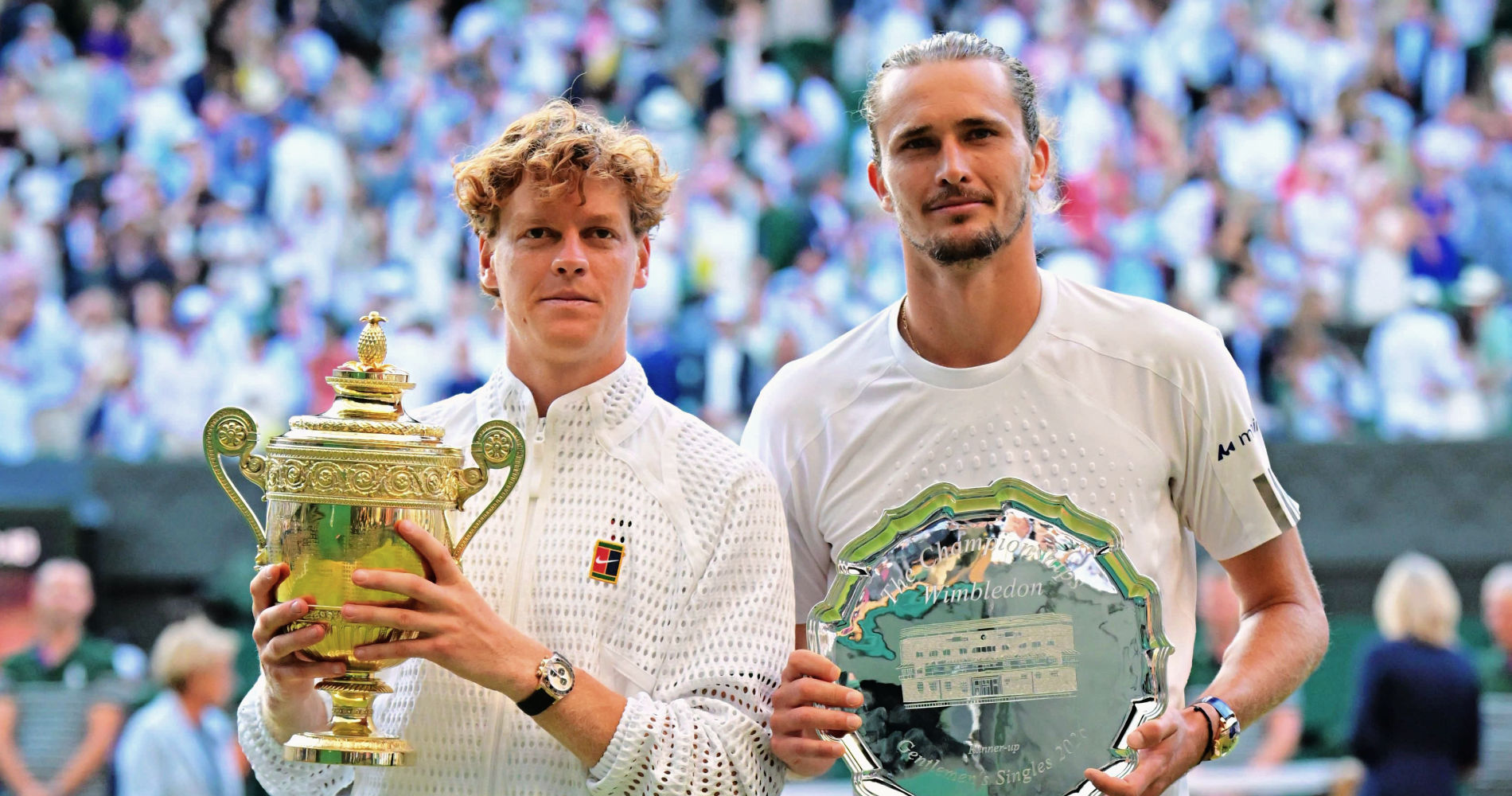
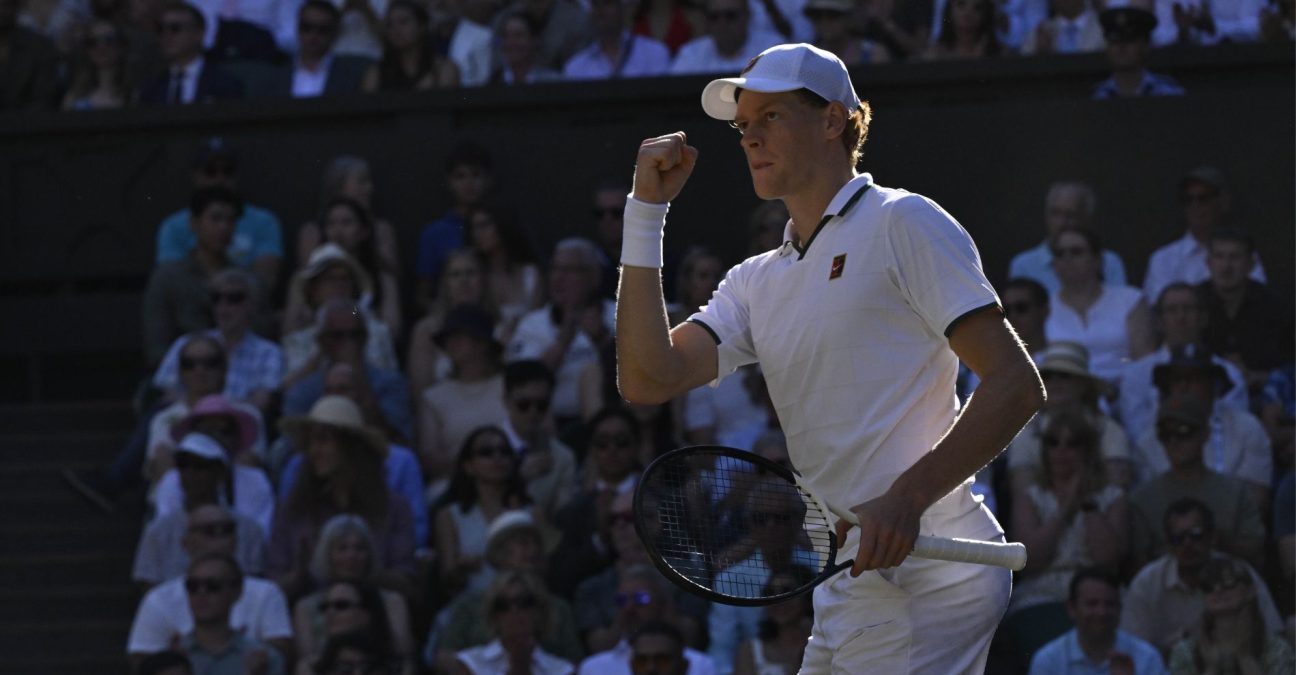 Jannik Sinner – Wimbledon 2026 © Chryslene Caillaud / Psnewz

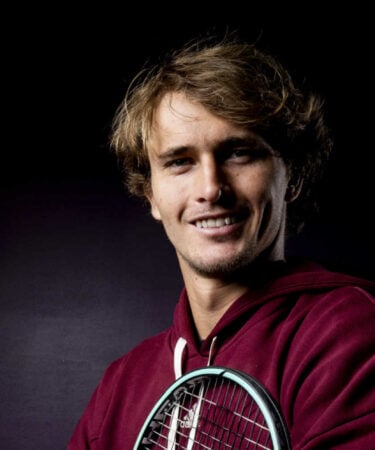
For the second year in a row, Jannik Sinner showed enormous mental resolve to bounce back from disappointment at Roland-Garros to win Wimbledon. Last year, he missed three match points in Paris against Carlos Alcaraz only to beat him in the final at Wimbledon; this year, he wilted in the heat at Roland-Garros but retained his Wimbledon title with a hard-fought win over Alexander Zverev.
That showed real mental fortitude, as Sinner agreed. “This one means a lot because was a tough one after Paris again,” he said. “Last year was also tough. But coming here, I tried to put myself in the best possible position to be as competitive as possible. We put in a lot of work days in Monaco, very, very long. Definitely sacrificing a lot of my time and everything to be in this position. Having this achievement, it means a lot to me.”
Sinner improved throughout the tournament, which was just as well. He showed Novak Djokovic no leniency in the semis and then in the final, when Zverev threatened him more than ever before, he found another gear and pulled away. Zverev’s slip on break point at 3-3 in the third, his only break point of the match, probably didn’t help, but Sinner was always there, mentally and physically.
Sunday’s final was in stark contrast to what happened in Paris, when he crumbled from two sets to one and 5-1 against Juan Manuel Cerundolo to lose in five, his body and mind in bits. The heat, seemingly, got to him that day and at the time, the idea that Sinner would bounce back by winning Wimbledon again seemed if not outlandish then definitely problematic.
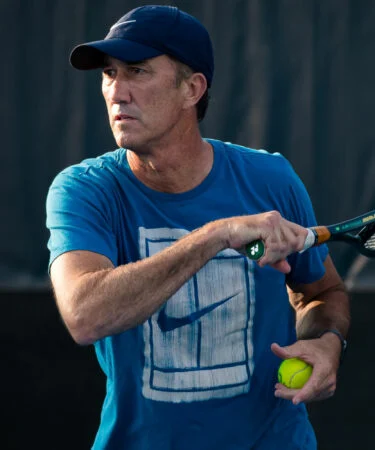
Listening to Sinner and his coaches, Darren Cahill and Simone Vagnozzi, on Sunday night, it seemed that no one could really explain how he had done it. Not Sinner, who started several answers with “I don’t know”. Not Cahill or Vagnozzi, who would not say if the medical tests Sinner had after Paris had really showed why he had such problems in the heat that day.
What was clear, though, is how Sinner functions, how he gets himself in the state to play the incredible tennis that has now brought him five grand slam titles. Work, work, work to be in the best possible position to produce his best. When the big moments come, his mind is free.
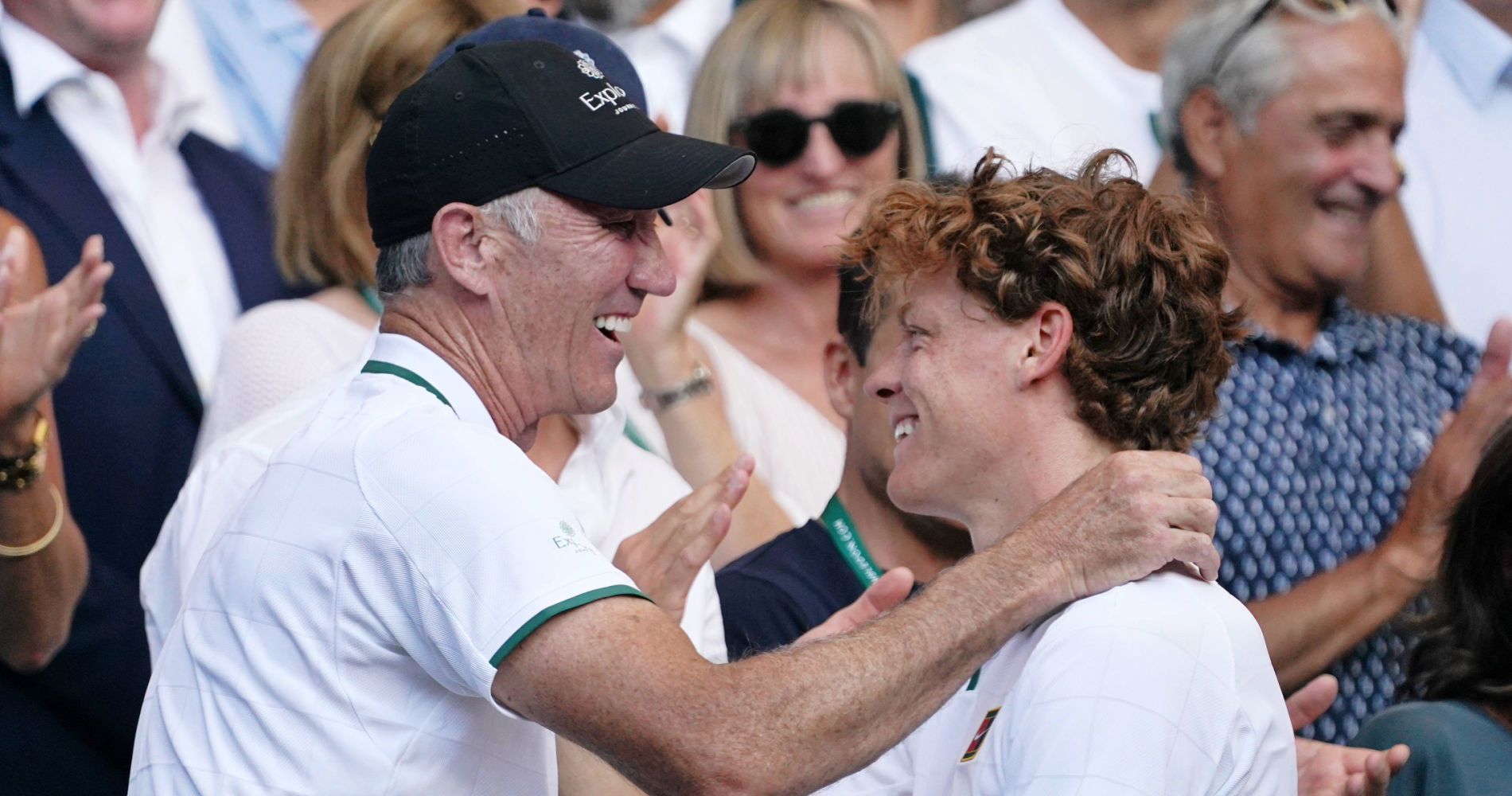
“I think what happened in Paris, just one of those things,” Cahill said. “It’s not something we can put our finger on and know exactly what happened. He went away and did what he needed to do with the testing and made a few changes to his preparation, the way he prepares for the hot days.
“But don’t really know it was that in Paris. It was just one of those things we don’t really have answers for. It goes to show the maturity of the player that we’re working with in Jannik, that he can take a kick in the guts like that, come back here, work his ass off.
“We got here 12 days early, didn’t play a lead-in tournament, so we knew the first couple matches were going to be really difficult for him to get through. He just puts his head down and goes to work. He’s had a great attitude throughout this entire tournament.”
Preparation is everything, like for Djokovic
In the wake of his defeat by Sinner, Djokovic talked about the way he works off the court, how being as well prepared as possible, fine-tuned, in perfect shape, was the key to his success. It’s not just about talent, as everyone knows.
When trying to explain how he managed to get himself back to his best, Sinner struggled to explain it, but the word “work” always came to the fore. For the Italian, if he is prepared, with miles in his legs, the repetitions in his body, he feels able to be free on the court. In the biggest moments on Sunday, he found a way.
“The only thing I’m very happy is that I’m trying to do my best every day,” he said. “Sometimes you have a tournament with a good outcome, and sometimes you just don’t have. There’s nothing you can really do about.”
“There is no failure if you don’t win a Grand Slam. It’s very, very rare days. Now I have five in my whole life. We talk about five Grand Slams. But end of the day, it’s five days of so many other days. You just want to enjoy it. Today was a very tough day. If I lose, it’s still a great day. Playing a grand slam final, it’s so rare and so special. I never take things for granted…you always need to work hard and have moments like this.
In big finals, the biggest matches, it’s always small details that make the difference. For Sinner, they come in the preparation. Cahill pointed to how Sinner now usually leaves the court after two sets, walks into an air-conditioned room, changes his shirt, does everything he can to cool his system for a couple of minutes.
“Look, he’s a redhead that lives in the north of Italy, that grew up in the snow and the Alps. Hot weather is a little bit different for him than it is for most people. The more time he spends in the heat, the better he’s going to be at it. We already saw here. I think it was one of the hottest Wimbledons on record. He managed through that incredibly well. We might even make some changes to the pre-season, chasing the sun a little bit more, getting him more acclimatized to playing in these types of conditions. He did amazingly well these entire two weeks.
Important to take opportunity with Alcaraz out
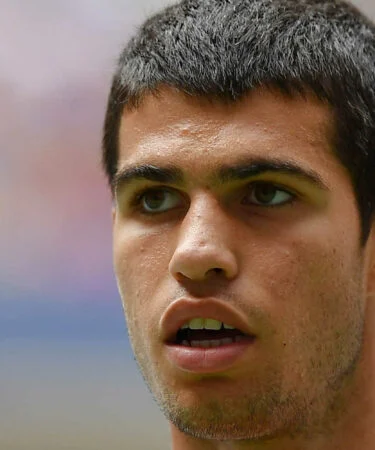
This was an important tournament for Cahill, not just because he was defending champion and because it was Wimbledon. It was also a golden opportunity for him to grab another grand slam title, while Carlos Alcaraz recuperates from a serious wrist injury.
It’s all done through attention to detail. Sinner loves working hard, seems to enjoy the process almost as much as he does winning matches. He’s not someone who’s out on the town, photographed in a bar in the early hours. When he has a setback, he works harder than ever.
“Probably what makes us the most proud of him and working with him is the way he comes back from those (tough moments),” Cahill said.
“It doesn’t put him down for too long. Obviously he’s disappointed after those moments. But it’s a day later. We get a phone call. All right, boys, what are we doing? Let’s get back on the court. What are we working towards? What’s the plan? Where are we going? What do we need to do to get better? That’s his attitude in tennis and it is his attitude in life. That’s why he’s so great to work with. We spoke about his resilience in those moments, being able to come back and be bigger, stronger and faster whenever he has a bad moment.
Ready to work again
“In this final he needed that to get through this match because he was tested badly against Zverev today. He showed amazing resilience. If you don’t have those tough moments, maybe you never grow like he’s been able to grow. We look at it as a big positive in his personality.”
Sunday’s final was incredibly tight. For two and a half sets, Zverev matched Sinner, serving like a god, and moving incredibly well. The slip at 3-3 in the third may well have played a role – his ball toss was apparently slightly lower immediately after and he played a loose game to be broken – but Sinner’s level stayed the same. He even raised his level at that stage, sensing the moment.
But when Sinner was asked how he did it, he couldn’t explain. His mind was probably already thinking about what’s next, what work needs to be done to maintain and improve. It’s what enables him to play the way he does in the biggest moments.