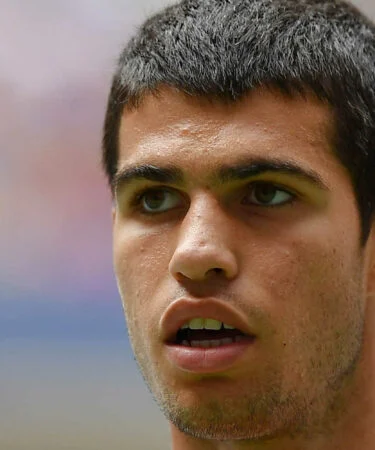
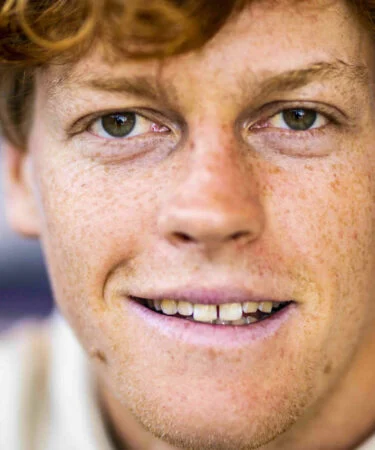
No one wanted this match more than they did – why Alcaraz and Sinner needed the Monte-Carlo final
Sunday’s Monte-Carlo Masters final brings the first Alcaraz–Sinner clash of the year, on clay, with the world number one ranking at stake. Everyone was waiting for it — the players most of all, for whom facing each other is the only way to know where they truly stand.
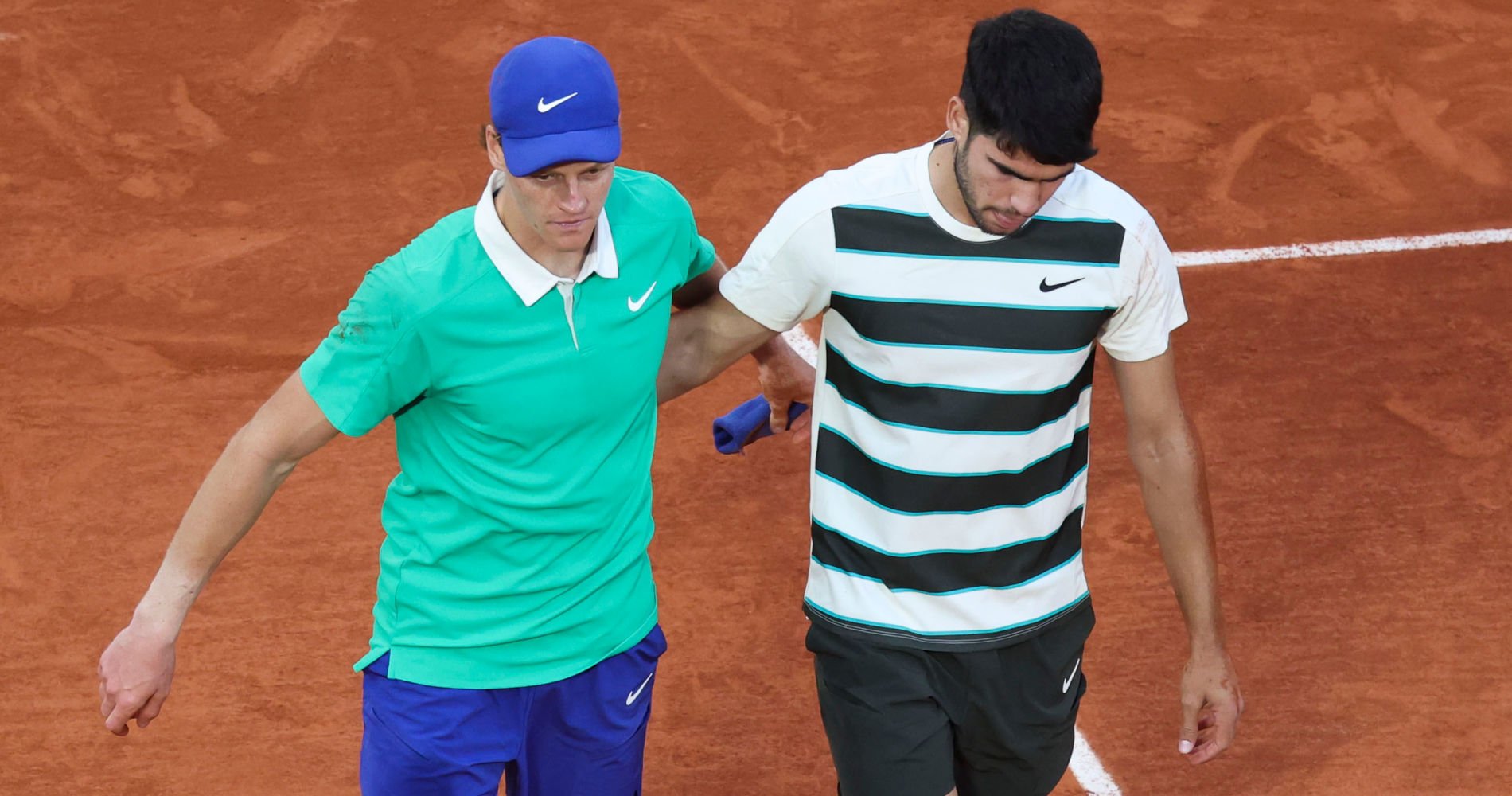
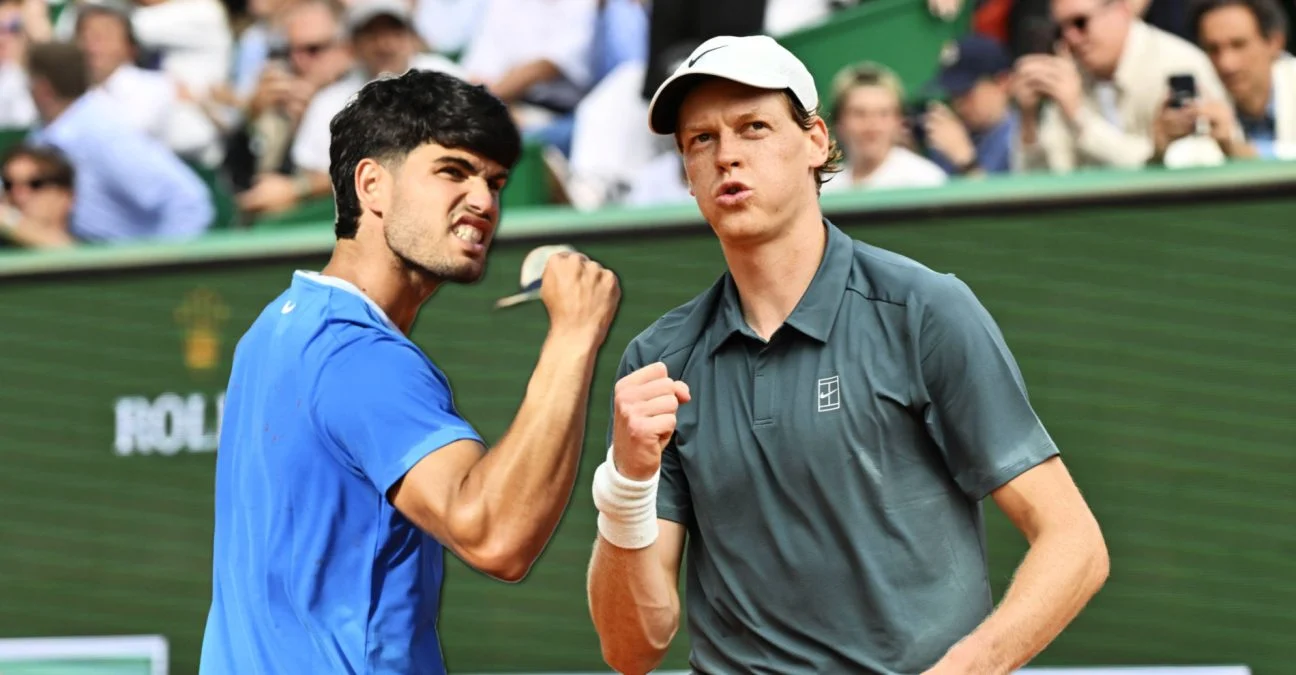 Carlos Alcaraz and Jannik Sinner, Monte-Carlo 2026 | © Chryslène Caillaud / PsNewz

Experience teaches us that the five weeks separating Monte-Carlo from Roland-Garros are more than enough for form to shift dramatically. Whatever the outcome of Sunday’s final between Carlos Alcaraz and Jannik Sinner at the Monte-Carlo Country Club, scheduled for 3pm CET, there will be little point in anointing an artificial favourite for the second Grand Slam of the year. Plenty of water — or rather crushed clay, and incidentally two more Masters 1000 events — will have flowed under the bridge by then.
This final has enough ingredients to tantalise before a single ball is struck. The world number one ranking is on the line, which was far from a foregone conclusion two months ago when Alcaraz was coming off his Australian Open title, making him the winner of three of the last four Grand Slams.
Even less so when, beaten in Doha by Jakub Mensik, Sinner appeared to be weighed down by the loss of confidence that followed his Melbourne semi-final defeat to Novak Djokovic. After retreating to California to put in the hard yards, the Italian has rediscovered his confidence, his power, and that indestructible quality that defines him when what he calls his “puzzle” is fully assembled.
“He’s like a wall,” was Alexander Zverev’s verdict after the drubbing he received in the semi-finals – a summary that still does not quite do justice to the Italian’s extraordinary first set.


A long time coming
At Indian Wells and Miami, Alcaraz’s unexpected defeats to Medvedev (semi-final) and Korda (third round) made a meeting between the two giants of men’s tennis impossible; and so the inevitable has arrived at their fifth shared draw. The anticipation surrounding this final echoes, in some ways, the excitement that built ahead of the Rome final in 2025 – itself coming after seven and a half months without a competitive encounter between the two (including three months of Sinner’s suspension).
Setting aside that suspension, and the exhibition match in Korea in January, you have to go all the way back to the stretch between the 2021 Paris Masters and Wimbledon 2022 for a comparable gap. A different era entirely.
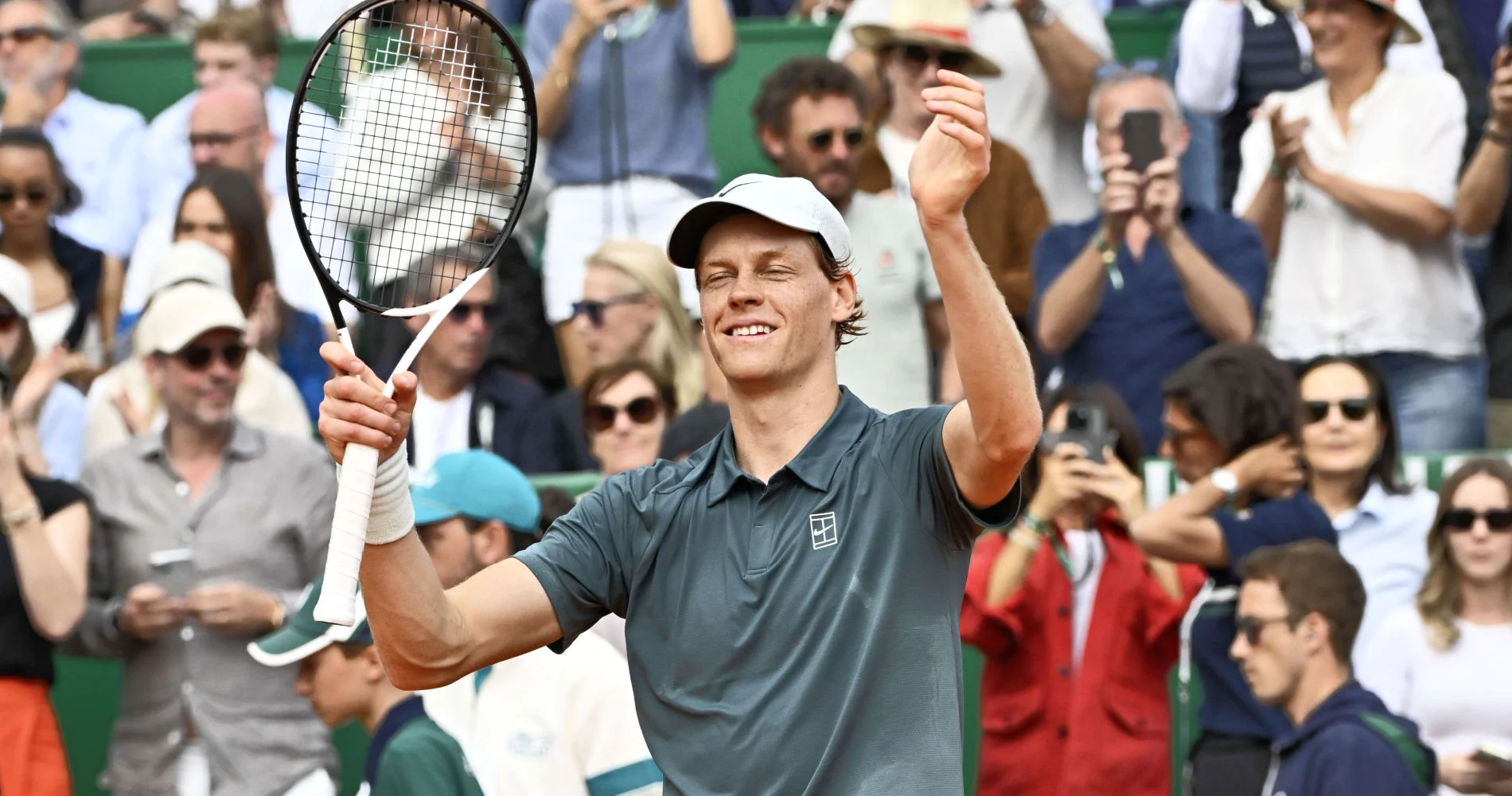
“It was good for me, before Paris, to play against him at least once – to see where my level is on this surface and where I need to improve,” Sinner said after his semi-final. “I hope it will give me good feedback. Whatever happens, win or lose, it will be a useful reference point.”
Since 2025, Sinner has made a conscious effort to inject more creativity and unpredictability into his game. Monte-Carlo has offered glimpses of that evolution, most notably through a more frequent use of the drop shot. It is one of the key tactical subplots heading into Sunday. “I’ve been watching his matches throughout the whole tournament – I know what he’s been working on, what he’s been improving,” Alcaraz confirmed. “And broadly speaking, I know what he does very well. This will be our 17th meeting, so I know him pretty well. I’ll sit down with Samuel (Lopez), we’ll prepare accordingly, but I can’t give anything away on tactics.”
3-1 to Alcaraz on clay
The clay court setting adds an obvious layer of intrigue, with the Spaniard on his favourite surface. He has won the last three meetings between the two on clay – at Roland-Garros in 2024 and 2025, and in Rome in 2025. Sinner’s final victory at Umag in 2022 belongs to another era and can hardly serve as a meaningful benchmark. Alcaraz was ranked fifth in the world at the time, Sinner tenth.
In Turin, ahead of the 2025 ATP Finals, Alcaraz had declared Sinner the favourite given the indoor conditions — where the Italian has been utterly dominant for two years, as he duly confirmed the following day in the final. He does not deny that clay gives him an edge on paper, but stops short of casting himself as the overwhelming favourite. “Jannik has said himself that clay is not his favourite surface,” Alcaraz notes. “His game, I’d say, suits other surfaces much better.”
“I can lose to Jannik on any surface, in any tournament.”
“But the level he plays at on clay is very high. The fact that he’s more comfortable on hard courts or grass doesn’t mean he plays poorly on clay. I feel more at home there because of the way I play – it comes more naturally to me. But I can lose to Jannik on any surface, in any tournament. I need to play my best tennis if I want to beat him. Against him, there’s never really a favourite. It all comes down to who plays better on the day.”
The last time Carlos produced his best tennis was probably in the Australian Open final against Novak Djokovic, or during his demolition of Casper Ruud five weeks ago at Indian Wells. And of course, he retains that rare ability to conjure the most outrageous shots at the most critical moments — the very reason he was able to win the 2025 Roland-Garros final while saving three match points.
This potential classic will linger long in the memory. Those who know their tennis history are aware that only five times in forty years have Monte-Carlo and Roland-Garros produced the same two finalists. Just once did the Monaco champion fail to go on and win in Paris — Lendl took the title in Monte-Carlo before Wilander claimed Roland-Garros in 1985. Nadal and Federer then dominated both events three years running, from 2006 to 2008, the Spaniard winning each time. In 2012, Nadal completed the same double against Djokovic. Players at this level don’t believe in omens. Normally.