“Impossible to stay the way I’m playing right now for the entire season”: Sinner, in his own words, after winning Rome
The first Italian Rome champion since Panatta in 1976. The second man ever to complete the Career Golden Masters. Sinner answers twelve questions on the week – and on what’s still to come.
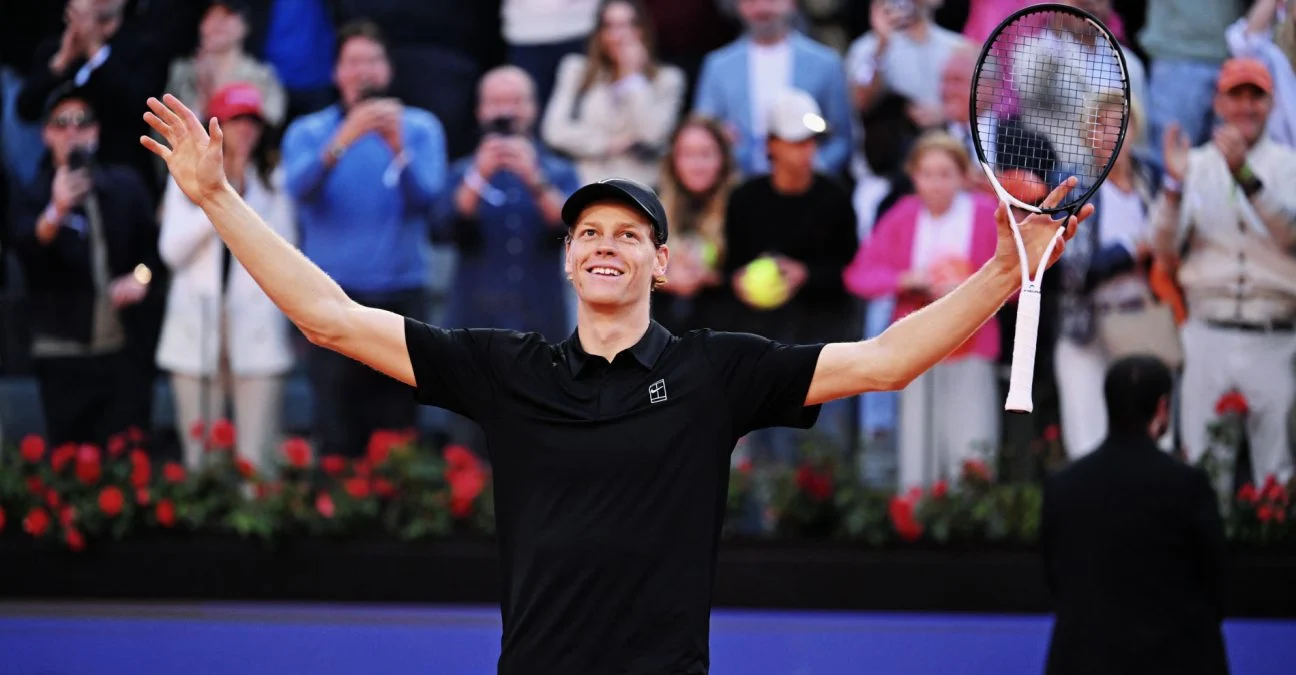 Jannik Sinner, 2026 | © Foto FITP

After winning Rome on Sunday for the first time in his career, Jannik Sinner completed the Career Golden Masters. He’s the second man in history, after Novak Djokovic, to win all nine Masters 1000 titles. He became the first Italian to win at the Foro Italico since Adriano Panatta in 1976. He extended his Masters 1000 winning streak to 34 and his run of consecutive titles at the level to five. These incredible numbers open up opportunities ahead of Roland-Garros, which starts in six days. But the Italian, as usual, is keeping expectations in check.
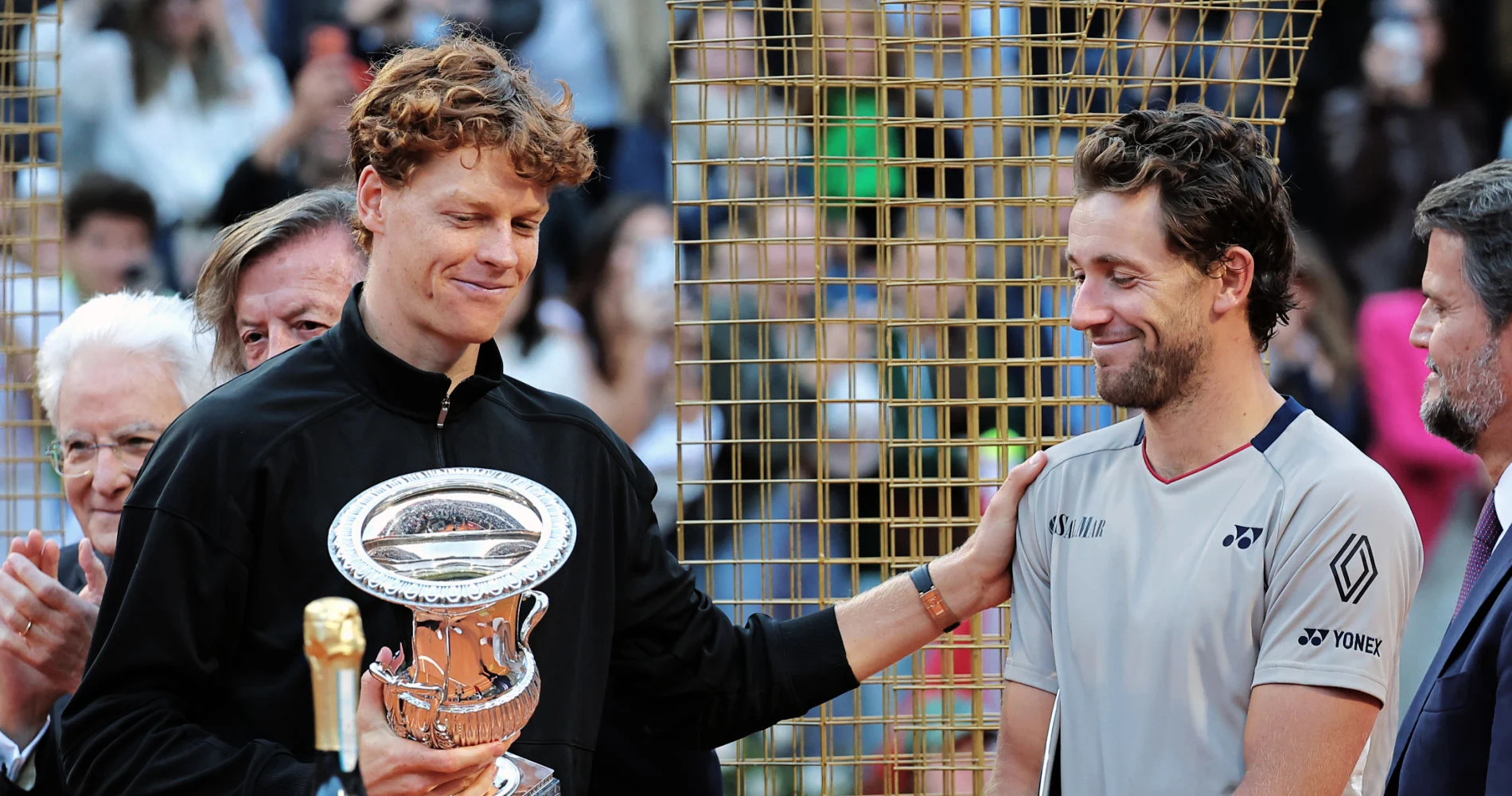
What does it mean to complete the Career Golden Masters here in Rome, in front of your home crowd and President Mattarella?
Jannik Sinner: There’s no better place to complete this set. It has been a very, very interesting tournament already back in the years. 2019, making my debut here on this court. I always felt a lot of, like in a different way, a very positive but different way — a lot of attention, a lot of emotions going through. It means a lot. I believe for an Italian, it’s one of the most special places we play tennis in. To win at least once in my career means a lot to me.
Could you target winning all nine Masters 1000 in a single calendar year?
Jannik Sinner: We have to go tournament by tournament. The most important thing is to feel good physically – otherwise you don’t go anywhere. That’s why I thank my team, we work hard. The thing that matters most is the body. Everyone plays good tennis, and it’s difficult to do those things. Before Wimbledon we don’t play any tournament on grass, and after Wimbledon there’s the possibility of playing in Canada. In my view, it’s not realistic to think about winning all nine 1000s – it’s impossible to stay the way I’m playing right now for the entire season.
How will you switch your attention to Roland-Garros now?
Jannik Sinner: The main priority is to recover as much as I can in the next two, three days. There is not going to be a lot of training, for sure. Tennis, zero. Physical, we need to see. I want to be a little bit with my family in this moment. Switching off on tennis. Then from Thursday on, I think I will be in Paris. Prepare, and we see how it goes. Now it’s important to rest.
Seven years ago, you made your Rome debut at 17. What do you remember?
Jannik Sinner: When I played the first time on Centre Court against [Steve] Johnson, I walked on court and I didn’t want to look bad. It was almost impossible to win, at least I thought so. I lost the first set 6-1 in a moment, but then I found the resources I had inside. What I’m doing now — I don’t even consider myself for certain things. I would never have thought I’d be here. I’m a boy who comes from a tiny little town, 2,000 people, where people go skiing. And I’m here playing tennis on the most beautiful courts in the world. It’s my life. What I will always try to do is give 100%, and what comes out is an experience.
I gave myself credit after the match against Medvedev, when I struggled a lot.
Do you ever tell yourself “well done, Jannik”?
Jannik Sinner: It’s part of staying lucid. I gave myself credit after the match against Medvedev, when I struggled a lot. After 4-2 in the third we had to stop, and it was good to still be there. But sometimes even after a defeat, you can give yourself credit for the tournament you played.
Did you sleep well on Saturday night, and how do you sleep when you lose?
Jannik Sinner: It depends on what I do tonight. It’s a very important tournament for me, lots of emotions, both good and bad. But I’ve always been someone who struggles to sleep after losing. The same applies to other athletes. It’s the most normal thing. You think about what you could have done better. When you win, there’s a little party, and you stop thinking. You sleep better after a win than after a loss.
Before the final, you spent a moment with some children courtside. What did that mean to you?
Jannik Sinner: We tennis players don’t always realise how lucky we are. There are children with serious problems who are happy with small gestures. You’re already happy just to play, with a full stadium, and your perspective changes. Those moments touch me more. You have physical contact, it’s beautiful — a moment that gives me a lot of pleasure. Small gestures that they will keep with them forever, and that cost us nothing. They actually give us beautiful sensations in return.
What kind of things keep you grounded outside tennis?
Jannik Sinner: I’m balanced, also in the way I do things. The small things — like golf, or go-karts — make me happy. After Monte-Carlo it wasn’t like that, we went straight to Madrid. In our sport you can lose the thread in a moment. But happiness doesn’t depend on a tournament. You can’t put too much pressure on yourself.
You’ve been vocal in the past about how tennis is organized and how the season starts. Luciano Darderi finished his round of 16 against Rafael Jodar at two in the morning. What do you make of late-night finishes for players?
Jannik Sinner: The rain slowed down the whole day. Look, I’m not a big fan when we players go on court that late. We’re human too. The problem is that it almost creates a jet-lag effect – because you go to sleep really late, then there’s treatment, eating, the press conference, many other things, and it becomes long. He has one day to rest, and he spent a lot of energy. Sasha [Zverev] also spent a lot of energy. But when you go on court that late, it’s also difficult to play good tennis. And I really respect the public who stayed – that’s the most beautiful thing here. They push us to play.
Q. Italian tennis has Cobolli, Musetti, Darderi, Pellegrino, you – all in the top 30 or close. How do you see this generation?
Jannik Sinner: It’s nice that Italian tennis keeps producing new players. When players get stronger, at the same time they become potential opponents, so it becomes a bit different. But I think I have a good relationship with everyone. We’re a beautiful team. And we’re lucky that we have so many Italian players in the top 20, top 25, top 30. By now we really are many. I think this is the most beautiful thing there is. We’re trying to push it as far as possible. Each player is totally different: Luciano (Darderi) has his own way of playing, his own way of being on court; I have mine; Lorenzo (Musetti) has his; Cobolli has a completely different kind of game again. So we all have different players. It’s a beautiful moment for Italian tennis.
Q. What do you think the future of tennis looks like, in terms of how it’s played?
Jannik Sinner: My job is to always stay in the present, to try to understand what tennis will be like. I think it will be faster and faster. The serve will be a very, very important weapon for the future. So we’ll see. But there’s already a new generation arriving, if we look at the slightly younger ones. The head makes a big difference, depending on how you manage things during the tournament. With my team, we’re going in the right direction.