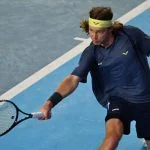
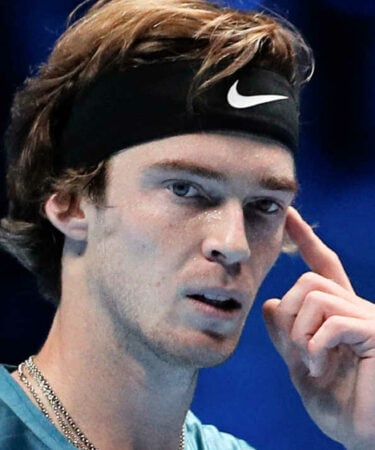
Andrey Rublev says he “completely lost” himself – and that the worst is now behind him, thanks to Marat Safin
The world No. 14 Andrey Rublev has given his most personal account yet of the period when he “completely lost” himself in 2025 – and credits Marat Safin with bringing him back.
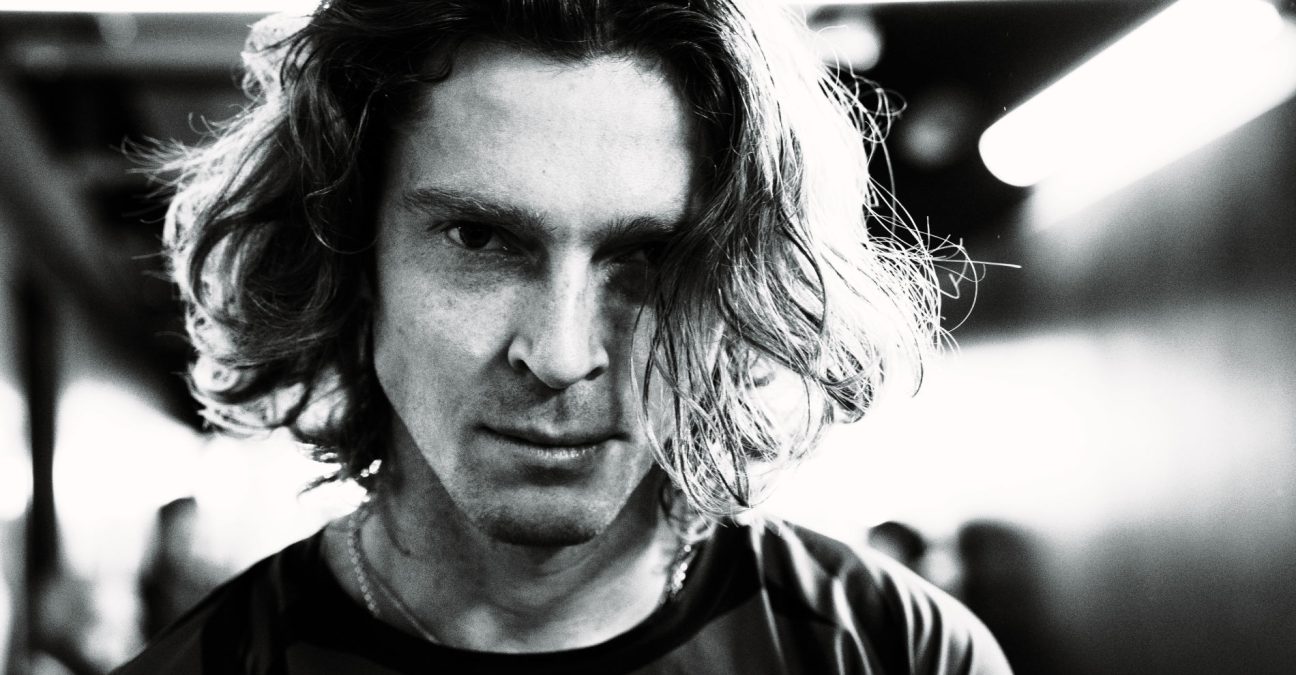 Andrey Rublev, 2025 | © UTS / Tennis Majors

Andrey Rublev has given the most personal account of his recent struggles in an exclusive interview with L’Équipe, published on Wednesday (in French) on the eve of his Rome Masters 1000 quarter-final against world No. 1 Jannik Sinner.
“I had hit rock bottom, I had completely lost myself, I was in pieces. Today, I’m a lot better,” Rublev told L’Équipe‘s Quentin Moynet on the sidelines of the Bastide UTS Nîmes five weeks ago.
Asked about earlier comments in which he had said he was struggling to find meaning in his life as a tennis player, the world No. 14 interrupted the question to make clear that what he had been going through was deeper than tennis.
“I wasn’t finding meaning in life in general.”
“It wasn’t specific to tennis. I wasn’t finding meaning in life in general,” Rublev told L’Équipe. “I no longer took any pleasure in anything. I didn’t understand what the point of living was. Every day was the same. It sounds dramatic, put like that, and it’s hard for me to describe exactly what I was feeling, because I don’t feel it any more.”
Rublev credited his current consulting coach Marat Safin, the former world No. 1 and twice Grand Slam champion, as central to the recovery, framing Safin’s role in psychological rather than purely tactical terms.
Safin and Rublev’s brain
“I tried a thousand things. What really helped me was Marat,” Rublev said. “You know when you open the bonnet of a car to look at what’s inside? Well, he did the same with my brain. He opened up my skull, and a lot of answers to my questions started to appear. We went deeper into it, and I saw more and more things. Before that, I had tried several therapies, different things – without which I wouldn’t have gone to Marat. All of that brought me to feeling much better.”
The Russian also addressed the root of his on-court self-destructive behaviour — the racquet-smashing, the visible mental collapses during matches, the violence directed at himself between points – which has been a recurring feature of his career.
“It comes from the way I grew up. It happened progressively. I was already like that at 10, 11 years old,” Rublev said. “Every time I lost, it was a drama. When that becomes your daily life for ten, fifteen years, you sink further and further into it, until you destroy yourself. It’s like planting a seed in the ground — the plant just keeps growing.”
Asked whether he had now cut the plant down, Rublev was direct. “Not entirely. Halfway, I’d say. The goal is to pull it out by the roots, and rid myself completely of this cancer.”
Rublo’s tactical B plan
The interview also contains an extended account of the tactical reinvention Rublev has undertaken in 2025-26 with Safin – building the Plan B that critics have long noted he lacked, including coming forward to the net not only when victory looked certain but also when the odds are split 70-30 or even 50-50. Rublev acknowledged that the integration of the new game has been uneven: successful at Doha and Dubai, less so at Indian Wells and Miami, where he “took refuge” in his older, forehand-dominated tennis.
What sets Rublev’s interview apart is the depth of disclosure on the record – and the timing. The Russian plays Sinner in the Rome quarter-finals on Thursday afternoon, with the world No. 1 one win from the semi-finals of the tournament he has yet to add to his Career Golden Masters collection.
The full interview is available at lequipe.fr.