“There was more excitement than pressure, and accumulated fatigue”: Parry, the last French player in the draw is brought down to earth
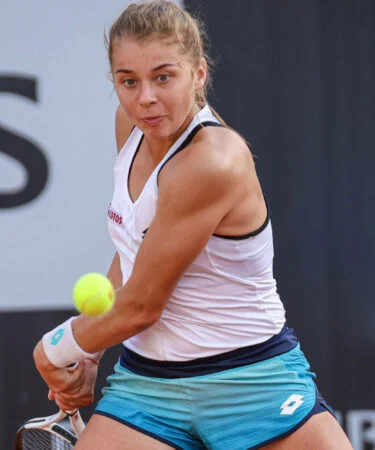
A month ago, she would have signed for a Roland-Garros round of 16. On Monday, the Polish qualifier Maja Chwalinska beat her 6-3, 6-2. Diane Parry on the defeat, the opponent, and the season ahead.
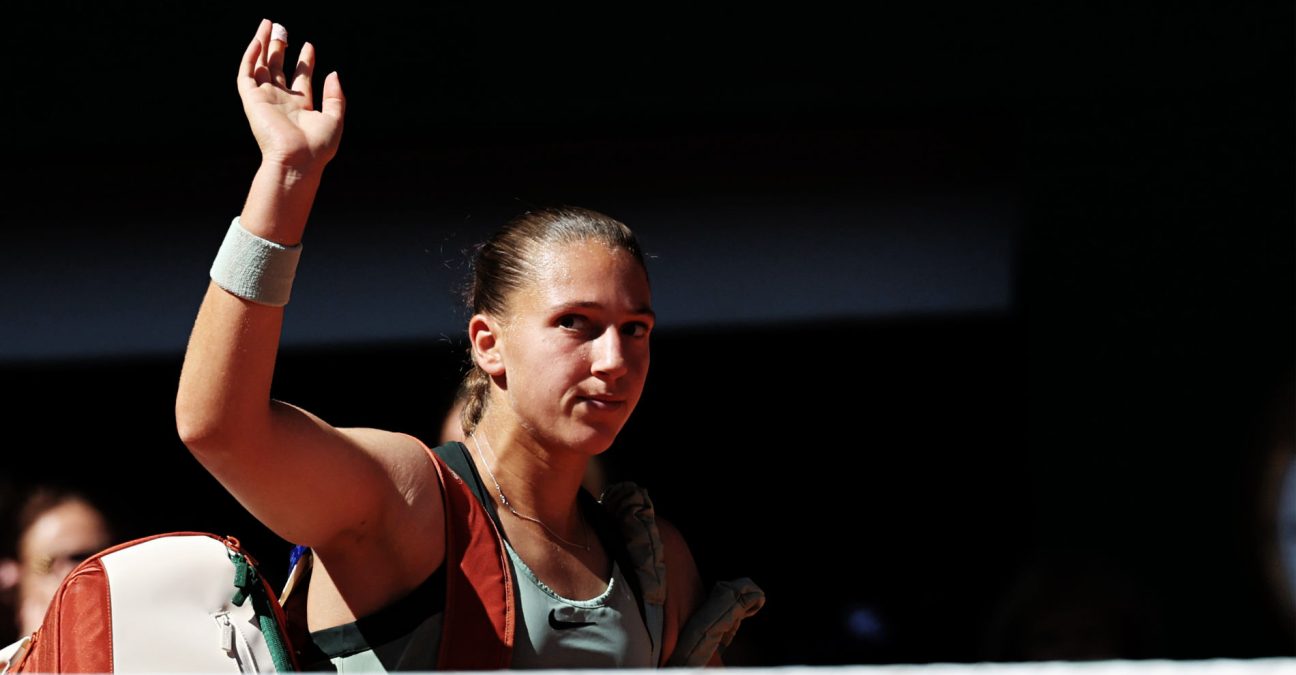 Diane Parry, Roland-Garros 2026 | © PsNewz

Diane Parry, tell us a bit about the match even if it’s tough so soon after. And what do you take away from your run this year, your first Slam round of 16?
Diane Parry: It’s tough, yes. Of course I’m really disappointed because you always want more. When you’re in the round of 16, and you’re at home, you always want to go further. It was a great opportunity for me today. I’m really disappointed, but credit to her, she played her match, and I wasn’t good enough.
It’s always hard to see the positives. You’re inevitably disappointed by the loss because. It was also a beautiful match to play for a place in the quarter-finals at Roland-Garros. I’ll have to absorb the defeat a little, the fact that I didn’t manage to seize the opportunities. But also draw all the positives from it, because if you’d told me a month ago that I’d be here today, I would have signed for it.
There are a lot of positives, a lot of good things, and I need to lean on those to keep working hard in the coming weeks.
Q. What was your opponent’s (Maja Chwalinska) ball like today? You seemed to struggle to get into the rallies. And what happened on your forehand to produce so many unforced errors? Were you bothered physically, or was there some accumulated fatigue?
Diane Parry: Very tough to play. It was very high, and less heavy than what I’d been getting in my last matches. And on Centre Court, it bounced a lot. I knew I’d be playing that way, but once you’re on court, it’s not simple. I just didn’t manage to find solutions. She was very solid and, I thought, very intelligent in the way she played. She always gives you different balls, so it’s hard to anticipate, hard to adapt. I wasn’t good enough.
Some accumulated fatigue yes, that’s normal. But it was her way of playing that bothered me a lot. I couldn’t lean on her ball, couldn’t find the right way to hit my forehand. I knew that if I got drawn into her way of playing, I wouldn’t win – she’s much stronger and much more used to that. I had to try to step in and hurt her with my own ball quality, but it was too hard to do today. I maybe didn’t have enough energy to produce enough power, to be well-placed every time. It’s a combination of a lot of things that made the result bad.

Q. What do you tell yourself on court facing an opponent like that – variation-based tennis, where you can’t lean on the ball? And had you played this kind of player before, or is she a slightly unique case?
Diane Parry: At a certain point, it becomes really tedious. You try to think of every possible option, to find at some moment a small spark, to see that there’s something that can bother her. What’s really hard about this kind of match is that there are a few points where you tell yourself: I’ve found the solution – and then you can’t reproduce it on every point. In the end, I think her big strength is that she knows she can absorb moments when the opponent plays very well and finds solutions. But doing it for a whole match against her, from beginning to end, becomes hard it’s very demanding in terms of placement, attention, concentration on the ball. There are moments when you believe, and others when you tell yourself it’s going to be complicated.
There are some, but at the highest level, it’s usually tennis played very fast, in rhythm — so it’s a bit the opposite of today. In my first round against Kalinina, at the start, it was a bit this style. But today, I felt she was doing it all the time, that she was used to it. In my opinion, she’s on a lot of confidence and a good period, so she’s able to do it for a whole match and find solutions against her opponents.
Q. Beyond your opponent’s quality, what do you blame yourself for most? It’s an enormous frustration, I imagine.
Diane Parry: Not having managed to find solutions. There are moments when you know you’re on the right track, even if you make a few errors, you know you have to keep going in that direction. I tried to stay in the first set, but I had very few opportunities on her service games. Mine were always close. It never turned in the right way. I think it was maybe not staying calm enough, not finding solutions on court.
It’s very frustrating and disappointing not to have had that form on court today, which maybe took away my chance to go further. When the announcer named the girls she’d beaten before – these are very good girls. She has consistency in the tournament and the ability to trouble a lot of opponents. I felt that today on court. I can only congratulate her for that, and for playing intelligently.
She was quite serene, she knew how to play. I didn’t feel like calling on the crowd
Q. You’re known for keeping your emotions internal on court. Wasn’t there a moment when you could have tried to call on the crowd, even if it’s not in your nature?
Diane Parry: I felt I didn’t have all the keys in hand to follow through in the right way, so I didn’t want to do that kind of thing. In the previous matches, I could have – there were moments that were a bit hotter, a bit more tense, where I felt the atmosphere could disturb my opponents. Today, I felt the girl wasn’t very worried in the match. She was quite serene, she knew how to play. I didn’t feel like calling on the crowd, even though it’s hard on court – you want to give more, more spectacle, a higher level of play. I wasn’t capable of it today, so I didn’t think it was the right moment.
Q. Roland-Garros is always special for French players, galvanising but also a lot of pressure. And the status of being the last French player in the tournament carries pressure too. Did it bother you, or was today purely tennis?
Diane Parry: It was a first for me, so it was very positive. Of course I was the last French player in the tournament, but at the same time it was something new for me, so very exciting. There was more excitement than pressure, I think. Maybe there was some accumulated fatigue too, so a bit less lucidity on court, maybe a bit quicker to get frustrated, irritated. That can quickly make the difference in this kind of match – not staying calm enough, not finding the solutions.
When you reach the second week of a Grand Slam, it narrows down – you know there aren’t many left. I didn’t pay too much attention to the fact I was the last French hope. I was aware, but it didn’t really change anything. It was more about me and what I was capable of doing on court to try to go further.
Q. You said you would have signed for being here. What perspective does that give you on the rest of the season? And do you have the feeling you’ve crossed a tennis or psychological threshold despite today?
Diane Parry: First, rest a little. That will do my head and my body good, to start again better afterwards, to work on myself. There’s the grass season, which is a format I like, and where I also want to perform. Last year I made the third round at Wimbledon, so I hope to reach the second week there, and even more if possible. It also lets me climb the rankings, which lets me play more interesting tournaments, get directly into the main draws. That will make the coming weeks a bit easier in terms of scheduling, and I’ll be confronted directly with the best. I hope it continues.
Yes, today it’s a bit of a knock on the head. You feel like you’ve gone back a little. But there were very good things, I beat very good girls. Feeling good on court is also important. It just makes me want to keep working hard so that the results follow, and so I’m capable of stringing weeks together.