Pickleball for Tennis Players: What to Know Before Your First Game
Tennis players, ready for pickleball? Your skills transfer, but expect a smaller court, new rules like the ‘kitchen,’ and different gear. This guide details what carries over and what’s new, ensuring a smooth first game. See why both sports thrive.
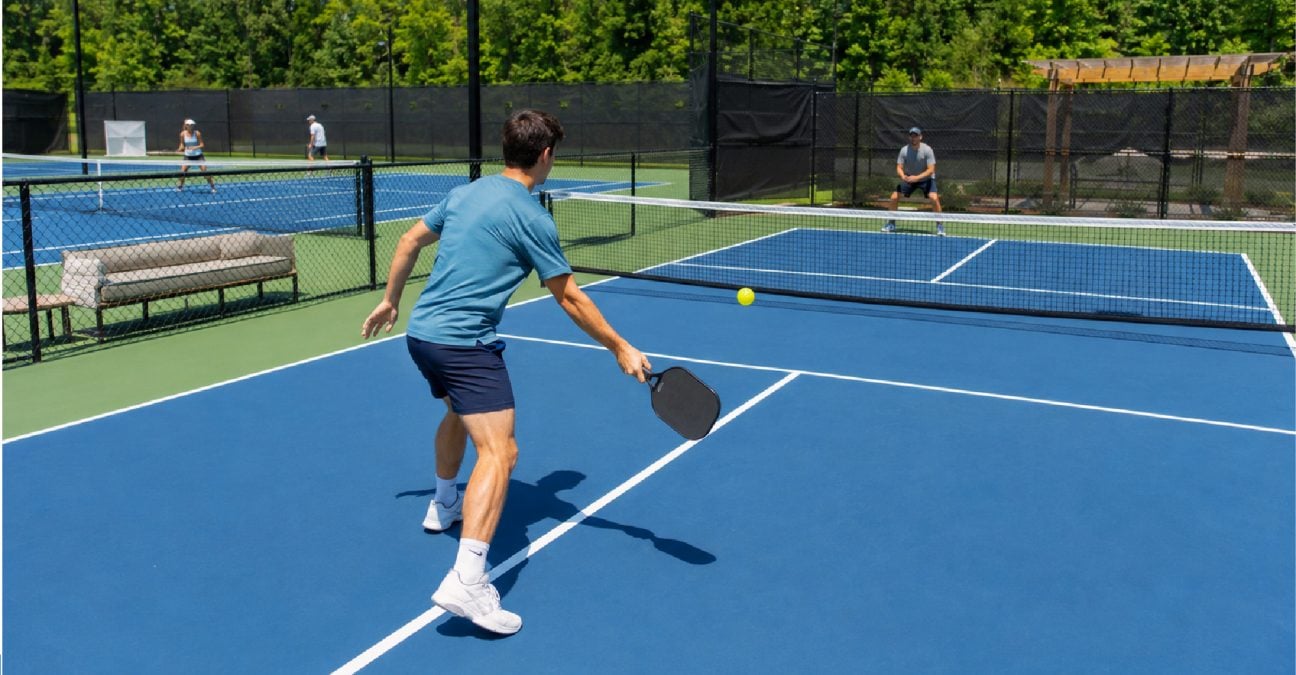 A tennis player stepping onto a pickleball court holding a paddle, mid rally near the kitchen line, with a tennis court visible in the background of the same facility. Natural daylight, wide angle, clean modern look, no logos or text overlays.

Pickleball keeps showing up at the tennis club. It sits on courts that used to host doubles drills and on schedules that had no room for it a year ago. Pickleball for tennis players is less of a fresh start than it looks. Your footwork, your hand eye coordination, and your net instincts all carry over.
A few rules and one smaller court feel strange for about a week, then they click. Plenty of tennis players add the game for the social rounds and the lighter load on the body, then stay for the fast hands at the net.
This is a practical look at what transfers from tennis, what changes once you step onto a pickleball court, and how to play your first game without feeling lost. The pickleball vs tennis debate reads like a rivalry online, yet most players who try both keep both
The Court Is Smaller, and That Changes Everything
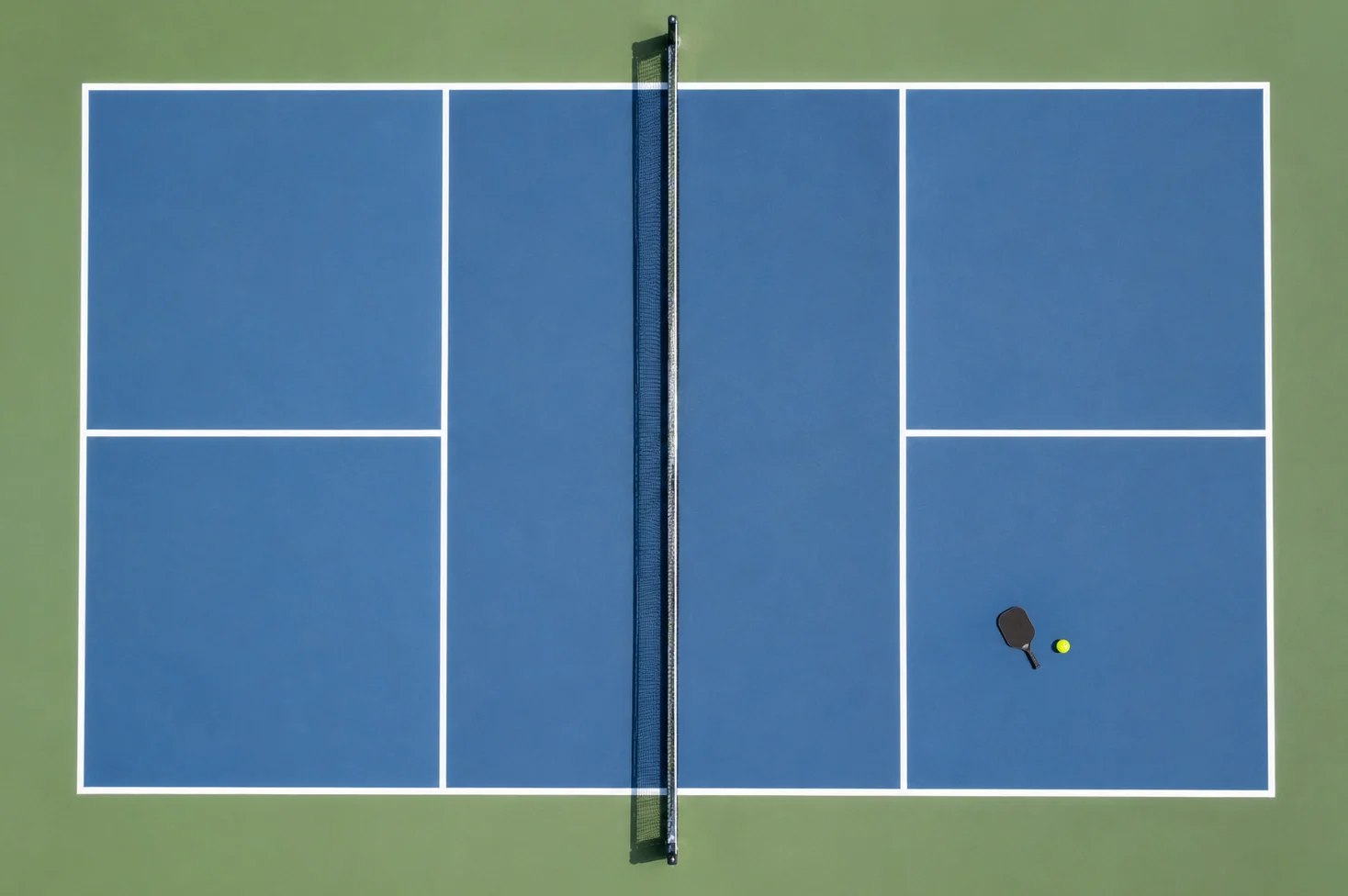
A pickleball court measures 20 feet by 44 feet, about the size of a doubles badminton court. A tennis court runs 78 feet long and up to 36 feet wide for doubles, so four pickleball courts fit inside one tennis court footprint. Plenty of clubs just paint pickleball lines onto existing tennis courts and share the space.
The smaller court rewards different habits. Tennis pays you back for long strides and big groundstrokes from the baseline. Pickleball pulls the action toward the net, where points are won and lost in tight exchanges. Your first instinct is to hang back at the baseline the way you do in tennis. Resist it, because the front of the court is where the game lives.
Net height shifts a little too. A tennis net sits at 36 inches in the center. A pickleball net drops to 34 inches, and that small gap opens up sharper angles and lower drives than a tennis net would catch.
Your Racket Skills Transfer, but the Gear Feels New
A pickleball paddle and a tennis racket are cousins, not twins. Tennis rackets use a strung head that creates spin and power through the string bed. Pickleball paddles are solid-faced, built with a carbon or composite skin over a polymer core, so the ball leaves the face flatter and faster. There’s no string bed to load, which is the first thing most tennis players notice.
Paddles also run shorter and lighter than rackets, usually 7 to 8.5 ounces. That lighter weight is part of why tennis players call pickleball easier on the shoulder and elbow. The range of pickleball paddles now spans control shapes to elongated power builds, and the elongated models hand former tennis players the reach and pop they miss from a longer racket.
The ball is the other clean split. Tennis balls are felt covered and pressurized to bounce high and take heavy topspin. Pickleball balls are hard plastic with drilled holes, closer to a wiffle ball, so they fly slower and react more to wind outdoors. That slower ball is what creates the patient rallies pickleball is known for.
The Rules That Will Trip You Up at First
Scoring is where pickleball and tennis split hard. Tennis counts 15, 30, 40, game, with six games to a set. The traditional pickleball game plays to 11 points, win by 2, and only the serving team can score. You call the score out loud before every serve, which feels odd at first and then turns into second nature.
Three rules catch tennis players off guard. The first is the underhand serve. You strike it below waist level and send it on a diagonal into the service box, and you get one attempt, not the two you lean on in tennis. The second is the two bounce rule. The serve has to bounce before the return, and the return has to bounce before the serving side hits it, so nobody storms the net off the serve. The third is the non volley zone, which every player calls the kitchen. It runs seven feet from the net on both sides, and you can’t volley while standing inside it. That one rule shapes how every point plays out. For the full set, the USA Pickleball official rulebook is the reference clubs follow.
What Feels Familiar Right Away
Tennis players pick up pickleball fast. The footwork pattern sits close enough that you won’t think about it, and hand speed at the net transfers almost completely. Tennis players often own the quickest hands in a beginner group, so volleys and reflex exchanges feel natural from the first session.
The adjustments land in three places. You take pace off the ball instead of swinging through it, you trust the paddle face for control rather than spin, and you treat the kitchen line as a hard line rather than a suggestion.
Should You Add Pickleball to Your Week?
Neither sport is better, and you don’t have to choose. Tennis rewards range, shot variety, and long physical matches. Pickleball rewards reflexes, placement, and patient dinking at the net. If you want a lower impact game on the days your body asks for one, it fits without taking anything from your tennis.
Most tennis players who try it keep both. They play tennis, they add pickleball for the social games and the faster net play, and the rivalry stops mattering once both sit on the calendar. Borrow a paddle for your first few outings, then pick one that matches how you already play. If you swing for power on a tennis court, an elongated paddle will feel like home.


More tennis news
October 12, 1998: The day Lindsay Davenport became world No 1 for the first time

“That’s already a small death”: beaten in Shanghai, Mannarino describes what it costs to keep up at 38


Wildcard Zheng stuns Andreeva to win first WTA 1000 crown on home soil in Beijing


Gea stuns Shelton for first Top 10 win and reaches Shanghai last 16 on Masters 1000 debut

October 11, 1940: The day Wimbledon was bombed during World War II