“Winning ugly” at 39: the maintenance behind Djokovic’s record days
Novak Djokovic set a new Wimbledon record with his 106th win, surpassing Roger Federer. At 39, he candidly spoke about his ‘ugly’ victory, detailing the extensive physical and mental maintenance, including advanced recovery and a mindset to endure, that keeps him winning.
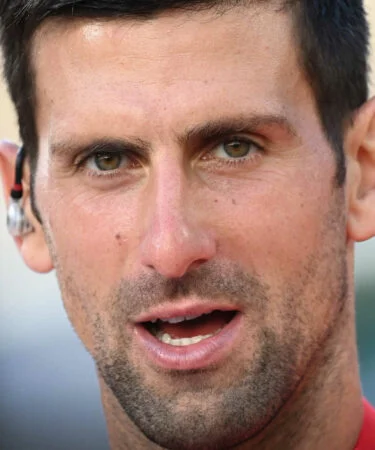
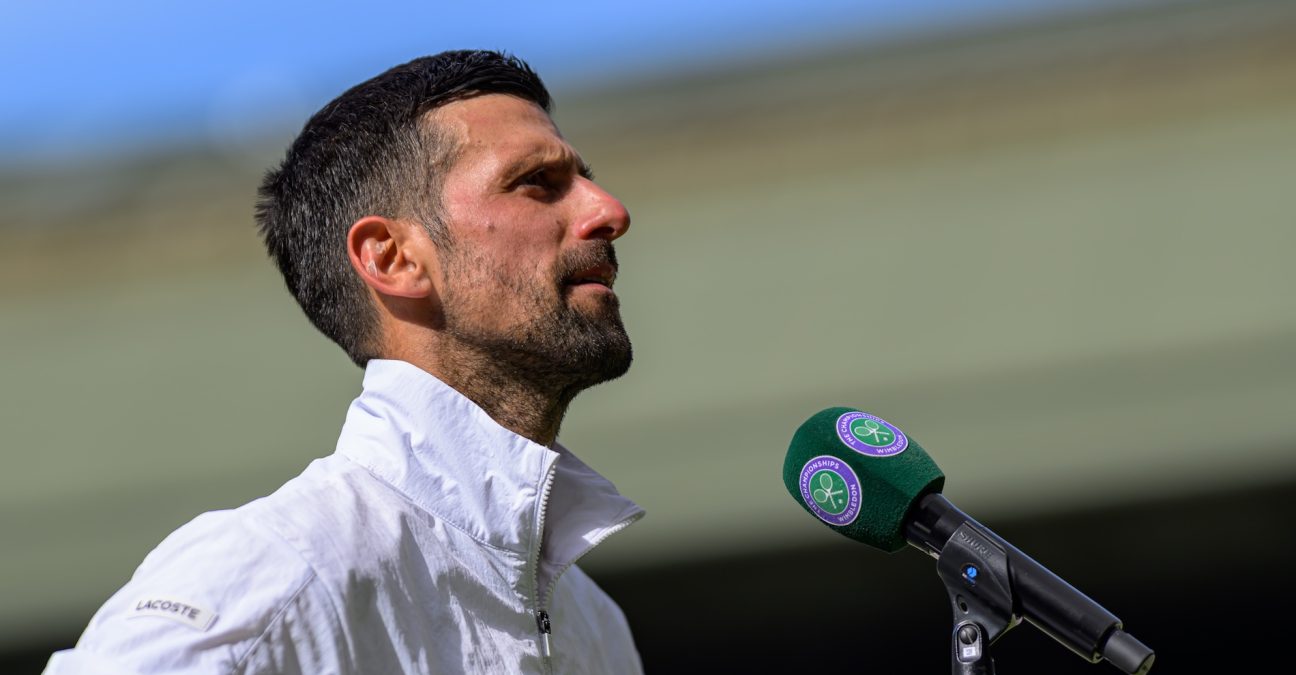 Novak Djokovic, Wimbledon 2026 | © PsNewz

Novak Djokovic made history at Wimbledon on Sunday and could not have sounded less interested in it. His 106th match-win at the All England Club, a 7-6, 6-3, 3-6, 6-3 defeat of qualifier Roman Safiullin, carried him past Roger Federer into sole possession of the record for the most men’s singles wins in the tournament’s history.
Told of the milestone, he offered a shrug. “Not on my priority list, to be honest,” he said. “I haven’t thought about it. I didn’t even know about it until after the last match win. That’s really quite insignificant to me at the moment.”
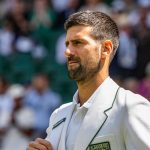
The win was also Djokovic’s 17th Wimbledon quarterfinal, second only to Federer, and his ninth in a row at the tournament. At 39, he became only the third man in the Open Era to reach the last eight here aged 39 or older, after Ken Rosewall and Federer himself (Wimbledon 2021). None of it, he insisted, was on his mind as he walked off court. What was on his mind was how little he had enjoyed the tennis that got him there.
Djokovic “relieved” more than “happy”
“Satisfaction and enjoyment were not part of today’s win, to be honest,” he said. “I’m relieved and happy to win it, but I haven’t enjoyed it. Hopefully the next match will be better in that sense.” The problem, he was careful to note, was not his body. “It wasn’t physical – physical was kind of okay. Just game-wise, I didn’t enjoy my tennis,” he said, handing the qualifier a share of the credit.
“It’s also due to him putting a lot of pressure on me, playing well. I struggled to find the level I’m looking for, the one I had in the second round particularly. But a win is a win, even if you win ugly. Hopefully I can build from this.”
For a player of his standards, accepting an ugly win is its own discipline. “I’m a perfectionist at core. I always want the best game, the best performance, for myself and for others and for the crowd,” he said. “It’s not always possible, and sometimes it’s hard for me to accept that and deal with it. It’s always like that fresh off the court. You need to just move on, learn, and be better next time.”
Moderns science
Asked to recall other majors where he had felt this flat and gone on to win the title, he smiled at his own fallibility. “My memory is not really good these days,” he said. “But there have been more than a few where you go through a difficult match or two on the path to a championship.”
If the game comes and goes, the maintenance never stops – and, by his own admission, it has never been heavier. “The amount of time I spend recovering nowadays is more than I have ever done,” he said. “It’s the demands of the body, more swear and tear. I can’t say I always enjoy it. It takes away a lot of time. But it’s part of the process, an adjustment to the body changes of the late years.”
What follows is a tour of modern sports science. “Throughout my career I’ve always tried to look for what can give me an edge, the best recovery and wellness technology out there,” he said. “Hyperbaric chambers, cryo chambers, cold immersions, red light therapy, pulse electromagnetic therapies. There are a lot of things I’ve used and I’m still using.” Experience, though, has taught him restraint as much as accumulation. “Sometimes less is more. You just have to feel what really works for you.”
I enjoy the battle. I enjoy the suffering, in a sense, to some extent – even though I don’t want it, I don’t invite it
The mind has been recalibrated to match. Where the object was once to dominate, now it is often simply to endure. “I enjoy the battle. I enjoy the suffering, in a sense, to some extent – even though I don’t want it, I don’t invite it,” he said. “If it happens, you just have to grind and look for a way to win. That’s what I did again today, against another inspired opponent who played really high-level tennis. I’m happy that I managed to find a way, because that’s the end result I’m always looking for.”
Not every part of the grind is serene. Djokovic acknowledged the flashes of temper that still surface – a warning here, a muttered outburst there – and framed them without pretence. “Sometimes it helps to filter things that are building inside,” he said. “It’s not something I’m proud of when I get a warning and have a meltdown. It’s not something I’m looking for. But when it happens, it happens. You just try to eliminate it, not think about it too long, and move on to the next point and the next task at hand.”
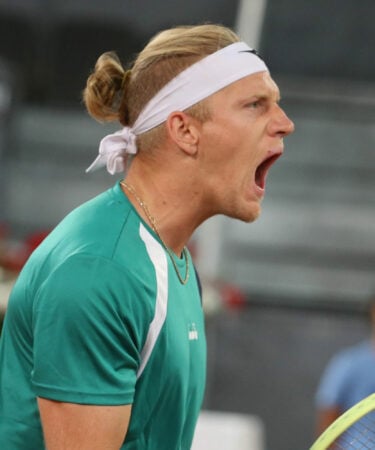
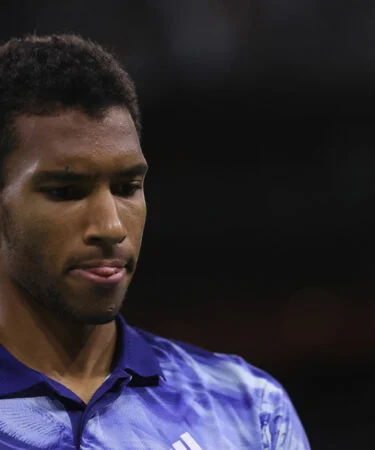
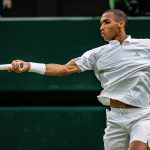
There will be another test soon enough – a quarterfinal against the winner of Felix Auger-Aliassime and Alejandro Davidovich Fokina – and, should the fortnight keep breaking his way, the prizes that would genuinely move him: an eighth Wimbledon title to equal Federer, a 25th major to stand alone.
Those are the numbers that still register. The one he set on Sunday, the one everyone else spent the evening celebrating, barely did. At 39, Djokovic has broken so much that records have become background noise. Only the trophy still pays him back – and, as he made plain, the past does not. “Quite insignificant to me at the moment…” A 25th Grand Slam might be the only legitimate thing to consider.