“You create the best humans”: Sandra Zaniewska, the coach who set Marta Kostyuk free
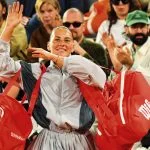
Before she meets Linda Nosková in the Wimbledon semi-finals on Thursday, Marta Kostyuk owes her rise to a coach who refused to change her. Sandra Zaniewska, once a No. 142 who was never let be herself, now builds players by doing the opposite. She told her story to Tennis Majors.
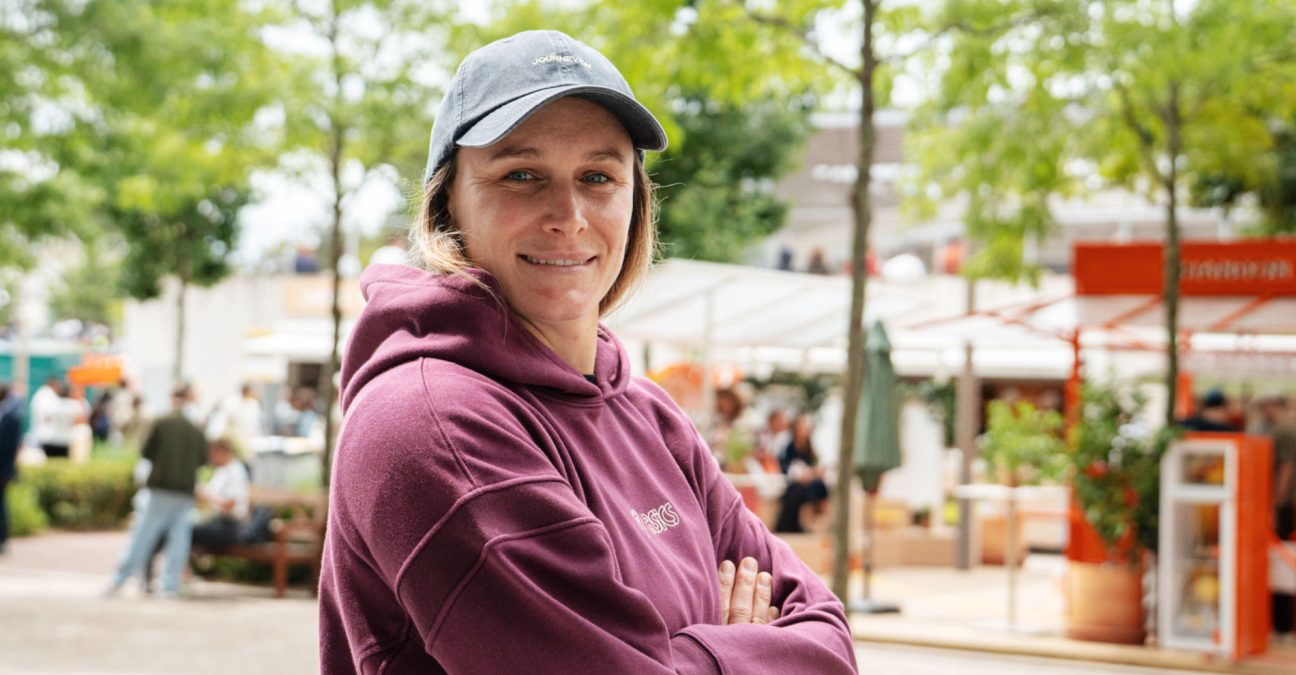 Sandra Zaniewska, 2026 | © Julien Nouet / Tennis Majors

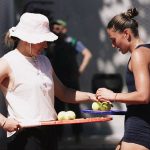
For most of her career, Marta Kostyuk had one reflex when things went wrong. “My default was I need to change everything,” she said at Wimbledon this week, into her second consecutive Grand Slam semi-final. “I need to change the coach, I need to change the whole team, nothing’s working, everything is very emotional. It’s been like that for quite a while.” Then, in July 2023, a Polish coach named Sandra Zaniewska walked into her life, and the reflex stopped. “Working with Sandra kind of healed it,” Kostyuk said.
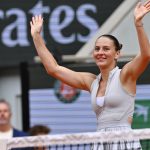
At this time Kostyuk had no coach – she had cut ties with everyone – when a mutual manager arranged a trial week in Monaco before Washington in 2023. She spent that week in pieces. “I was crying on the practice every single day,” she has said before her Roland-Garros semi-final, “and she didn’t say one word about it.” Every coach before had reacted the same way: “They would flip after the second practice, and they wouldn’t let me do anything. They would tell me I have to change.” Zaniewska did the opposite of flip. “I was very surprised with how composed and calm she was when I had this storm happening in my head,” Kostyuk said. “She let me be who I am.”
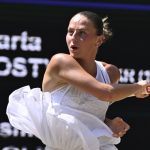
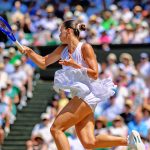
No coach, she said, ever let her be who she was
That phrase – she let me be who I am – is the hinge of the whole partnership, and when it was read back to Zaniewska in an interview at Roland-Garros, it visibly moved her, because she recognised it as her own wound.
Zaniewska was a modestly ranked player, a career-high No. 142 who made her Wimbledon main-draw debut through qualifying in 2012 and retired in 2017. She never played the flat, orthodox women’s game. “I had a heavy forehand, I played a lot of dropshots, I liked coming to the net,” she said. “Everyone always wanted to make me more of a ‘female’ player, a more flat-hitting player, and that never really worked.”
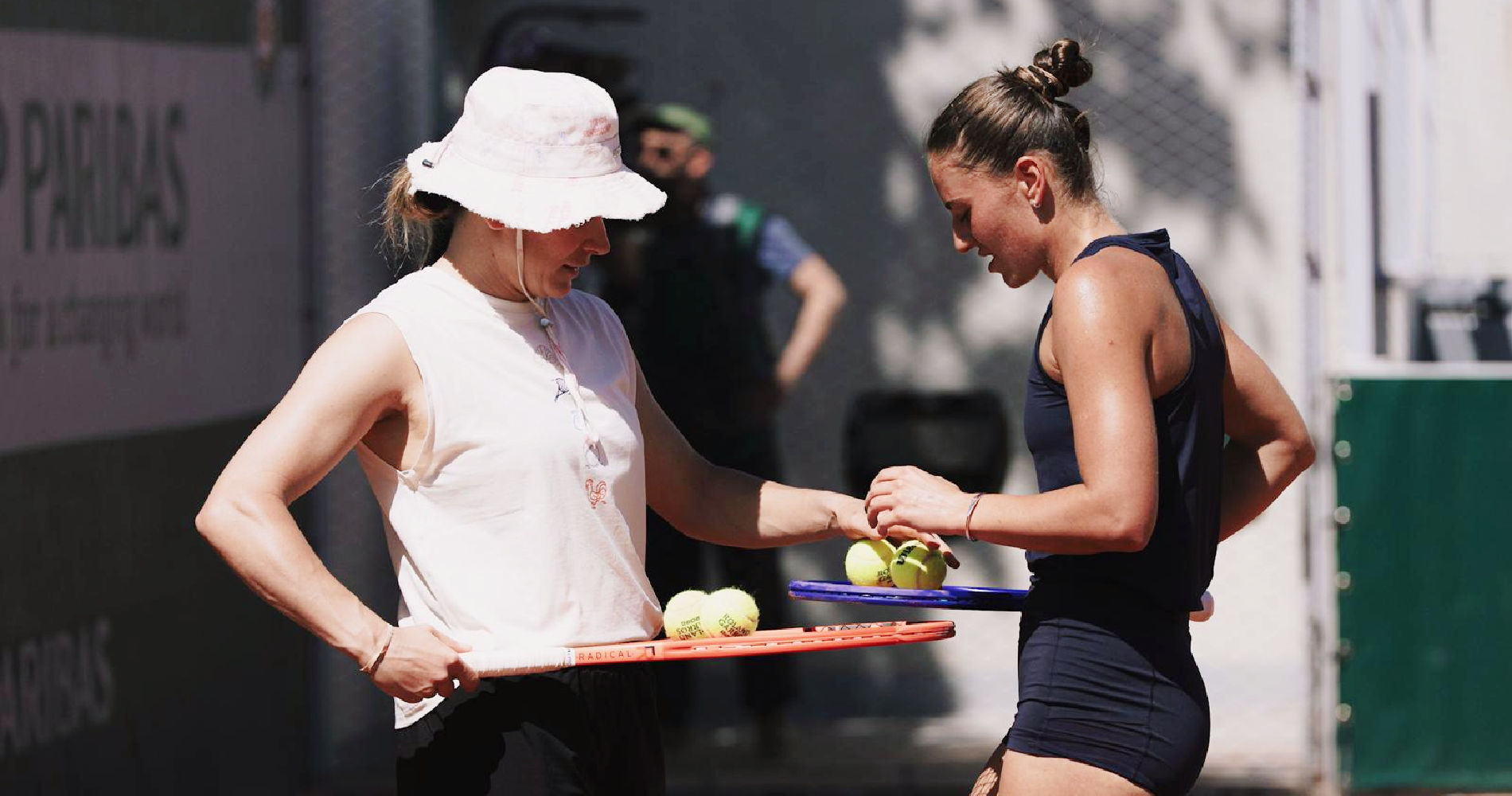
No coach, she said, ever let her be who she was – until the very end. “For the majority of my tennis life I felt like I was with someone who just misunderstood me constantly. So as a coach, I always wanted to give this to my players, to never make them feel that way.” The coaching philosophy she now lists on her WTA page follows directly: the best coaches don’t create the best players, they create the best humans.
If that sounds soft, the results are not. Zaniewska is not a feelings coach who happens to be in the box; she is a proven builder. Full-time with Petra Martić within a year of retiring, she took the Croatian from No. 90 to a career-high No. 15 across 2018–2019, with a maiden WTA title in Istanbul and a Roland-Garros quarter-final.
Marta said : ‘I’m still twenty-eight in the world’. And I said, ‘just wait’
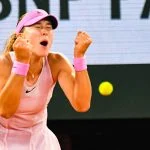
What she brings Kostyuk is a cold, data-first method under the warm surface. “We never make results goals,” she said. “I always think results are just a side effect of the things you do.” What they measure instead is granular: ball speed, points finished at the net, the winning percentage behind first and second serve. It was that data, not a hunch, that told her Kostyuk was about to erupt. “In March she was very close to being top ten in the stats,” Zaniewska recalled. “I told her – in Miami, after she lost to Rybakina – and she was like, ‘yeah, but what the hell, I’m still twenty-eight in the world’. And I said, just wait.” Kostyuk won Madrid weeks later and reached the Roland-Garros semis. Her only loss in three months.
The deepest work, though, was on the thing that used to sink Kostyuk: tying her worth to the scoreboard. “I’ve done a lot of very deep work on understanding where my worth is coming from,” she said this week after qualifying for the quarters defeating Krueger. “It’s not coming from being a tennis player.” She calls it harder than anything on court. “Changing these habits was the most difficult thing I’ve ever had to experience. Playing tennis is much easier than doing this, because it takes much longer, much more work, much more self-awareness. »
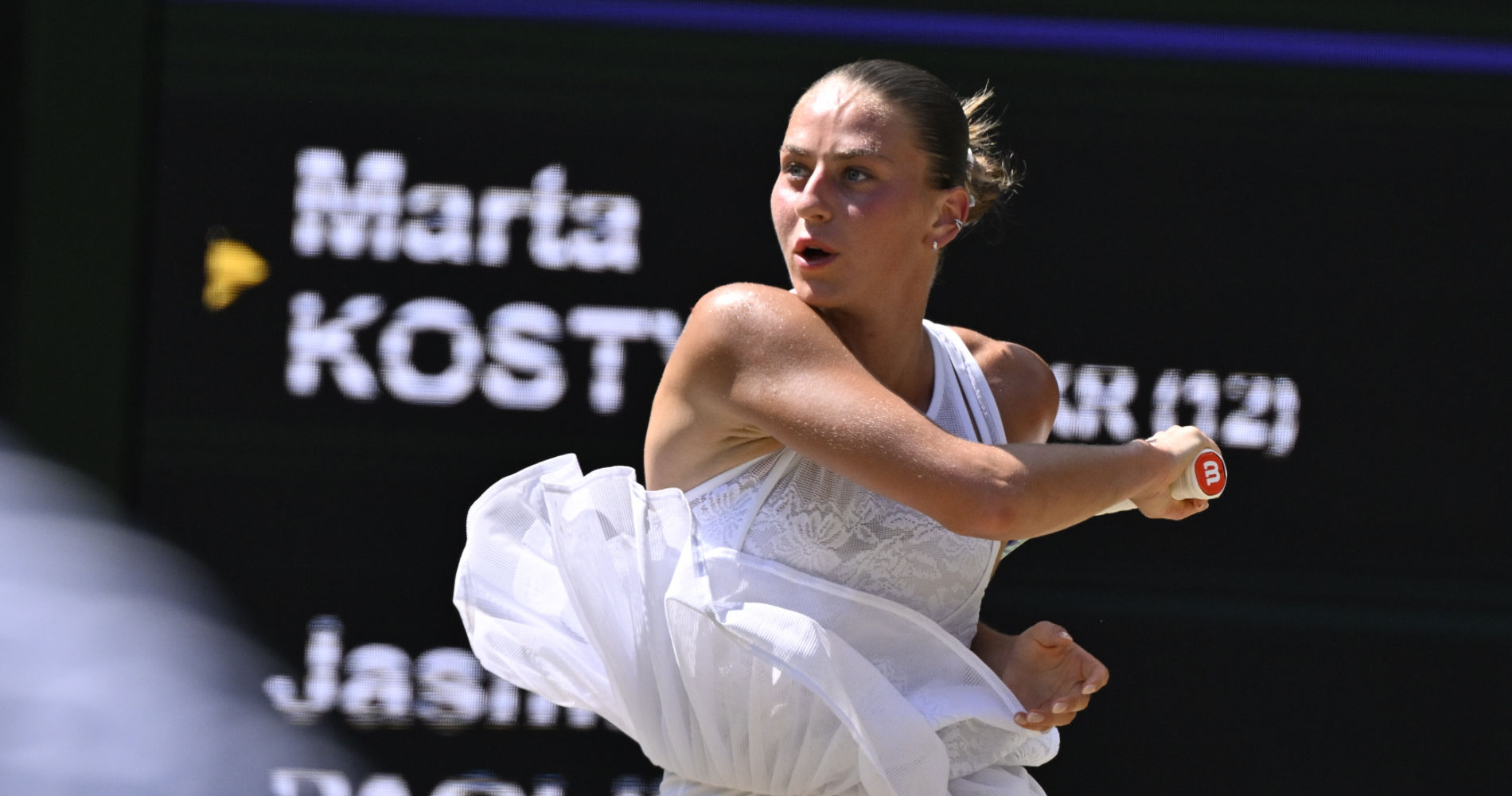
Zaniewska’s role in that is not to fix it but to hold steady while Kostyuk fixes herself. When Kostyuk arrives at practice with tears in her eyes over the war at home, Zaniewska does not push. “I cannot relate to this – I don’t have a family living in a country under attack,” she said. “I’m not trying to give opinions or advice; that would be hypocritical. I’m here to give her a hug, and that’s it.”
Grass was not for KostyUk
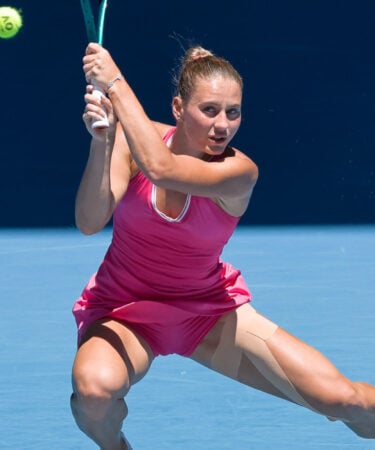
This fortnight brought another proof of that effectiveness – on grass, the surface that had always humiliated Kostyuk. “A lot of years I played here, I played horrendous,” she said. “It was a really complicated relationship with this surface.” Losing every practice set in the build-up, she turned to Zaniewska for a verdict. “I go: ‘can you please tell me, honestly, right now, if you think grass suits my game?’ She said, 100%.” Kostyuk is an all-court player, her coach highlights. She will play the semi-finals on Thursday against Linda Noskova – and Wimbledon grass had been, of all things, Zaniewska’s own worst surface as a player.
A No. 142 from Katowice, a 2009 junior Australian Open doubles finalist alongside Aleksandra Krunić: Zaniewska never wanted to coach at all — “I’d given my life enough to this sport already” — and yet is now becoming one of the biggest names in the business, exceptional at the one thing done to her that she refused to repeat.
That was the first moment where I thought: okay, this is really cool. I’m loving it…
“When you get hurt in any way in life, you can use it both ways,” she said. “Either you hurt more and become the same, or you do the total opposite and go completely the other way. For me it’s such a strong thing that I went completely the opposite way.” That instinct – to give her players the freedom no one gave her – is what she measures herself by, above any scoreline. “For me, her feeling this way is much more important than any result she will ever achieve.”
And the special moments are what convince her it was worth it. Zaniewska had hers early in her first partnership, courtside on Court Philippe-Chatrier, watching Petra Martić win. “The court that I dreamt of being on, that I watched Rafa win on so many times as a kid, still as a really little girl – and now I’m sitting here experiencing all this, being the closest person to the player on this journey,” she said. “That was the first moment where I thought: okay, this is really cool. I’m loving it.”
She is one of vanishingly few women coaching at the top of the WTA, and she is clear-eyed about why there won’t soon be parity: the travel, she says, collides with the families women are more often expected to raise. But she is not done reaching. Asked whether she would coach on the men’s tour one day, once her time with Kostyuk ends, she did not hesitate.
“I would love to. I think it would be an incredible challenge – a very different game, a very different way of communicating. I’d be very happy to get a chance like that.” Since Amélie Mauresmo coached Andy Murray (2014-2016), no woman has coached a top man. But we may now know who’s next.