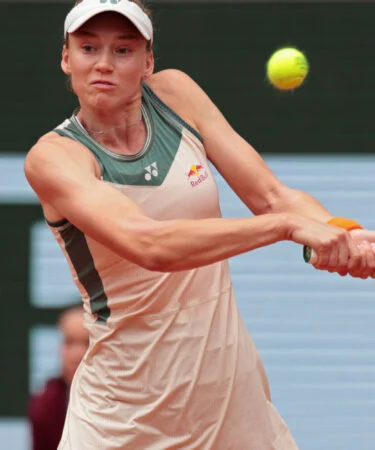
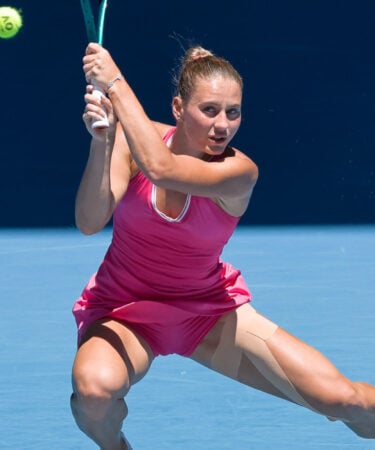
“Results are just a side effect”: Coach Sandra Zaniewska on the season that took Marta Kostyuk to a maiden Grand Slam semi-final
Marta Kostyuk arrived at her first Roland-Garros semi-final on a 16-0 clay-court streak, with titles in Rouen and Madrid and a career-high ranking of No. 15. Her coach of two and a half years, the former player Sandra Zaniewska, explains to Tennis Majors the thinking behind the run.
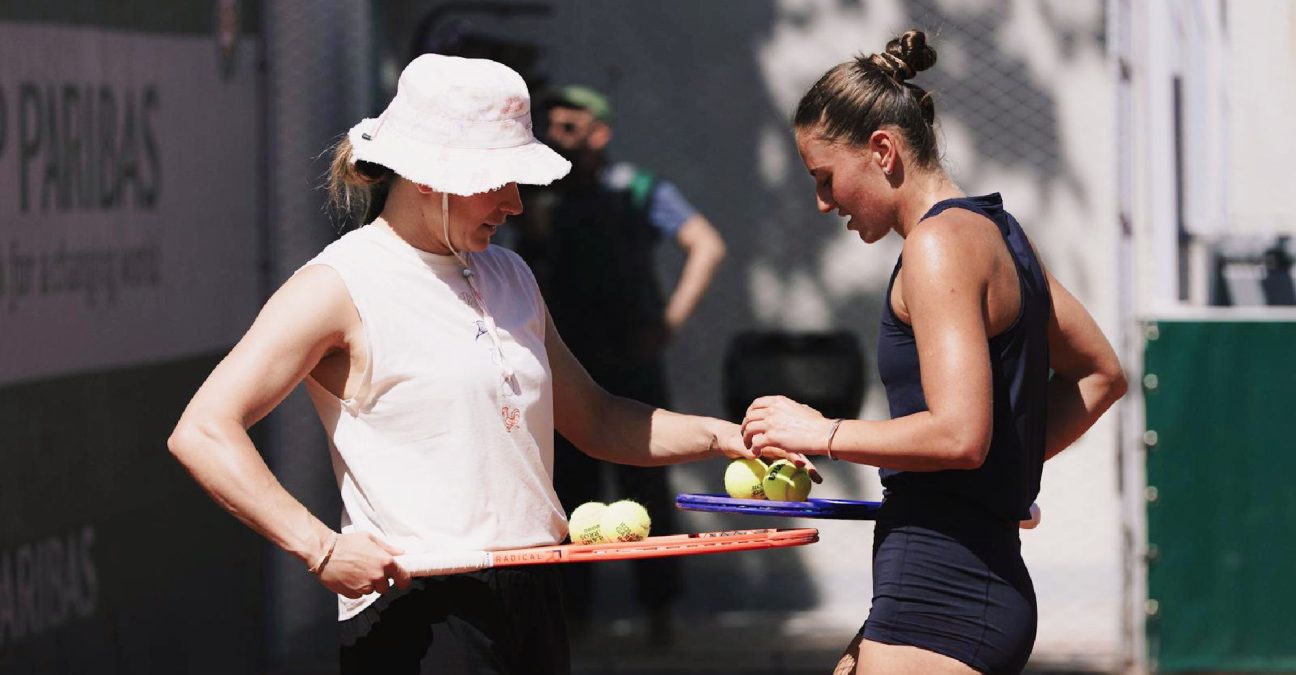 Sandra Zaniewska and Marta Kostyuk | © Owen Reynoldson

Tennis Majors: Marta is undefeated on clay in 2026. She has won her first Masters 1000 this season. She will be at least 12th in the world on Monday, even more if she wins her Roland-Garros semi-final. You have shaped one of the most successful player on the WTA Tour. Did you set results goals for this season?
Sandra Zaniewska: No, we never make results goals. I always think results are just a side effect of the things you do, so we focus more on the goals we can measure through the data on court. It can be the speed of the ball – that was one for us last year. After matches she’d be like, “what was the speed of my ball?” We were laughing about it, because I said: I think we can up it by a couple of kilometres — and we clearly did. But yes, ball speed sometimes; the amount of points you finish at the net; the winning percentage after your first or second serve. This kind of data.

Tennis Majors: Could you see this run coming, earlier in the year?
Sandra Zaniewska: Well, we had a clear data clue, I’d say, because I think in March she was very close to being top ten in the stats. I told her that – in Miami, after she lost to Rybakina – and she was like, “yeah, but what the hell, I’m still twenty-eight in the world.” And I said, “just wait, we just need to play tournaments, just wait”. I couldn’t predict exactly what was going to happen, but I knew that what she was doing on court was the right thing. It was clearly paying off stats-wise, and she just needed to continue for it to show up in the ranking.
I don’t know why this run on clay to be honest. I think she could explode on any surface, really.
Tennis Majors: Why has it come together specifically on clay?
Sandra Zaniewska: I don’t know why clay to be honest. I think she could explode on any surface, really. I wouldn’t attribute it to clay. Maybe she’s able to do so well, especially here, because she’s very good physically, aside from all the other things she does great: hitting the ball, being aggressive, the returns, the serving, playing very well tactically. Maybe it’s also the movement that helps.
Tennis Majors: Marta has said tin Madrid hat being a young prospect very early was like a curse. Is that something you’ve worked on?
Sandra Zaniewska: Yeah, I think it was more of a curse before, and now it’s more of a blessing, I’d say. It’s the best if you can transform a curse into a blessing. She was so good so early, and emotionally she just wasn’t ready for it – and not just her; any player that young, dealing with such success and such attention, will not handle it as a fully functional adult. That’s normal. So it took a while for her to process that inside herself, to be able to use it as something good rather than something that was weighing her down.
Tennis Majors: Does she now believe, as you do, that the sky’s the limit?
Sandra Zaniewska: I think she knows it rationally. Emotionally… You know, players chase each other, they compare themselves to others in terms of their tools and results, and when you do that, it’s normal that emotions get in. So it’s a process of her getting there. Maybe she’s there already, to be honest. But for sure, the further you go, the more confidence you get – it’s proof that you’re doing the right things and that you can go even further.
Tennis Majors: You seem to have a special relationship. On Tuesday, when Marta was asked about you, she mentioned you let her be who she is since the start, which was unusual and a great asset for her. What was it like to hear that?
Sandra Zaniewska: It touched me so much, because I realised I had that problem when I was a player – no coach ever let me be who I was. For the majority of my tennis life I felt like I was with someone who just misunderstood me constantly. So I always wanted to give this to my players, to never make them feel that way. It’s such a powerful thing: when you get hurt in any way in life, you can use it both ways – you either hurt more and become the same, or you go completely the other way. For me, her feeling this way is much more important than any result she will ever achieve.