“A Grand Slam is nothing compared to that”: the battles Marta Kostyuk won with herself before she ever reached a semi-final
Marta Kostyuk lost her first Grand Slam semi-final, but for her, the real victories happened off-court. She details her profound personal transformation since the war, crediting therapy and a shift in perspective for her newfound equanimity and success, valuing internal battles over on-court results.
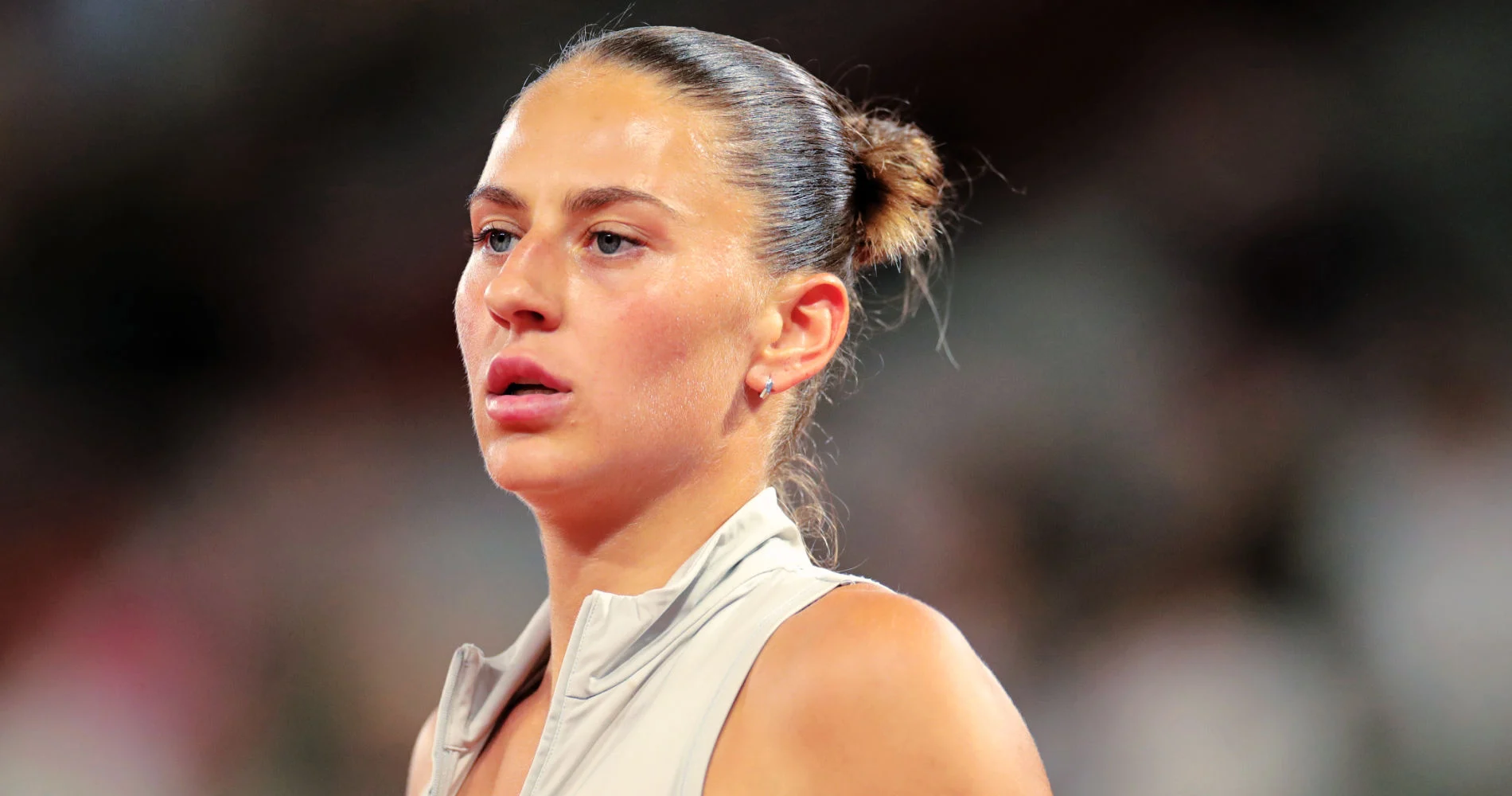
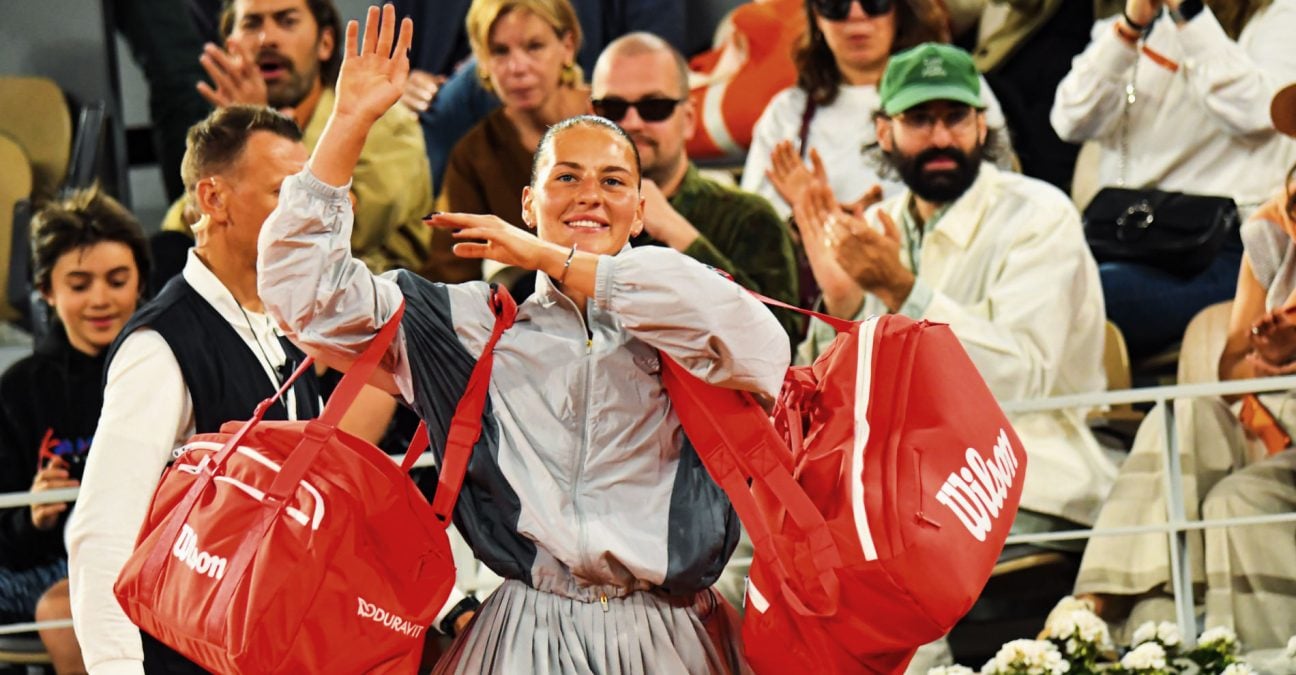 Marta Kostyuk, Roland-Garros 2026 | © PsNewz

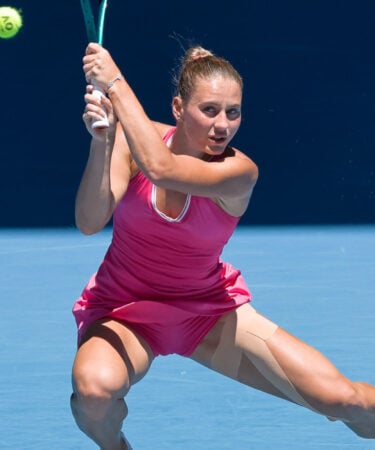
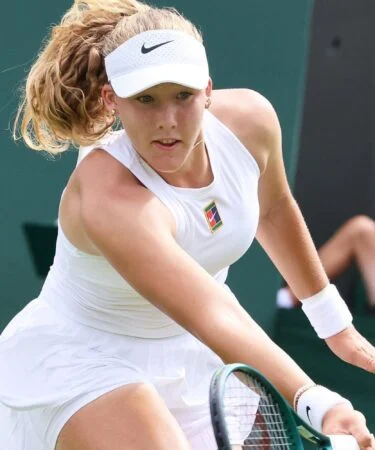
Marta Kostyuk lost her first Grand Slam semi-final on Thursday, beaten by Mirra Andreeva, and with it went a 16-match clay-court winning streak that had carried her through the best spring of her career. She walked into her press conference and, asked what she would take from the fortnight, did not reach for the result. “For sure my streak,” she said.
“I take it with me to the grave.” It was the lighter version of a point she would make, more seriously, a few minutes later. The tennis – the titles in Rouen and Madrid, the wins over Świątek and Svitolina, the first Ukrainian woman in an Open-era Roland-Garros semi-final – was not, in her telling, the hard part.
The hard part happened somewhere the scoreboard never recorded. “The battles I’ve won against myself, in my head – a Grand Slam is nothing compared to that,” the 23-year old said. “Nothing.” And then, almost as an aside: “Playing tennis is easy. It’s really easy.” Coming from a player who had just been dismantled, it might have sounded like consolation.
It wasn’t.
Control freak
Kostyuk has been describing this reordering of priorities, in pieces, all fortnight, and it traces to a single point in time. “When the full-scale war started, I realised I needed to change my perspective on life, because it’s clearly not just tennis,” she said. “That long process began, and it’s been over four years now.”
What that process produced was, by her own account, a different person. Asked who she had been before, she did not flinch. “I was very intense. I was a control freak,” she said. “I was very traumatised – I’m not going to hide it.” She was, she said, not happy, and not easy company for herself. “I didn’t like being with myself.” She named the controlling instinct as the worst of it, and was quick to add that there was nothing exceptional in any of this – “it’s a very common thing for people; it’s not like I’m any different from everyone.”
The repair work she credits plainly. “I love therapy,” she said, and the line drew a laugh, but the substance under it was serious: an intention, deliberately set, about the kind of player and person she wanted to become, and a slow movement toward it. “I’m arriving where I want to be, and how I want to be.”
The crucial sequence, the one she keeps returning to, is the order of events. The form did not fix the person; the person came first. “I changed first, and then the streak came,” she said. “Not that the streak came and then I changed.” The proof, for her, is in what the losing feels like now. “I already enjoyed playing and being at tournaments before the streak,” she said, “and now, not having the streak anymore, I’m the same.”
I’ve had enough tough days, bad days, to know it’s not the worst thing in the world to lose a match
She did not pretend her performance was good. “Obviously not the greatest match for me today,” she said, “but I don’t think about it that much.” A first semi-final, she reasoned, is its own form of education: “Next time, when I’m in a semi-final, maybe I’m going to feel better, different.” She has, she pointed out, banked enough bad days to keep one in proportion. “I’ve had enough tough days, bad days, to know it’s not the worst thing in the world to lose a match.”
There is a careful humility in how she now talks about her standing in the game, the same instinct that makes her resist letting one fortnight inflate into a verdict. “If I’m there, probably I belong,” she said of the company she is suddenly keeping, as a WTA 1000 champion (Madrid) and a Grand Slam semi-finalist. But she drew the line she always draws. “It’s one thing to get somewhere, another to stay there.”
Asked to weigh the semi-final against that moment, she did not hesitate: “I feel like this is the highlight of my tournament.” And then she was already moving on, to grass, to Queen’s, to Wimbledon, carrying the streak to the grave and not much else. “I still enjoy being here,” she said. She does not know how long the rest of it lasts – “I don’t know how long I’m going to be here playing tennis” – which is, perhaps, the final lesson of the four years she spent rebuilding the person who plays it.
So she does the only thing the work left her wanting to do. “I try to enjoy it to the fullest.”