Six arguments, six answers: how a New York judge kept the PTPA case alive
A US District Court judge has denied all six motions to dismiss an antitrust case brought by current and former players against tennis’s governing bodies. This ruling means the ATP, WTA, FFT, AELTC, and USTA must now proceed to discovery, opening their books and providing sworn evidence in a significant development for the sport’s future.
 PTPA case, illustration | © Shutterstock w/ Tennis Majors
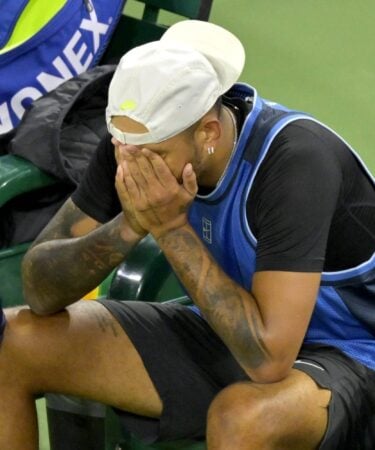
On September 30, Judge Margaret M. Garnett of the US District Court for the Southern District of New York issued a 66-page opinion in the antitrust case brought by fifteen current and former players and the Professional Tennis Players Association. The players include Vasek Pospisil, who co-founded the PTPA, Nick Kyrgios, Tennys Sandgren, Christian Harrison, Marco Trungelliti, Saisai Zheng, Varvara Gracheva, Sachia Vickery, Aldila Sutjiadi, Nicole Melichar-Martinez and Anastasia Rodionova.
The defendants are the bodies that run the sport: the ATP Tour, the WTA Tour, the Fédération Française de Tennis, which organizes Roland-Garros, the All England Lawn Tennis Club, which organizes Wimbledon, and the United States Tennis Association, which organizes the US Open. Between them they filed six separate motions designed to kill the case, shrink it, or move it somewhere less convenient for the players.
Garnett denied all six, which means the case now moves into its next phase, the one in which the defendants have to hand over documents and give sworn evidence.
Tennis Australia is no longer a defendant. It settled with the plaintiffs, and the court file records only that a settlement was reached and that all deadlines concerning it were suspended; the terms are not in the public record, and the removal was reported around the turn of the year. The International Tennis Federation and the International Tennis Integrity Agency were also defendants when the case was filed in March 2025, but the players dropped them when they amended their complaint on 24 June 2025.

1. what this ruling is not: a decision on who is right
At this stage a judge does not decide who is right. On a motion to dismiss, she must take the complaint’s allegations as true and ask one question: if all of this turned out to be accurate, would it describe a breach of the law? Garnett examined no evidence, heard no witness and tested no factual claim, because none of that is permitted at this point.
She was asked whether the players’ account, assumed to be true, describes an illegal restraint of competition under the Sherman Act, the American law that outlaws agreements between competitors that suppress a market.
Skepticism of a conspiracy’s existence is insufficient to warrant dismissal
Her answer is yes, and she said so in terms that cut both ways. The court, she wrote, must accept the complaint’s allegations “without giving credence to Defendants’ arguments about what they believe the facts will ultimately show.” When the Tours offered innocent explanations, she declined to weigh them, noting that choosing between two plausible readings “is not a choice to be made by the court on a Rule 12(b)(6) motion”.
And she quoted the governing standard plainly: “Skepticism of a conspiracy’s existence is insufficient to warrant dismissal; a well-pleaded complaint may proceed even if it strikes a savvy judge that actual proof of those facts is improbable.”
2. Why the WTA could not send its players to arbitration
The WTA argued that its Rulebook obliges players to take any dispute to the American Arbitration Association, a private body that resolves disputes out of court, in confidence, with no judge, no jury and no public record. For a defendant, it is by far the quieter option.
Garnett read the clause closely. It covers “any dispute … arising out of the application of any provision of this Rulebook”, and “application” means the enforcement of a rule in an individual case. In other words, the clause is built for the everyday disputes of the circuit: a player who thinks her ranking points were wrongly calculated, an entry refused, a fine she considers unjust.
This lawsuit is not that. The players are not saying the WTA misapplied its rules; they are saying the rules themselves are the product of an illegal agreement. As the judge put it, the plaintiffs “largely assume the opposite, that WTA applied its rules exactly as written.”
She also rejected the WTA’s fallback argument, that by referring to AAA procedures the Rulebook handed the arbitrator the power to decide even this question, because a narrow clause plus a reference to those procedures is not the “clear and unmistakable” delegation the law demands.
3. Why the US Open waiver did not work either
The USTA relied on the Legal Consent Waiver that seven of the plaintiffs signed in order to play the 2024 or 2025 US Open, which sends to arbitration any claim “related or incidental to” their participation. In other words: you entered our tournament, you signed our form, so your complaint belongs in private arbitration.
Garnett found that no named plaintiff had agreed to arbitrate these claims. Signing an entry form for a tournament is not the same as agreeing to arbitrate a conspiracy claim aimed at the structure of the whole sport.
4. Why each Tour (ATP and WTA) has to answer to the other Tour’s players
The ATP asked to be released from the female players’ claims, and the WTA from the male players’. The argument sounded like common sense: men and women play on separate tours, in separate markets, and have done for decades.
Garnett’s answer is the most revealing passage in the opinion. The plaintiffs do not merely observe that two circuits exist side by side. They point to the ATP and WTA bylaws, which restrict tournament operators from staging certain competing events; to an alleged agreement that neither Tour will organize events competing for the other’s players; and to the United Cup.
Combined men’s and women’s events are nothing new, from Indian Wells and Miami to Madrid, Rome, Cincinnati and, in its own way, the Canadian Open, but those are run by tournament operators. The United Cup is owned and operated by the two Tours themselves, which is why it matters here.
Then comes the mechanism, in a sentence worth quoting in full: it is “more than plausible, for example, that if WTA lifted its restrictions on prize money sanctioned tournaments could pay to female tennis players, that would dramatically increase the market pressure on ATP to lift its corresponding restrictions on prize money for male players.”
Each Tour, on this theory, benefits from the other holding the line. The complaint also alleges a concrete instance: both Tours rejected a proposed prize-money increase at the BNP Paribas Open, the Masters 1000 and WTA 1000 event at Indian Wells, which the players present as evidence of an agreement to keep the pay structure where it is.
5. Why Wimbledon and Roland-Garros must answer in a New York court
The AELTC and the FFT argued that an English club and a French federation have no business being sued in Manhattan. Garnett applied New York’s long-arm statute, which allows a court to take jurisdiction over a foreign defendant through the acts of a co-conspirator committed inside the state.
The co-conspirator is the USTA, and the act is the staging of the US Open, though not simply because it happens in New York. An overt act, in this context, means a concrete step taken to carry out an alleged agreement, and it need not be unlawful in itself. What counts, she writes, is what happens at Flushing Meadows: entrants are selected under ranking criteria agreed among the Slams and the Tours, players must hand over commercial rights without separate payment and comply with the Grand Slam Rulebook’s endorsement restrictions, and prize money is paid under arrangements the players say are constrained by the alleged agreements.
Because Wimbledon and the FFT sit in the shared governance structure that writes those rules and benefit from them, the USTA’s conduct in New York is attributed to them.
6. Why the Grand Slams could not get the claims dismissed
The three Slams still in the case argued that nothing specific connects them to a conspiracy. Garnett identified three written agreements: the Ranking Points Agreement, dating to roughly 1998, which links Slam results to Tour rankings and, on the players’ account, compels attendance within the system; the Grand Slam Rulebook, jointly written through the shared governance structure known as Grand Slam Tennis; and the ATP and WTA rulebooks and bylaws, which bind the FFT as operator of the Paris Masters and bound the USTA as operator of Cincinnati until 2022.
On harm, she lists the three effects the complaint pleads: compensation suppressed, including the allegation that players must assign their name, image and likeness rights “for $0 in return”; output reduced, because players who refuse the conditions cannot compete at all; and quality degraded, through compelled attendance and “an unreasonably long schedule”.
The Slams’ answers, that these rules fund their tournaments and protect their branding, may well prevail later, but they are arguments about evidence, and evidence is not weighed on a motion to dismiss.
7. Why the ATP is not going to Delaware
The ATP invoked a clause in its own bylaws designating Delaware as the venue for disputes with its members, and asked for the male players’ claims against it to be split off and sent there. Garnett acknowledged that such clauses should almost always be enforced, then found this to be one of the rare exceptions: splitting the case would mean the same players litigating nearly identical claims against alleged co-conspirators in two courts at once, with the risk of contradictory judgments.
8. Why the PTPA stays in the case
The Tours argued that the players’ association has no members, no injury and therefore no right to sue. The court found that it has associational standing, the right of an organization to sue on behalf of its members, relying partly on a declaration from Saisai Zheng confirming her membership, and noted that an organization is not required to name its injured members at this stage.
9. What happens now
The two sides, the fifteen players and the PTPA on one hand, the ATP, WTA, FFT, AELTC and USTA on the other, must tell the judge how they intend to proceed. They have to file a joint letter by three business days before 29 October, when they are due in her courtroom in Manhattan for a conference on next steps.
The defendants now have three ways forward. They can fight, which means discovery – handing over internal emails, contracts and financial records, and putting executives through depositions, where they answer lawyers’ questions under oath for hours at a time. They can settle, which means money, rule changes or both: Tennis Australia has already done it and is out of the case. Or they can try to appeal parts of the ruling, which rarely stops the clock, so the documents may have to be produced anyway while the appeal is heard.
What tennis has lost, in other words, is the chance to end this quietly. The next phase of the case is the one in which the sport’s governing bodies have to show how their system actually works.





People in this post





More tennis news
No. 118 Charaeva stuns Rybakina in her first match as world No. 1!


What happens to betting markets when tennis stars withdraw?


Sinner withdraws from Shanghai, Zverev eyes World No. 1 spot

Alcaraz recovers from 2-6 down in tiebreak, sweeps past Arnaldi into Tokyo quarterfinals

October 3, 1982: The day John McEnroe sealed a place in the Davis Cup final, after an endless journey and plane scare

