“Tennis needs a reset”: at Wimbledon, Novak Djokovic takes the floor on the future of his sport
After a hard-fought win over Wu Yibing, Novak Djokovic used his Wimbledon press conference to call for a complete reset of professional tennis, criticising the calendar, the Masters 1000 expansion and the disunity he sees among the sport’s governing bodies.
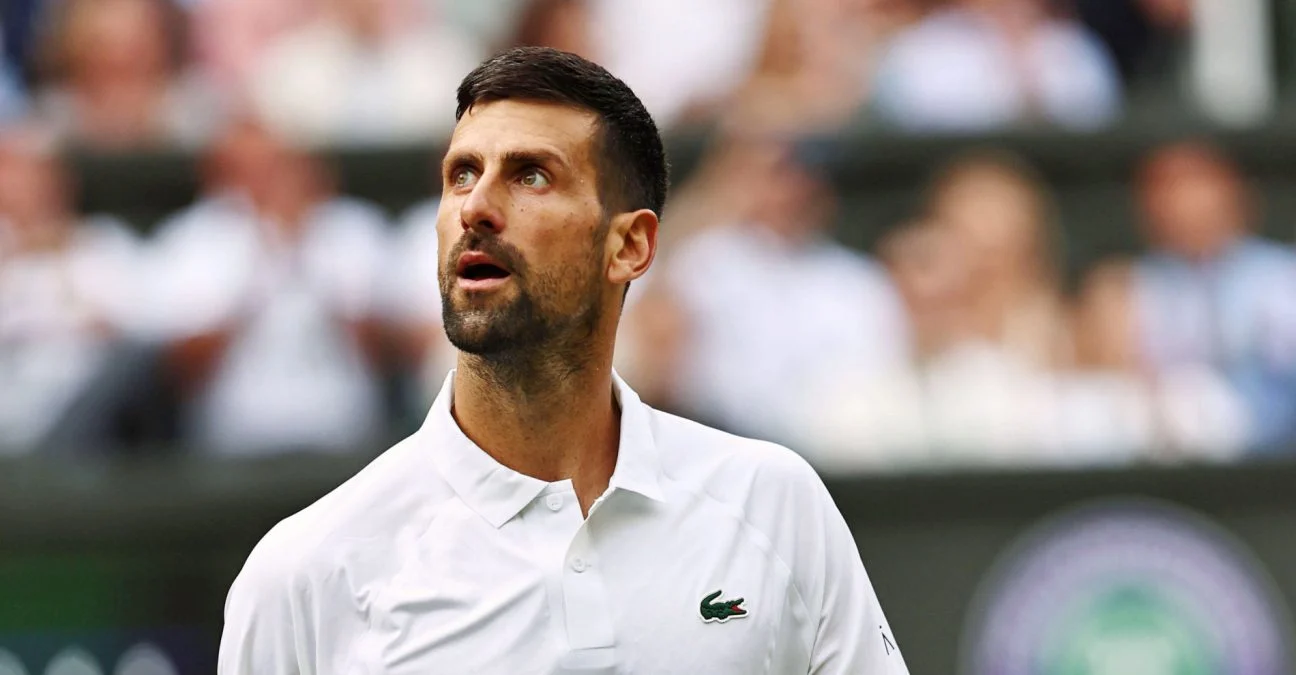 Novak Djokovic, Wimbledon 2026 | © Imago / PsNewz

There is a rhythm to Novak Djokovic’s Wimbledon press conferences. He plays, he wins, and then, almost as an afterthought, he sets aside the scoreline and speaks to the bigger picture – the direction of his sport, the forces pulling at it, the things he believes the people who run it are getting wrong.
Two years ago, in this same room after a third-round win over Alexei Popyrin, it was the rise of padel and the existential threat he saw it posing to local tennis clubs. On Monday night, having come through a tougher-than-expected opener against Wu Yibing (6-4, 5-7, 6-4, 6-4), the subject was grander still: nothing less than a wholesale overhaul of professional tennis.

“Tennis really needs a reset of some kind on a bigger level,” he said. “Our tours respectively are not functioning well at all.” It was the headline line of an answer that ran for several minutes, prompted by a question about the rise in injuries among young players, and it set the tone for a press conference in which the seven-time champion’s win felt like the least newsworthy thing he did.
Commercially it adds value, but adds value for who?
The dominant issue, he argued, is commercial. “That is probably overwhelmingly now dominant in our sport,” he said, “the commercial value that you are trying to increase by creating longer days, longer-duration tournaments, introducing two tournaments to the already congested calendar.” He acknowledged his own position is unusual. “I’m not playing nearly as much as I used to,” he said at the start of hi fifth event this season. “I have the luxury of picking and choosing where I want to play. I don’t get that exposure to this high-intensity calendar like most of the other players.”
The expansion of the Masters 1000 events to two weeks drew his sharpest criticism, and the most detail. It was a change he says he always opposed. “Commercially it adds value, but adds value for who?” the 39-year old said. “For the tournament owners mostly.” He walked through the economics as he understands them, describing how owners who upgraded facilities and built new stadiums are recouping those investments in their negotiations with the ATP.
Djokovic : If we want this sport to really improve…”
“We get the benefit and the profit of the stadium revenue only for the duration of the tournament, which is less than two weeks,” he said. “What happens the other 50 weeks is everything is going in the pocket of the stadium owner.” It was, he said, just one example of why he opposed a 30-year commercial deal he could not stop. “The players got the shorter end of the stick. They wanted that. They pushed for that,” he said. “I was at that point president of the council, but I didn’t have enough executive power to vote against it. Now they have to deal with it.”
He connected the structure directly to the toll on players’ bodies, and to the players he feels are squeezed hardest. “Latin American players have been for decades producing some of the best players in the world,” he said, lamenting their shrinking seasons across clay and hard court. The wider effect, he argued, is a sport forever patching itself rather than fixing anything. “We are trying to put a Band-Aid on everything,” he said. “Trying to fix something, take this tournament away.”
His prescription was a summit – every stakeholder, in one room. “If we want this sport to really improve and the tour to experience long, sustaining success in the next decades, and be able to compete with the popularity of all the other global sports, we just have to take all of the key players, sit down, and see what we can do,” he said. But he was openly pessimistic it would happen, and his diagnosis of why was bleak. “There’s a lot more conflict within the governing bodies of our sport than there is unity,” he said.
They’re not going to sit for four and five hours and watch tennis every day. It’s a short attention span.
Running beneath the critique was the same preoccupation that animated his padel comments two years ago: how a historic sport keeps itself relevant to people who did not grow up on it. He returned to research the Professional Tennis Players Association once commissioned. “The age of the average tennis fan around the world was 61,” he said. “With all due respect, how do we get younger people hooked on tennis?”
His answer was uncomfortable. “They’re not going to sit for four and five hours and watch tennis every day. It’s a short attention span.” On the tours, if not at the majors, he wants experimentation. “We have to change the format, have shorter matches, more dynamic, something more interesting,” he said.
“Grand Slams, that’s different.” He was careful, as ever, to frame himself as a custodian rather than an iconoclast. “I’m all for innovation and change,” he said, “because we have to retain the culture and history of our sport, which I’ve always respected.”

Open to a comeback at the PTPA ?
The reckoning extended to the players’ body he helped create. Asked about the turmoil at the PTPA, where a member lawsuit has exposed deep divisions, Djokovic was candid about his disenchantment. “PTPA is going through its own transformational period,” he said. He returned to first principles, explaining why he and Vasek Pospisil founded it.
“You cannot, as a player, make any difference in the players’ council of the ATP, full stop,” he said. “That’s the reason we co-founded the PTPA, with a desire to get a seat at the decision-making table.” He did not hide that it had drifted from him. “The direction went in a way that I did not like,” he said. “That’s why I stepped out.” But he left a door open. “I’m not excluding the possibility of coming back, because I care about it,” he said.