The clay court season: forging character on the road to Roland-Garros
The clay court season represents the ultimate crucible in tennis, offering a transparent window into a player’s psychological and physical limits. As the tour leaves the predictable bounces of hard courts behind, matches transform into grueling physical duels that punish a lack of tactical discipline. For fans, this stretch of the calendar subjects a player’s … Continued
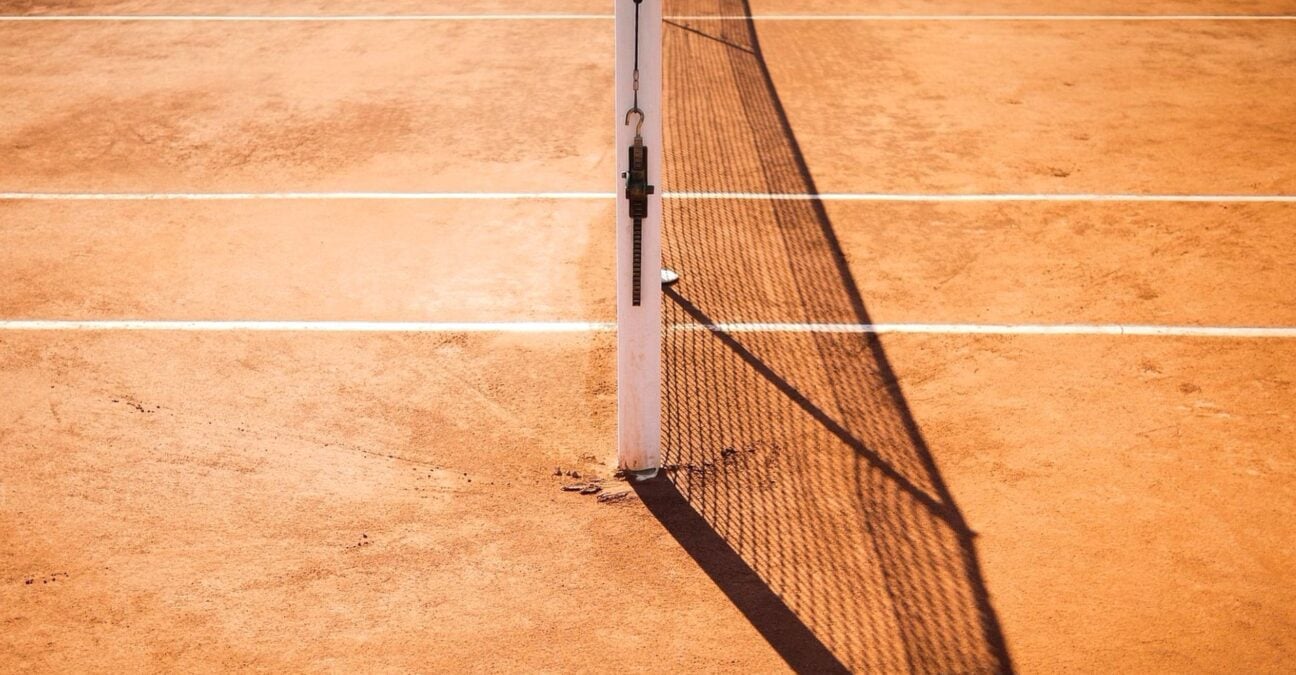 Clay-court tennis

The clay court season represents the ultimate crucible in tennis, offering a transparent window into a player’s psychological and physical limits. As the tour leaves the predictable bounces of hard courts behind, matches transform into grueling physical duels that punish a lack of tactical discipline.
For fans, this stretch of the calendar subjects a player’s form and reputation to intense scrutiny. Unlike the hard-court season, which is often defined by a single major, the European spring is a cumulative journey—a high-stakes collection of events that builds momentum toward its Parisian showpiece.
Early Tests: Monte Carlo and Barcelona
The swing ignites at the Monte Carlo Masters, a tournament that traditionally tests a player’s mastery of movement on a slow, punishing surface. Success in the Principality demands more than just endurance; it requires aggressive clay-court tennis. To overcome the heavy conditions, players must possess the firepower to hit through the court. This is why the tournament favors those with heavy, high-RPM topspin – exemplified by double champion Stefanos Tsitsipas – who can dictate play rather than merely reacting to it.
The Barcelona Open follows, favoring technical virtuosity. On these courts, players must showcase a complete arsenal, blending variety and precision to navigate a 500-level draw that rarely offers an easy path.
Madrid and Rome: A Study in Contrasts
The narrative shifts as the tour moves to Madrid and Rome—two Masters 1000 events that present diametrically opposed challenges.
In Madrid, the high altitude thins the air and accelerates the ball. These quicker conditions reward power-hitters and clinical shot-makers like Alexander Zverev, who can finish points efficiently. Conversely, Rome offers a traditional, heavier clay surface that demands supreme endurance. Here, defensive giants thrive, though the recent evolution of players like Daniil Medvedev – whose improved mobility has dismantled the “clay-court specialist” archetype, especially during de 2023 Rome edition – proves that adaptability is now the tour’s most valuable currency.
By the time the final ball is struck in Rome, the patterns of dominance are impossible to ignore.
The Ascent to Paris
All roads inevitably lead to Roland-Garros, where the unique demands of clay-court tennis reach their zenith. Only those with every facet of their game intact can survive a best-of-five format on dirt. This year, the spotlight remains fixed on Carlos Alcaraz.
His explosive athleticism and delicate touch make him a natural heir to the clay-court throne. Alcaraz’s ability to transition seamlessly from desperate defense to crushing offense has decided countless battles of attrition—cementing his status as the current favorite in the eyes of many analysts and betting markets, favourite according to NetBet’s tennis odds, our partner.
However, the field is deep. Jannik Sinner continues to sharpen his clay-court craft, looking increasingly dangerous in prolonged exchanges, while Casper Ruud remains a model of consistency, having repeatedly proven he has the stamina to go deep into the second week in Paris.
Why Clay Rewards Grit Over Status
The clay season rarely allows for a shortcut. Even the elite must constantly prove their physical and mental fitness, as the surface eliminates the “easy” points found on grass or hard courts. For the spectator, this produces a deeply satisfying narrative: a season where momentum is earned through sweat, not granted by seeding.
When the French Open begins, fans witness the culmination of months of adaptation and evolution. Roland Garros does not merely crown a winner; it rewards the player who has mastered the long, arduous journey to the finish line.