The ‘fun’ factor: How new formats are winning over the Tour’s toughest
Whether it’s facing legends or battling amateurs for AUD $1 million, the 2026 Australian Open reveals an industry transformed, where even the fiercest athletes are trading the tension of the locker room for the shared joy of the stadium.
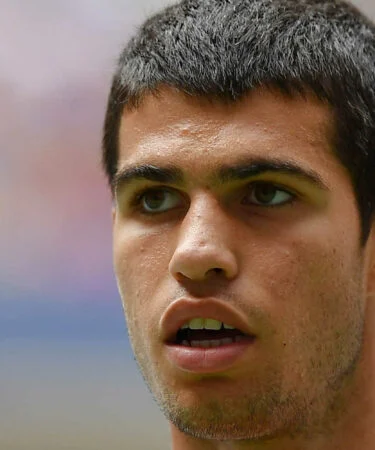
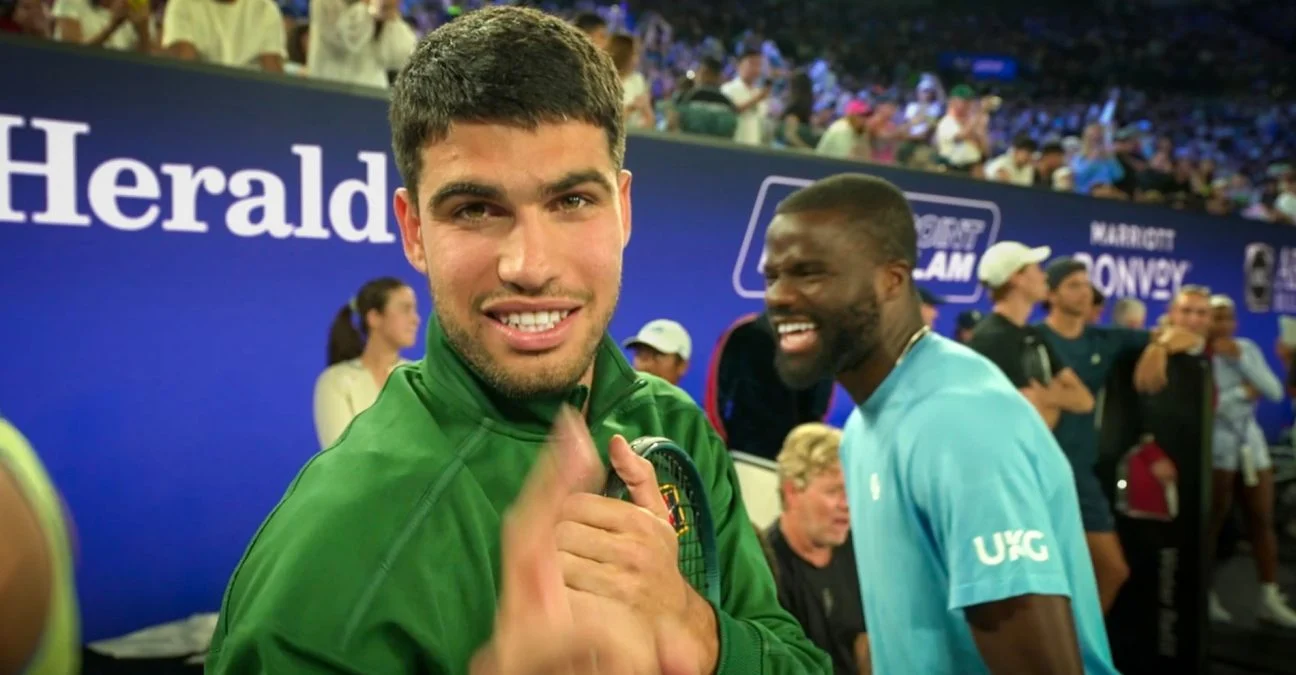 Carlos Alcaraz at the 1-Point Slam, Australian Open 2026 | © Tennis Australia / Tennis Majors

It’s not that long ago that players preparing for a Grand Slam event would have two main options for the week preceding the main draw. Either they played a warm-up tournament somewhere, honing their game on the match court, or they just took the week to practice, readying themselves for the conditions.
It always seemed to be an either/or situation and one that had its upsides and downsides. If you played a tournament the week before, maybe a few wins would be ideal but if you went all the way to the final, or won the title, then it is entirely possible you might run out of steam in the marathon that is a two-week slam.
If you took the week to practice, then you might feel fresh but you could be caught cold in the early rounds, especially if you met someone who was battle-hardened from the previous week. Few players win a title the week before a slam and actually go on to win, even if three of the past four Adelaide women’s champions have actually gone on to win the Australian Open. Clearly it depends who those players are.
Lately, though, the players have been given some fresh new options. This year’s Australian Open debuted the 1 Point Slam, a 64-player draw mixing professionals and amateurs, and offering AUD $1 million to the winner.
Million Dollar Drama: The Rise of Sudden Death Tennis in Melbourne
With only one serve, the popular choice was to receive, and drama ensued. Carlos Alcaraz lost to Maria Sakkari, Alexander Zverev lost to Joanna Garland, the world No 124 and an amateur, Jordan Smith, ended up winning the title. Check it out on YouTube and you’ll see great videos of all the players enjoying themselves, from Iga Swiatek to Naomi Osaka, Frances Tiafoe and especially Alcaraz, even if he still rues missing a drop shot to lose to Sakkari. “I had nightmares about the drop shot for two nights,” Alcaraz joked at Melbourne Park on Friday.
But in a sport that is so tense in the heat of competition, the players were revelling in the moment, chatting happily, cheering on the amateurs, in particular, and generally relaxing and having a good time.
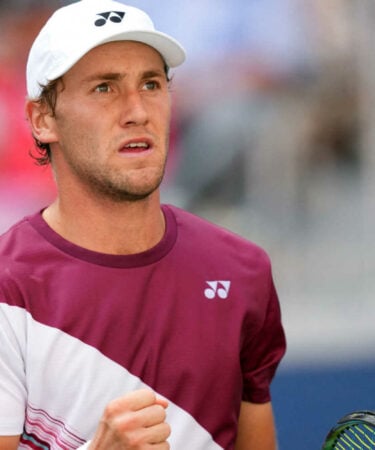
Casper Ruud didn’t play the 1 Point Slam but the Norwegian will never forget his pre-tournament week experience. The former world No 2 enjoyed a practice against Roger Federer. The 20-time Grand Slam champion was back in Melbourne for the first time in six years to take part in the Opening Ceremony, an exhibition alongside Andre Agassi, Pat Rafter, Lleyton Hewitt and Ash Barty, and wanted someone to hit with. The look of pure joy on Ruud’s face said everything.
“It was fun,” Ruud told Tennis Channel, grinning from ear to ear. “He just wanted an easy hit, wanted to feel the ball and it was really fun. The groundstrokes were as flawless as ever.”
Legend Encounters and Exhibition Magic: Balancing Pressure with Joy
And the month before Australia, we saw a battle of the sexes match between Aryna Sabalenka and Nick Kyrgios, offering a glimpse of men and women playing each other, albeit in an exhibition and hardly on the same scale as Billie Jean King v Bobby Riggs in 1973. “It attracted a lot of attention,” Iga Swiatek said. “It was entertainment, but I wouldn’t say that had anything to do with social change or any important topics. The name was just the same … that’s it. There were no similarities because women’s tennis stands on its own right now. We have so many great athletes and great stories to present, we don’t necessarily need to compare to men’s tennis.”
But put all these new things together – pro v amateur, legend v pro and men v women – and you have a number of new formats that offer the players a fun choice, while at the same time attracting new audiences to tennis.
Fast Format Innovations: How UTS and Mixed fan-centric experience are scaling the game
And don’t forget the option of ‘same elite players, new rules’ with the UTS Tour. The brainchild of Patrick Mouratoglou, it launched in 2020 following the Covid lockdown to offer a totally new format and lucrative opportunities, often scheduled the week before official ATP events. The Bastide UTS Nimes, held the weekend before Monte-Carlo, opened the clay-court season in 2025 and will do so again this year.
Played over four quarters of eight minutes apiece, with 15 seconds between points and only one serve, UTS is intense on the court but lots of fun, too. Players are mandated to speak to commentators between quarters and off the court, the innovation stretches to dinners between several players, at which they discuss almost anything in the game.
Having something unusual that you have fun on court, I think it’s great.
The players seem to love it. At one such dinner, even when his fellow diners left, Casper Ruud stayed on for half an hour to keep chatting about tennis and life. Tennis players, after all, are normal people and most crave human interaction. How often do they get to share a dinner table with their fellow pros, outside of the ones they know best from their home countries?
Whatever the format, the players seem energised by having something free of pressure to do before slams and tournaments. “I think having those things, that you have fun (is good),” world No 1 Carlos Alcaraz said. “It’s not just focusing 24 hours per day, just for practice, to recover, the next day (do) exactly the same thing. So having something unusual that you have fun on court, I think it’s great.”
Mental Resets and Fan Engagement: Why the Industry’s New Rules are Working
Alcaraz played in the 1 Point Slam at the Australian Open, in front of a sold-out Rod Laver Arena, which enthralled players and even saw an amateur taking home the AUD $1 million first prize, the ideal conclusion to a competition sure to be a fixture at Melbourne Park in the coming years.
“It’s something that we’re not used to seeing, to play just one point,” Alcaraz said. “When the qualifying (was on), we were all talking about it. ‘Ok, did you see this point? Did you see that point? It’s just kind of funny.
“I think sometimes too, (to) stay away from focusing on the professional part, let’s say, and having that part of fun I think helps you a lot. Then (you are) coming to the practises or to the matches with a fresh mind. To be honest, I really liked it. Probably this year was a little bit long. They have to fix it in some way, but to be honest, this kind of event I think is great.”
“Just different. And amazing”
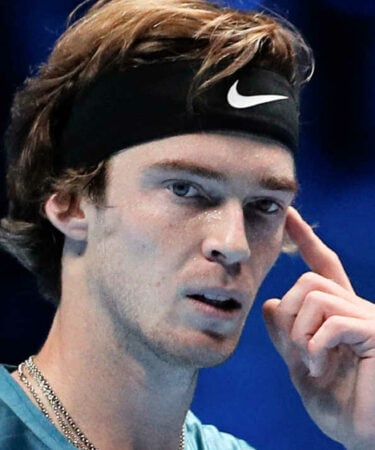
Andrey Rublev played in the 1 Point Slam and is a veteran of the UTS, winning several events. The format seems to suit him, but the effect it has is also important.
“To have something like that on slams or on the big events before the start, it’s amazing,” Rublev said. “They are different. “1 Point Slam, you feel tensions, emotions, but if you lose, it’s over. That’s it. UTS is at least two days, sometimes three days. You play maybe 45 minutes one match, it’s endurance, it’s very intense. So it’s a completely different format. Both are fun.”
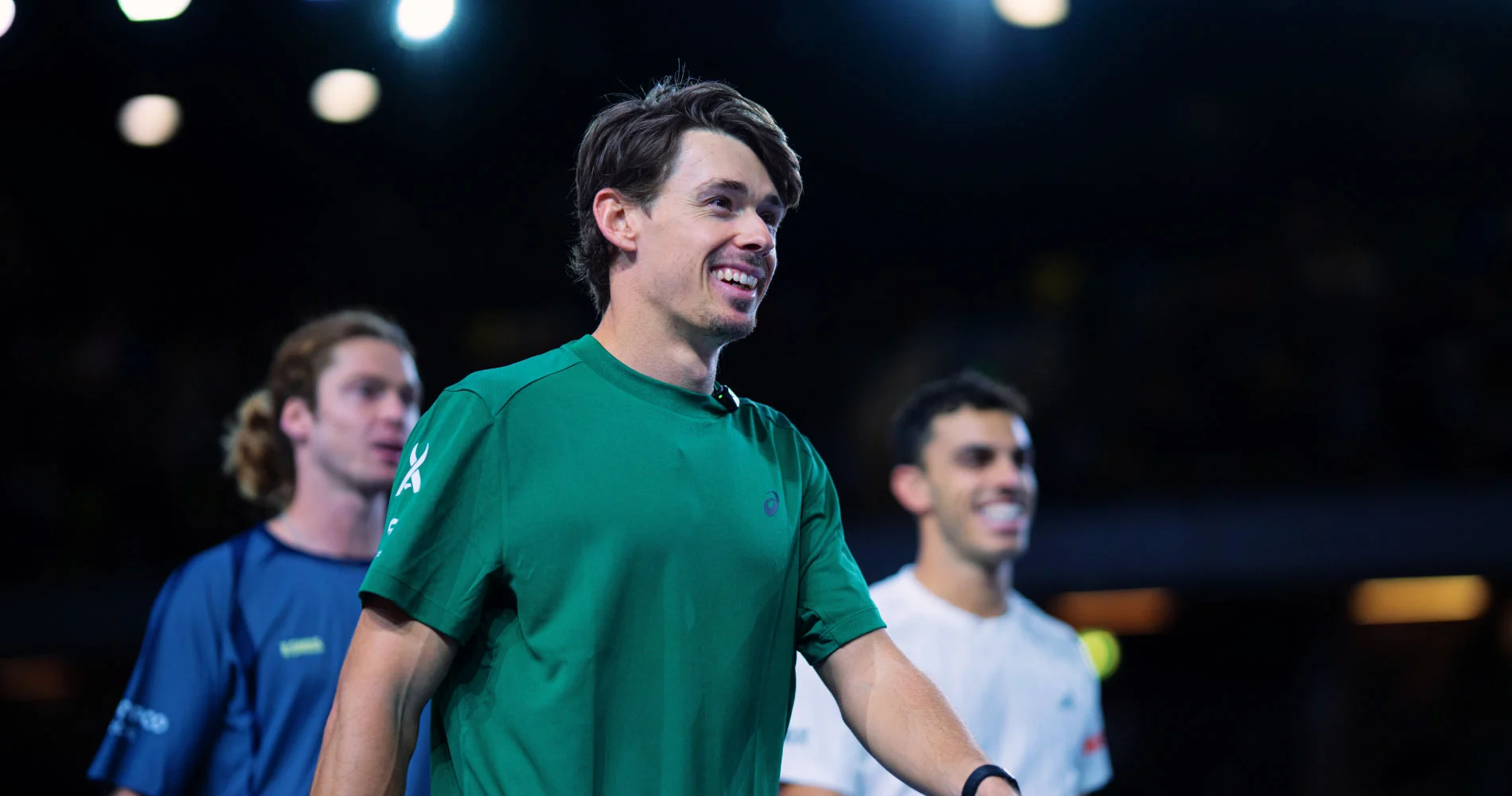
Amanda Anisimova cuts an intense figure on the match court but the American was smiling so much during the 1 Point Slam she would like to see it implemented elsewhere.
“It was so much fun,” she said. “I absolutely loved it. I would want to do it at every single Grand Slam. It was just so much fun to laugh with each other ahead of a big two weeks. We all stayed up late in the lobby just watching, so it was a lot of fun.
“No preference, all are good for tennis”
Corentin Moutet said it is impossible to choose which format is best.
“Everything is fun,” he said. “I think it’s good to put on a show, to try to change a little bit, create new things in tennis. I think it’s great for the sport to bring new fans. I actually enjoy watching it as well. I don’t have a preference, but I think all those things are good for the tennis I would say.”
At the 1 Point Slam, professionals mixed with amateurs, some of the richest sports people in the world listening and chatting to people they might otherwise never come across.
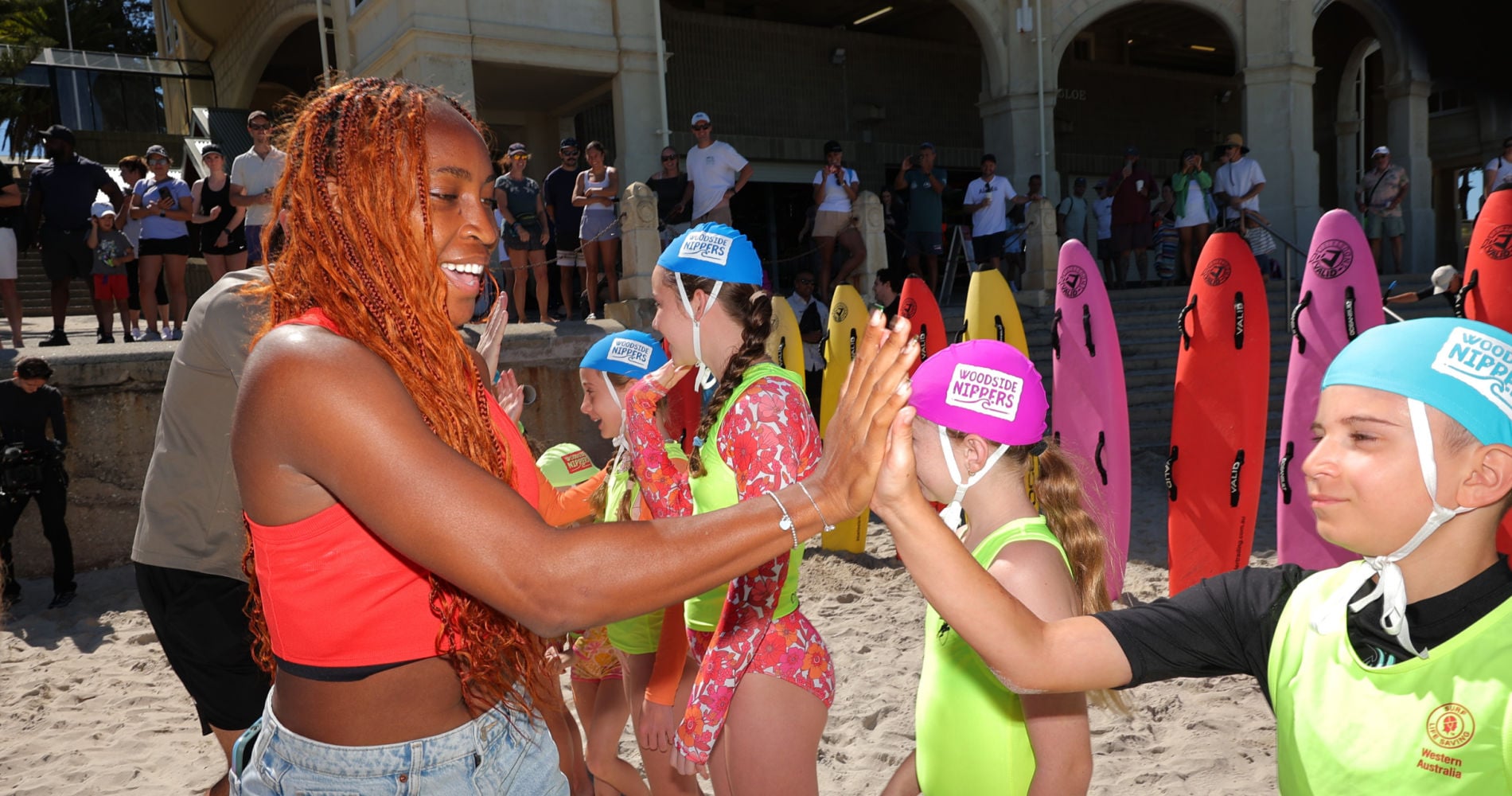
“I thought that was cool because you got to hear stories that you would never hear,” Coco Gauff said. “My only not complaint (was) I think people had to make six rounds to make it Rod Laver (Arena). I think that was a lot. There were a couple of cool stories that were from the qualifying rounds that I wish some people got to see on Rod Laver.
“There was a guy promoting paraplegic tennis. No one saw him. There was another older lady who had the best outfit. I think the qualifying rounds for the real amateurs, because there were some fake amateurs, my hitting partner was an amateur and he was 200 in the world. For the real amateurs, I think they should have a little less strenuous qualifying process. They may not win, but seeing those stories on Laver would be cool.”
From the closed doors culture to vast tickets selling
Even Federer was impressed, watching on YouTube, having missed the event in person.
“Took about half an hour to look at all the highlights, who double-faulted, etc” he said. “Anyway, it was hilarious. I played the one-point tournaments myself at charity events and also exhibitions or weddings of friends and stuff (where) we’ve done it. I’ve lost some, obviously. I like how everybody gets incredibly tight. It was good to see everybody feeling that way as well.”
Not so long ago the Australian Open used to shield players’ practices in the week before a slam from the public eye, restricting the media to just 15 minutes of watching, claiming the players asked for it. That, as was pointed out to them many times, made them stand out – not in a good way – from the other majors, where practice was free for everyone to watch.
Once they opened up practice sessions to the public, and realised they could charge for tickets, the door was open to more innovative moves, with the 1 Point Slam the latest of them.
The fans enjoyed it, tournament organisers received a cash injection and some good vibes and the players embraced it, setting them up perfectly for the bigger tasks ahead.