Rafael Jódar teats Roland-Garros exit a beginning, not a chance gone begging
Beaten by Alexander Zverev in the Roland-Garros quarter-finals, 19-year-old Spaniard Rafael Jódar refuses to read the exit as an opportunity lost. For a player who was a virtual unknown a year ago, a first Grand Slam quarter-final is a marker on a road he knows is still long.
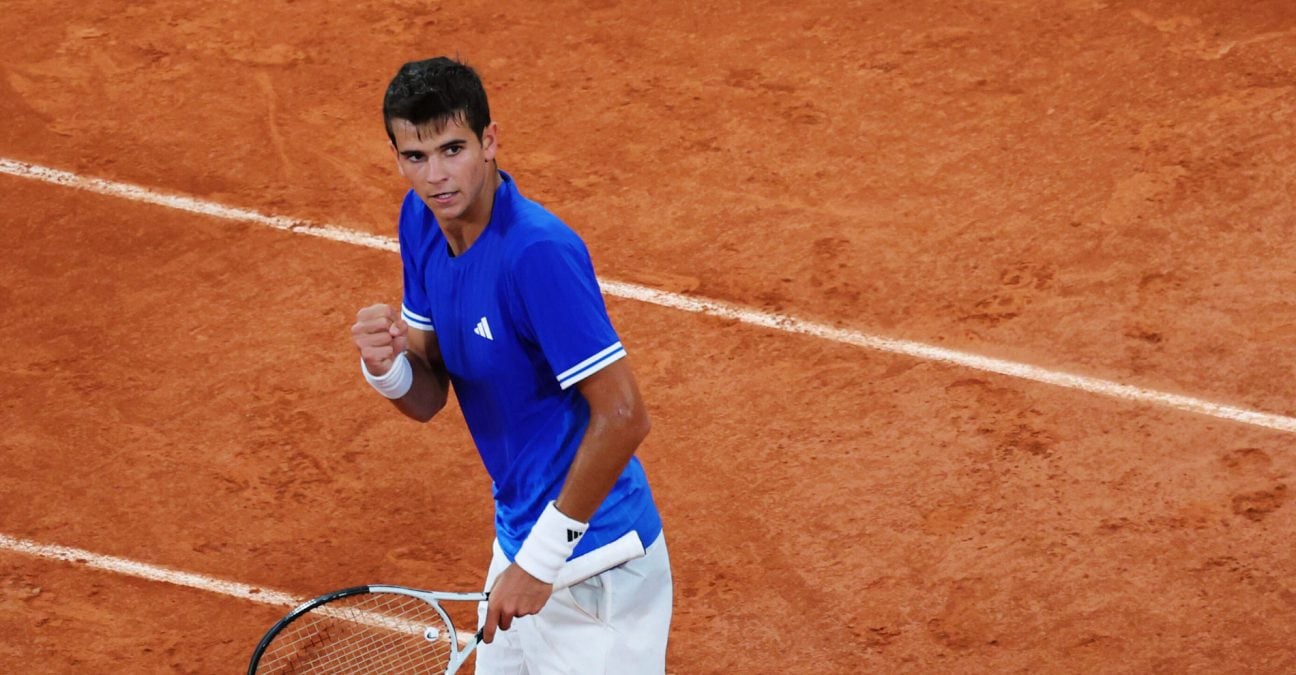 Rafael Jodar, Roland-Garros 2026 | © M. Baucher / PsNewz

Rafael Jódar’s first Grand Slam quarter-final ended on Tuesday at the hands of Alexander Zverev, and the 19-year-old Spaniard left Court Philippe-Chatrier refusing to file it under regret.
In a draw stripped of Alcaraz, Sinner and Djokovic, and widely called the most open in years, Jódar had been talked up as one of the breakout threats of the fortnight – a teenager who had beaten established names to reach the last eight in his first Slan main draw, and whom Zverev himself is describing as having one of the heaviest forehands on tour.
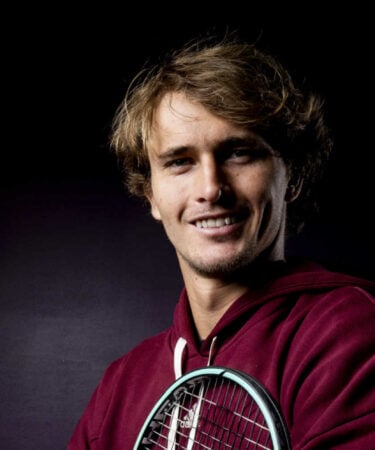
“His forehand is the heaviest forehand on tour right now, I think, in terms of spin and speed”, Zverev said in Germand after the match. “He can create unbelievable pressure from both sides. I knew that beforehand, but I felt it now for the first time. And that he can do very, very much from defence too, accelerate very quickly, that he has a fast arm. I knew all of it already, but now I felt it myself.”


The seed of a title run, in the loosest sense, was there for any young player on his side of the bracket to seize.
But Jódar declined to mourn the one that got away in his last press conference of the week. “I’m content with the tournament, with my participation in Paris,” he said, “but I’m conscious that, just because I reached the quarters, it’s not a [definitive] result.” It was, he stressed, his first year on the circuit, with room to grow: a quarter-final as data, not destination.
If one day I want to be at Zverev’s level, I’m aware I have to work hard.
The matches, he said, had taught him that to compete with the best. “You have to keep your level the same all the time – you can’t have a lot of downs,” saif the one who has been leading 5-2 in the first set. About himself, the lesson was double-edged: “I can compete against anyone, but I still have to improve a lot of things.”
Jódar framed his conqueror not as a missed scalp but as a measuring stick: a player with “a lot of experience” who has “been at these stages for a lot of years,” and the standard he must reach. “If one day I want to be at that level, I’m aware I have to work hard.”
The Chatrier? “One more tennis court”
The run caps a startling ascent. Outside the top 700 a year ago and outside the top 100 entering the clay swing in April, Jódar built one of the best clay records on tour this season and is projected into the top 25 after Paris – territory unimaginable twelve months earlier.
Jódar’s breakthrough is built on a season of firsts. He claimed his maiden ATP title at Marrakech and has reached the quarter-finals at every event he contested this clay swing, a consistency rare in a player in his first full year on tour. The defeats, when they came, were almost exclusively to the elite: [Arthur] Fils in Barcelona, Jannik Sinner in Madrid, [Luciano] Darderi in Rome and now Alexander Zverev.

The fourth-round win over Pablo Carreño Busta, recovered from two sets down, drew an endorsement from the beaten Spaniard that he could “compete with Carlos and Jannik very soon.”
On Chatrier, he noted, the occasion had not overwhelmed him. “It didn’t impress me at all; it was just one more court” — a line that, from a teenager one match from a maiden Slam semi-final, reads less as bravado than as the mindset he intends to carry forward.