“The sky is the limit”: how Mirra Andreeva built a champion out of a world-class player
Through a coach who named the barriers and a Federer model she chose to inhabit, Mirra Andreeva turned a turbulent season into a maiden Roland-Garros title at 19. Conchita Martínez explains how a world-class player became a champion.
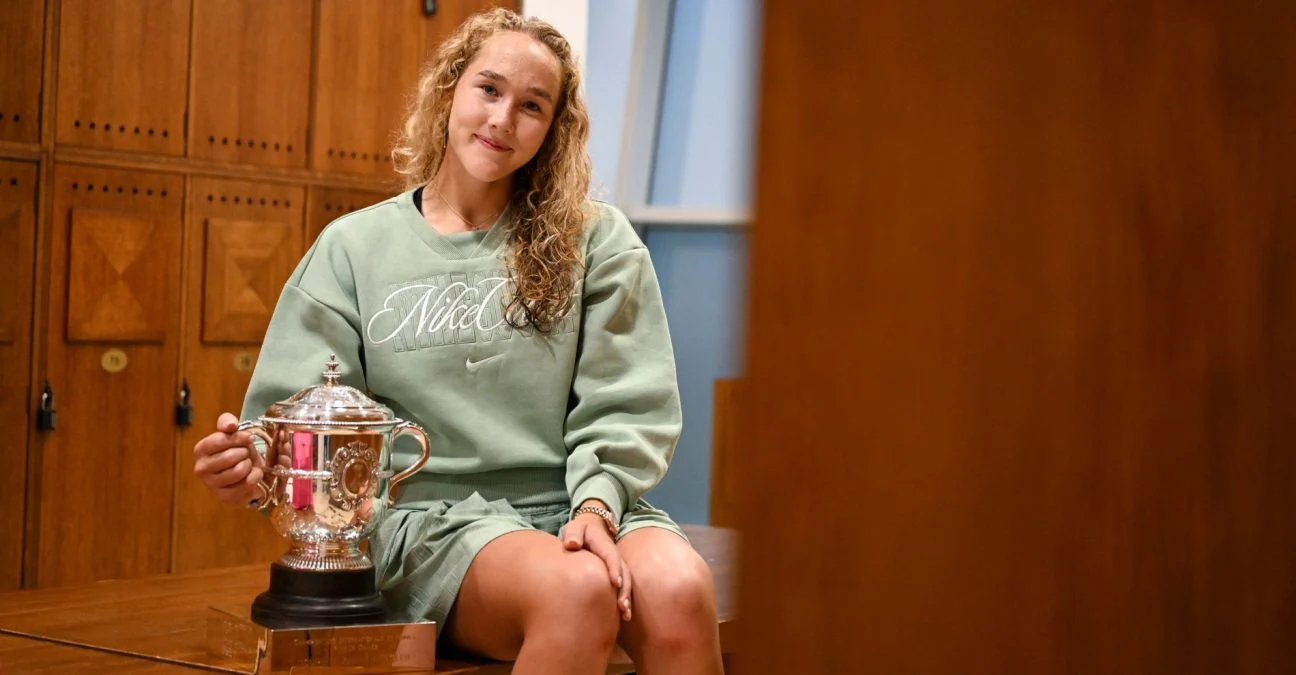 Mirra Andreeva, Roland-Garros 2026 | © FFT

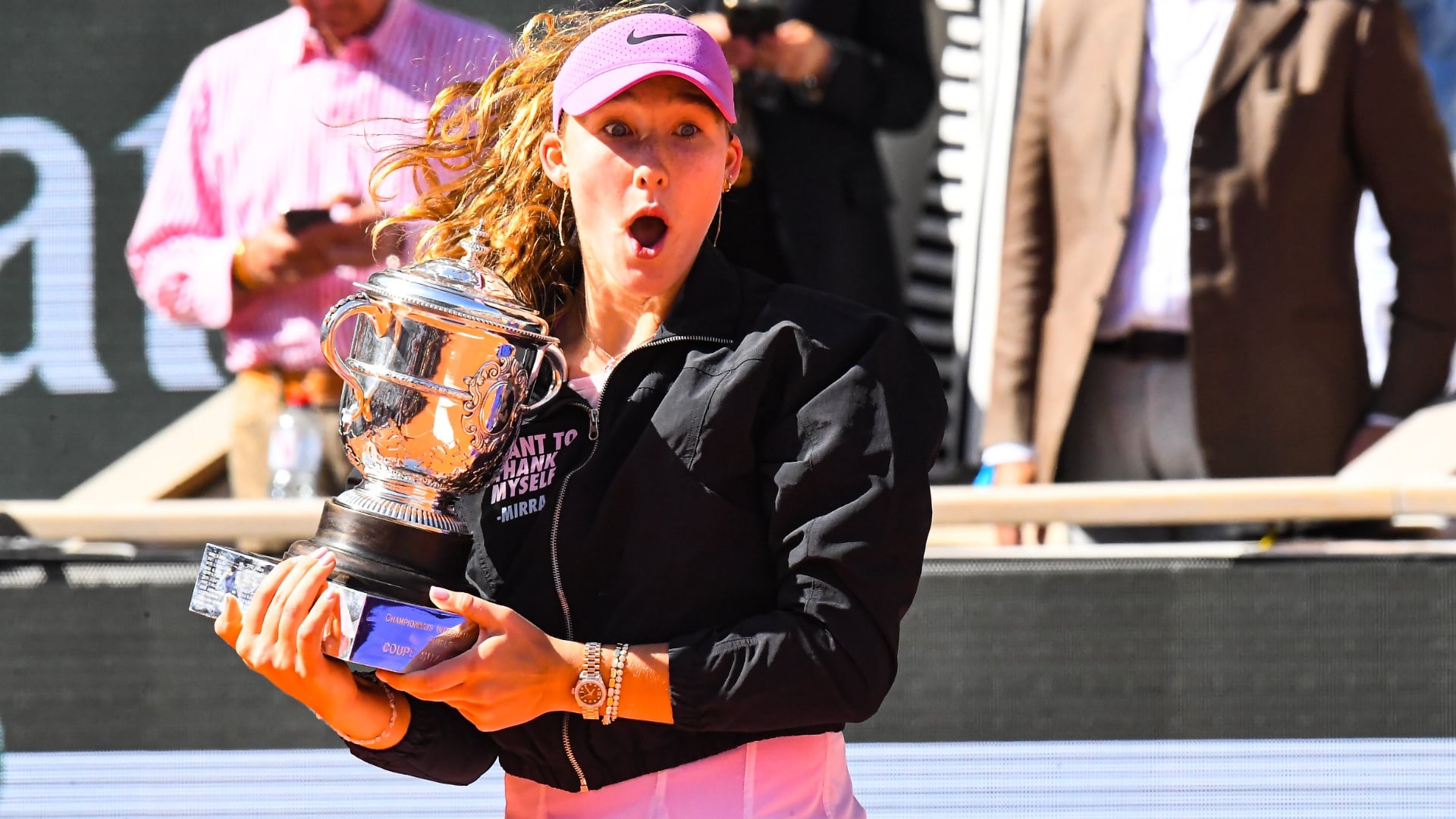
The player who knelt on the Court Philippe-Chatrier clay on Saturday, a Grand Slam trophy minutes away, looked like someone who had always belonged there. Calm, composed, ruthless in a 6-3 6-2 win over Maja Chwalinska – Mirra Andreeva at 19 gave the impression of a champion arriving exactly on schedule.
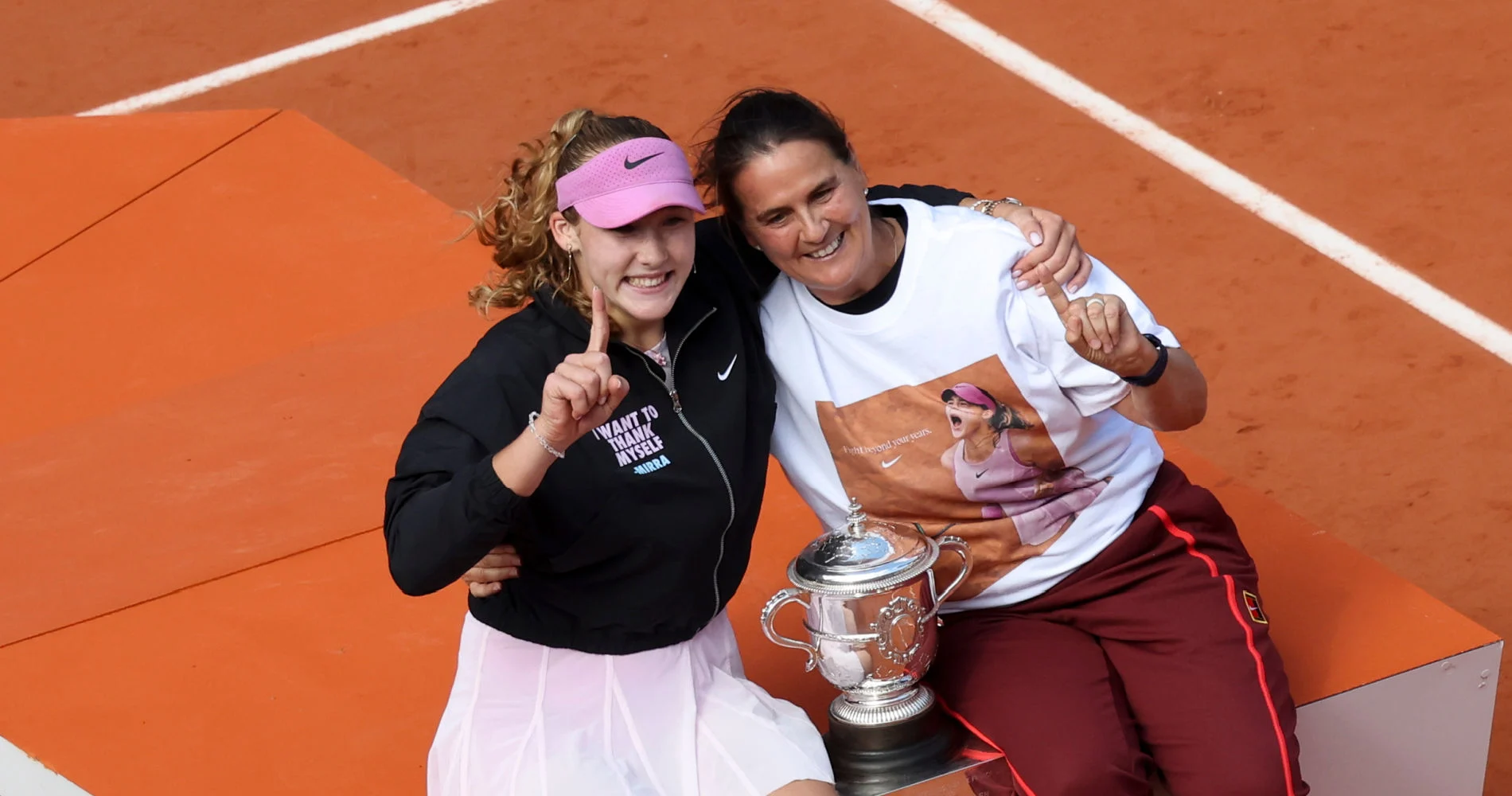
Ask her coach where the ceiling is and Conchita Martínez does not hesitate. “She’s a natural. She’s a great player,” the 1994 Wimbledon champion said. “When she works hard and when she listens and does everything, she has no limits. The sky is the limit.” But the sentence has a condition built into it – when she works hard, when she listens – and that condition is the whole story.



For two years, the gap between Andreeva the world-class player and Andreeva the champion was not measured in forehands. It was measured in everything around them.
Martínez, who took over the coaching in April 2024, has never pretended otherwise. “I knew things had to change for her to win big things,” she said. “If you don’t change something, you make it extra difficult for yourself.” Asked, on the day of the title, what had been hard about the job, she did not reach for diplomacy. “Her attitude is difficult,” she said warmly, with a laugh, but said plainly.“ You tell her something and maybe she’s not open to listening.”
Turbulent spring
The evidence had been public: a turbulent spring, the ups and downs Martínez kept returning to, a player whose emotions could run away with the match. The point of the past two years was not to make Andreeva a good tennis player. It was to build the mental commitment and loseness of a champion.
One of the hardest barriers they cleared, she said, was Andreeva’s reluctance to fully commit to the ball in training – to go for her shots when nothing was at stake. “How are you going to improve, how are you going to hit the ball when a match starts, if you don’t do it in practice?” Martínez said. It was, in her words, “a very complicated barrier,” and they only got past it this year.
The second brick was subtraction. The hard-court stretch — Doha, Dubai, Indian Wells, Miami – was disappointing. “It wasn’t as we would have loved, results-wise” : From the Australian Open through Miami, Andreeva failed to go beyond a quarter-final. In Melbourne she beat Vekic, Sakkari and Ruse before Elina Svitolina stopped her in the fourth round; in Doha and again in Miami she was beaten by the rising Canadian Victoria Mboko; in Dubai she edged past Kasatkina and Cristian before falling to Amanda Anisimova in a three-set quarter-final; and at Indian Wells, where she was defending the title, she went out in her opening match to Katerina Siniakova.
So she made a deliberate decision to send Andreeva to Linz without her. “I’m doing a lot of weeks, and I also have a life,” Martínez said, half-joking, but the reasoning underneath was serious. “I saw it as an opportunity for her to go there. Now you don’t have anybody to blame. You go there, you play your matches, and you think a little bit too.”
“My psychologist said…”
She was on the phone constantly, preparing each match – but she was not in the box. Andreeva won the title. “That was the beginning of a very good clay-court season,” Martínez said, “and here we are, talking about the title.” After the win in Linz, came a final in Madrid, a semi-final in Stuttgart and a quarter-final in Riee. A champion has to be able to stand alone; Linz was where Andreeva learned to.
But the move that turns all of this from damage-repair into something more deliberate – the move that builds a champion rather than just fixing a player – came from Andreeva herself, and it is the best thing she said all fortnight. She did not describe a reset. She described a choice. “My psychologist says you can always choose how you’re going to be on court, how you’re going to play, and who you’re going to be as a person,” she said. “So I decided to choose to be a fighter.”
It’s nice for people to watch players try their best and fight and compete.
And then she named her model. “I watched a lot of Roger’s matches here,” she said. “Obviously I’m never going to have the same aura — no one’s going to have the same aura — but I wanted to try to impersonate the way he behaves a little on court, because I love watching how he used to play.” She wanted, she said, to look good out there, not in the sense of vanity, but in the sense of bearing. “Not be frustrated, not be unhappy with how I play. It’s also nice for people to watch players try their best and fight and compete.”
This is the difference between managing a weakness and constructing an identity. Andreeva did not merely learn to stop the bad behaviour; she picked a template for the good one, studied it, and tried to inhabit it. Martínez, watching from the outside, saw the same thing and gave it its proper name. “Kudos to her for being willing to change, staying open, doing the hard work,” she said. “Once she does the hard work, her potential just comes out.”
The fighter Andreeva chose to be is not a different player from the prodigy. It is the prodigy with the self-sabotage engineered out and a model of composure engineered in.
The proof was in the title itself – fourteen days, Martínez kept repeating, is not easy; “she had a lot of ups and downs during the tournament, but she has her tools now, and she was able to work with them.” The wobble in the final, two games conceded from 5-love, was met not with a meltdown but with a calm tactical read about the wind. The old Andreeva might have unravelled. This one closed it out.
This thing is a little bit addicting.
And now comes the most telling sign of all that a champion, not just a player, walked off that court: she wants it again, immediately. “This thing is a little bit addicting,” Andreeva said, already talking about preparing for the grass season. “I really want to do my best to experience all of this for a second time.” It is the appetite of someone who has tasted the thing the talent was always capable of and intends to make it a habit.
Martínez, who has seen the ups and the downs, supplied the brake. “We have to stay humble,” she said. “Nothing comes easy. Feet on the floor”. The only way she knows to reach the sky.