Grand Slam dilemma: winning pre-major can be a “poisoned chalice”
Winning a big title just before a Grand Slam can be a double-edged sword. While it builds confidence, the physical and mental toll can prove too much, leading to early exits at the major. This article delves into the “poisoned chalice” dilemma faced by many players outside the very top.
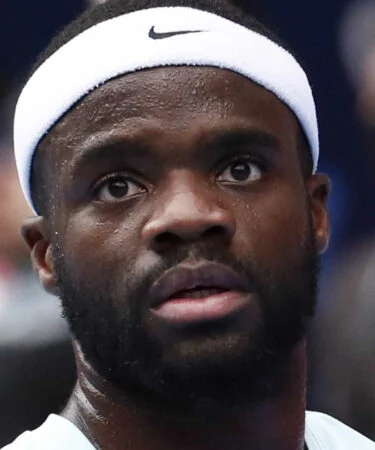
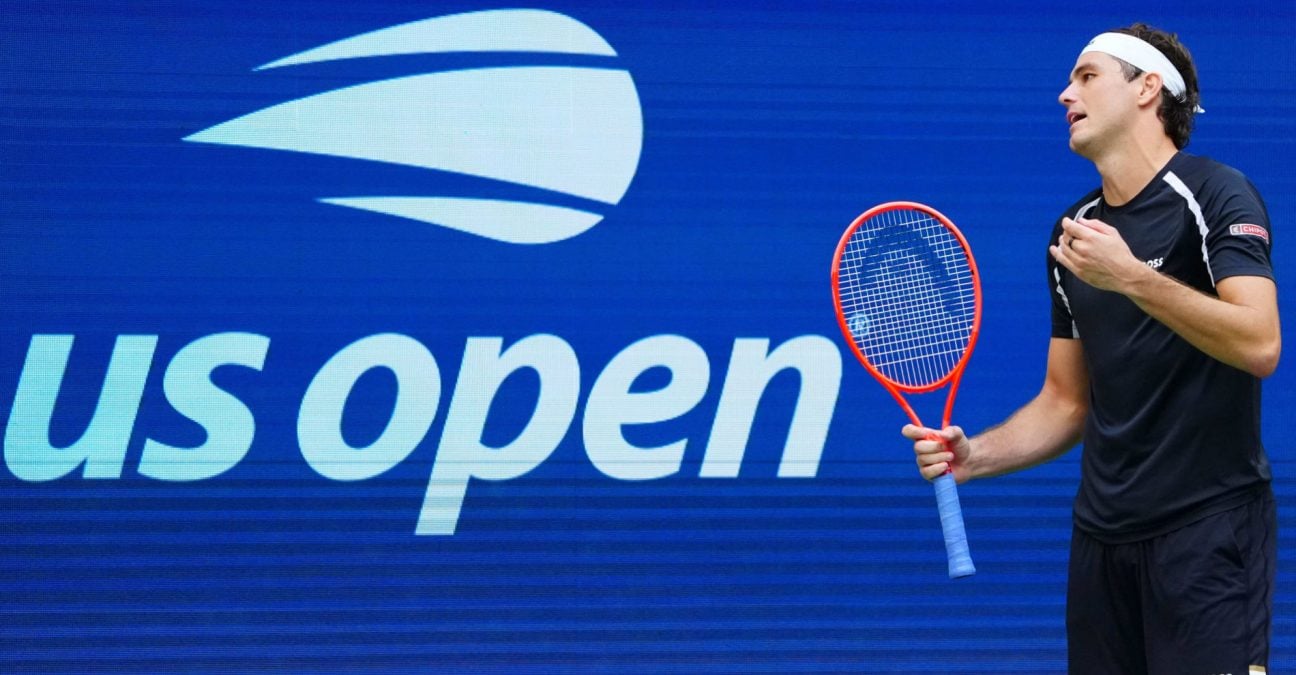 Taylor Fritz, US Open 2026 | © Javier Garcia : shutterstock / SIPA

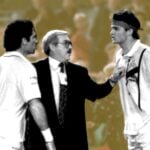
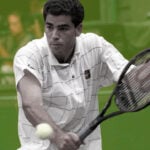
It was the summer of 1989 and Brad Gilbert was on a tear. After finishing runner-up in Washington, he won Stratton Mountain and Livingstone and arrived in Cincinnati brimming with confidence. In Cincy, he beat a young Pete Sampras in the last 16, took out Roland-Garros champion Michael Chang in the quarters, Wimbledon champion Boris Becker in the semis and Wimbledon runner-up Stefan Edberg in the final.
It was a stunning streak of success that elevated Gilbert to No 8 in the rankings and sent him to the US Open in a rich vein of form. He was talked up as a possible dark horse for the title, only to lose in the first round to Todd Witsken, a fellow American ranked No 63.
Witsken was a decent player, who had beaten Jimmy Connors at the US Open in 1986, but Gilbert was expected to beat him easily enough. Instead, he struggled, hitting 10 double faults and fading as the match went on. Later, Gilbert complained that he had been sick on the morning of the match but Witsken offered another possible explanation.
“I think winning all those matches and playing so much tennis is tiring,” Witsken said, according to an LA Times report. “I think he might be needing a rest.”
Shelton IS A GOOD argument for and against
Ben Shelton could be a good argument in favour of a pre-tournament success and against it. Twelve months ago, the American won in Canada, reached the quarter-finals in Cincinnati and was discussed among the favourites for the US Open title.
What happened? He looked good in his first two rounds but then his body broke down in the third round against Adrian Mannarino. “It’s been a great summer, a lot of things to be thankful for,” he said at the time. “You won’t hear me over here pouting about how bad things are with the summer that I’ve had, the things that I’ve been able to do in this sport in a short amount of time and the people I got around me, like I said, a lot of blessings.”
This year, Shelton repeated his success in Canada with brilliant tennis and then lost in the firsrt round in Cincinnati. Perhaps that early loss will prove beneficial. He’s looked strong so far at the US Open and again is being talked up as a potential champion; if he does it, he’ll be the first American winner since Andy Roddick in 2003.
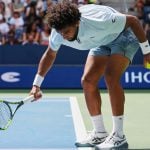
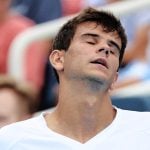
Winning titles takes a lot of effort. For the top three or four, it’s tough, but they’re used to being there every weekend, recovering and going again. For those like Gilbert – a fine player who would win 20 titles and reached a high of No 4 at one stage – the physical effort of playing more matches than usual can easily take their toll.
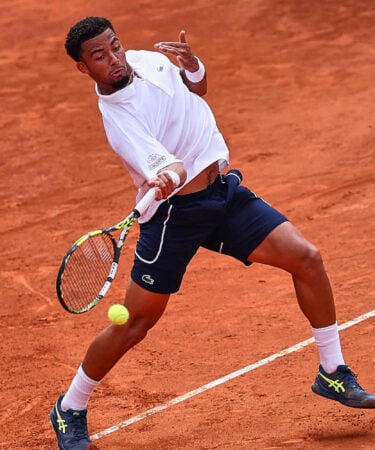
Arthur Fils might agree. The Frenchman won the biggest title of his career to date in Cincinnati last month and many people were tipping him to go deep in New York. He led Stefanos Tsitsipas by a set and 5-2 in the first round only to seemingly run out of steam. “Once the energy went down at the end of the second, I never felt again a good energy,” he said. “Of course it’s a very long swing, but no excuse. I mean, I just have to work way harder to be able to play those kinds of tournaments.”
The Nadal way
The dilemma for players outside the top few, then, is how much to push it in the tournaments before the slams. There is a difference between Masters 1000s like Cincinnati, held a couple of weeks before a slam, and the 250s that come in the week immediately beforehand. In the days when Queen’s came immediately after Roland-Garros, Rafael Nadal often used to win a couple of matches and lose on Friday, in the quarter-finals, with enough match practice under his belt, but not too much effort. Job done.
It should also be remembered that for most players, other than the big guns, the Tour is their bread and butter; there is no reason not to give their absolute all in them, just because they fear they might be tired come slam time.
The Cincinnati titles have been won by big names in most years. But 2022 is perhaps a good example of the dilemma that other players face. The winners that year were Borna Coric of Croatia and Caroline Garcia of France. Coric was good enough to be ranked No 12 at one stage and made the quarter-finals in 2020, while Garcia was a hugely talented and streaky player, who peaked at No 4. At the 2022 US Open, Coric went out in round two, beaten by Jenson Brooksby, but Garcia enjoyed her best ever US Open, making it all the way to the semi-finals.
What about Tiafoe?
Frances Tiafoe finished runner-up to Fils in Cincinnati and so far, he has looked good, even if he felt he was not playing his best in the first two matches at the US Open before stepping up a level in the third round. Washington was a few weeks ago, but Taylor Fritz was the champion and on Saturday, he went out, beaten by Fernando Cerundolo.
So, it can be done. And it’s certainly easier than it is for those who do well in the week immediately before a Grand Slam. The big guns usually skip those events, of course, and they’re generally 250s, but still, being so close to a slam makes it tough.
And for young players, it’s even tougher. Ignacio Buse won his first ATP title in Hamburg this year and then lost in the first round at Roland-Garros, and then won the title in Winston-Salem the week before the US Open, and then went out in round two in New York. And Zizou Bergs won Eastbourne only to lose in the third round at Wimbledon.
There is no perfect way to prepare for a Grand Slam. Some top players don’t play an official event at all, while others like to get a few matches under their belt, depending on the surface. But for as long as there is a crowded calendar, with little time between events, winning the likes of Cincinnati, after an already potentially tough hard-court summer, can be a poisoned chalice.