How much longer will Novak Djokovic put himself through the pain? Only he can know and only he can decide
After losing in round one at the US Open on Sunday – his earliest grand slam defeat in 20 years – the 39-year-old was in no mood to discuss his future. That time will come
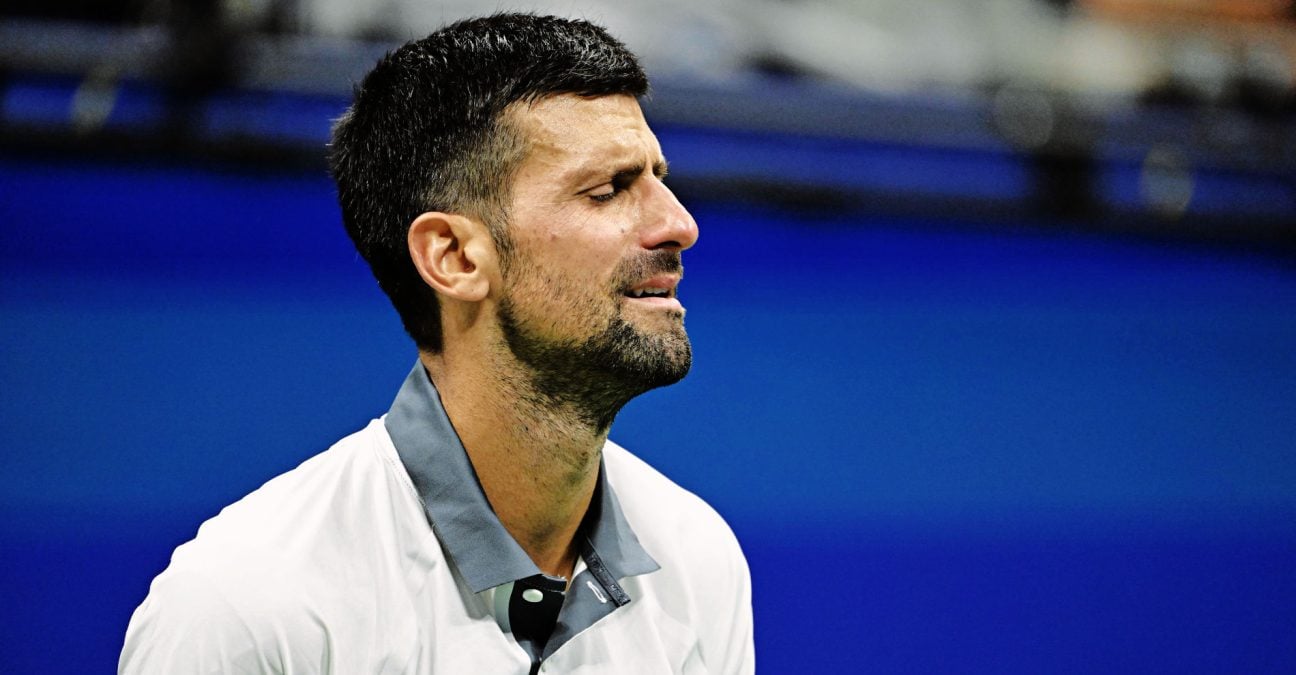 Novak Djokovic, US Open 2026 | © Zuma / PsNewz

As the clock ticked past midnight on day one of the US Open on Sunday, one thing was abundantly clear. Novak Djokovic did not want to think about, or discuss the future.
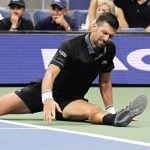
Vomiting on several occasions and in more and more pain as the match drew on, Djokovic suffered physically and mentally in his 7-6 (5), 5-7, 4-6, 6-2, 6-1 defeat by Mariano Navone. It was his first opening-round defeat in any grand slam event since the 2006 Australian Open and it hurt, in every way imaginable.
Seeing Djokovic in obvious discomfort was tough to watch. At 39, the 24-times grand slam champion has been suffering a lot recently, alluding to a health issue that is exacerbated in humid conditions. Against Navone, he was sick on court and never looked comfortable. In the final set, after another grueling encounter, his back and shoulder gave out too and he looked close to tears.
At the end of the match, Djokovic showed impressive sportsmanship, as he always does, smiling and embracing Navone with real warmth. It can’t have been easy, especially when you read his words soon after. “When it comes to match itself and overall feeling of how I felt with body and playing, it was really not enjoyable,” he said. “I pretty much despised every moment that I spent on the court for that.”
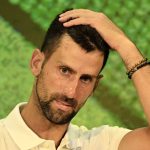
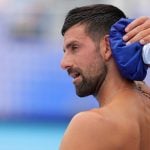
Though he signed autographs on court afterwards, another act of generosity in the circumstances, Djokovic was in no mood to hang around and had to be convinced to have a quick mixed zone chat with a few reporters by the player locker rooms inside the bowels of Flushing Meadows. He didn’t countenance any question about his future.
At 39, after a 20-plus year career that has brought him 24 grand slam titles, 101 tournament wins worldwide, Olympic singles gold, the world No 1 ranking, Davis Cup glory and numerous records that will probably never be broken, Djokovic has earned himself the right to do what he wants.
The 2028 Olympics, really?
That includes how long he wants to play on. He could just play in the grand slam events, pick and choose his outings, as he has largely done this year. He has talked about wanting to play on to the Olympics in Los Angeles in 2028, but on nights like Sunday, when his body failed him, that must seem a long way off. Djokovic will be 41 by then (Wawrinka’s age) and if there are many more matches like this one, it’s hard to see him wanting to play on much longer. His family, watching from the player box, lived every minute of his pain.
Perhaps the only thing we can really know is that he has nothing to prove. Djokovic will go down in history as the greatest player to play the game, thanks to his achievements; 10 Australian Opens, seven Wimbledons, four US Opens and three French Open titles. His will-power alone took him to some of those titles; his heart, his defence, his court coverage, backhand, athleticism and flexibility were second to none.
The question to ask himself, when he is ready to consider it, is why he wants to continue to put himself through the kind of pain that was all too apparent on Sunday night. In the days to come, he will probably tell himself, and anyone around him, that he got to the Australian Open final in January and the semi-finals at Wimbledon in July, playing some truly great matches in the process. If he can do that at 39, why not at 40 and 41?
Like Murray in Paris 2024?
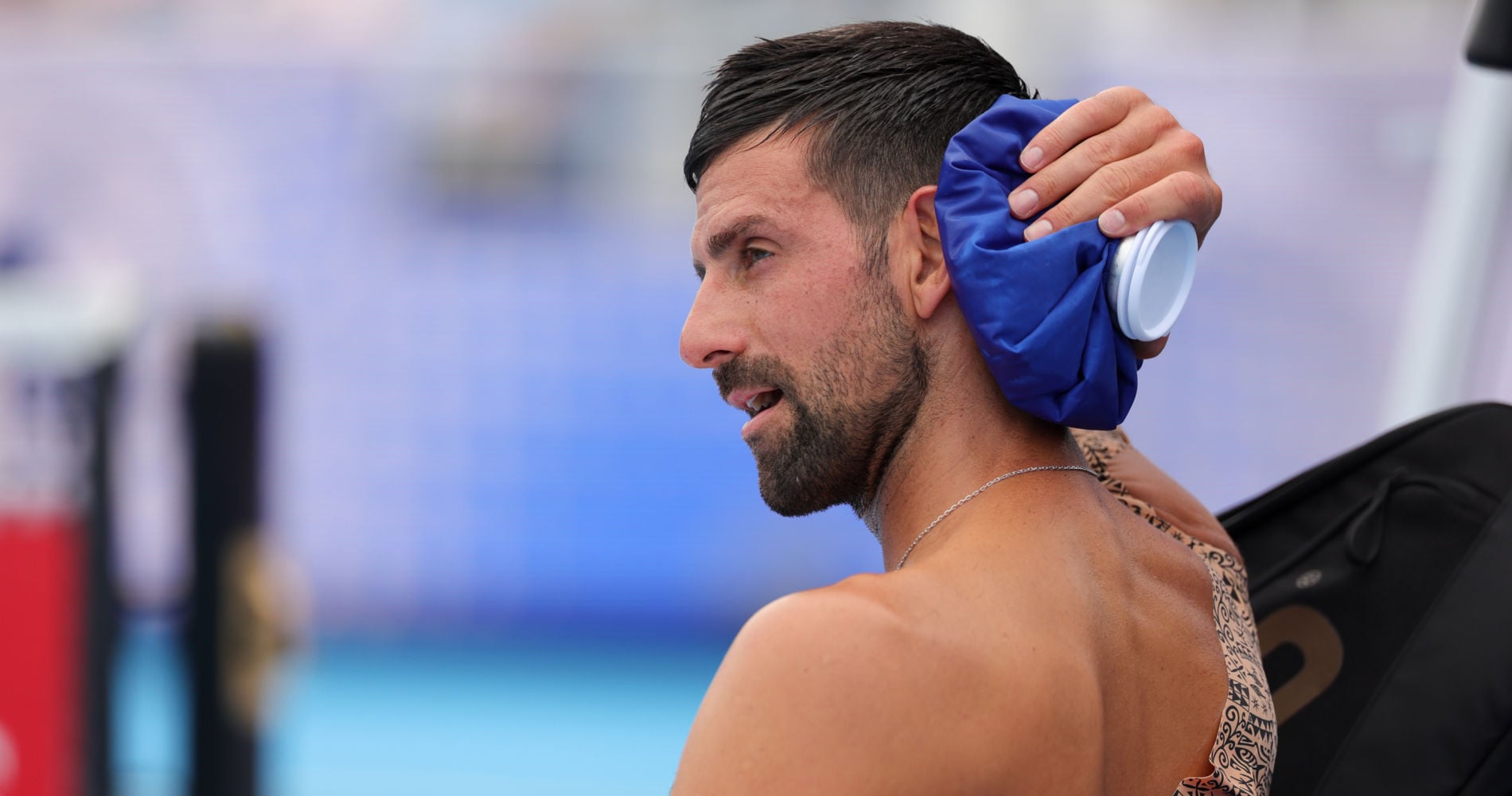
But it’s getting harder and harder, of that there can be no doubt. Finding the balance between being fresh and playing enough is becoming more and more difficult. The health issue that affected him at the US Open and in Cincinnati is clearly serious and if he can’t figure out how to overcome that, it’s going to get even more complicated.
One reason why Djokovic may want to extend his career as long as possible is that he needs the profile that he has an active tennis player to help him in his business dealings. Earlier this year, Djokovic became a global strategic advisor at General Atlantic, a private equity firm, offering advice on investments in the sports and active lifestyle sectors. As he nears the end of his playing career, he is likely to focus on his future more and more, but by being an active player, he will have even more impact.
Djokovic has talked about the symmetry of ending his career at the Los Angeles Olympics, where he would love to be the flag-bearer for Serbia, just as he was in London in 2012. As surely his country’s greatest ever sportsman, he would fully deserve that. If he wanted, he could even just play doubles in LA, as Andy Murray did in Paris in 2024. But if he wants to play singles, as the defending champion, then he would have every right to do so.
No rush
There is also no rush to decide or make a snap decision. Djokovic’s first priority will be to get to the bottom of his recent health problem. If he does that, then there’s no reason he can’t play the same kind of tennis he did in Australia and at Wimbledon for another couple of years, even if the physical demands are getting harder and harder.
It’s logical to question why he wants to put himself through the pain, the hours of training on and off the court, the meticulous attention to detail in his diet and lifestyle that has been so integral to making him the greatest player of all time. But the bottom line is that the decision is his. He’s earned that right.