Acceptance the hardest thing for Novak Djokovic to deal with
The 24-time grand slam champion continues to play amazing tennis, especially at the four grand slams, but at 39, he knows it’s getting harder and harder to win the biggest titles and take his major tally to a record-extending 25
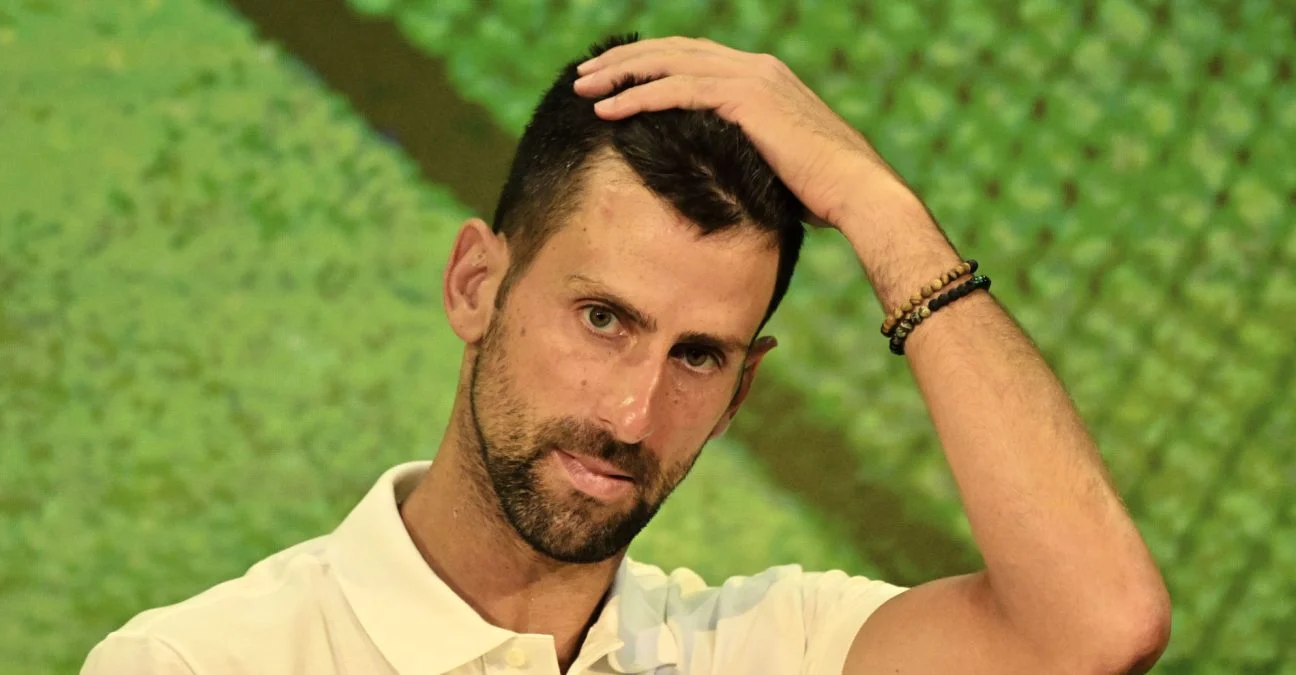 Novak Djokovic, Wimbledon 2026 | © Ch. Caillaud / PsNewz

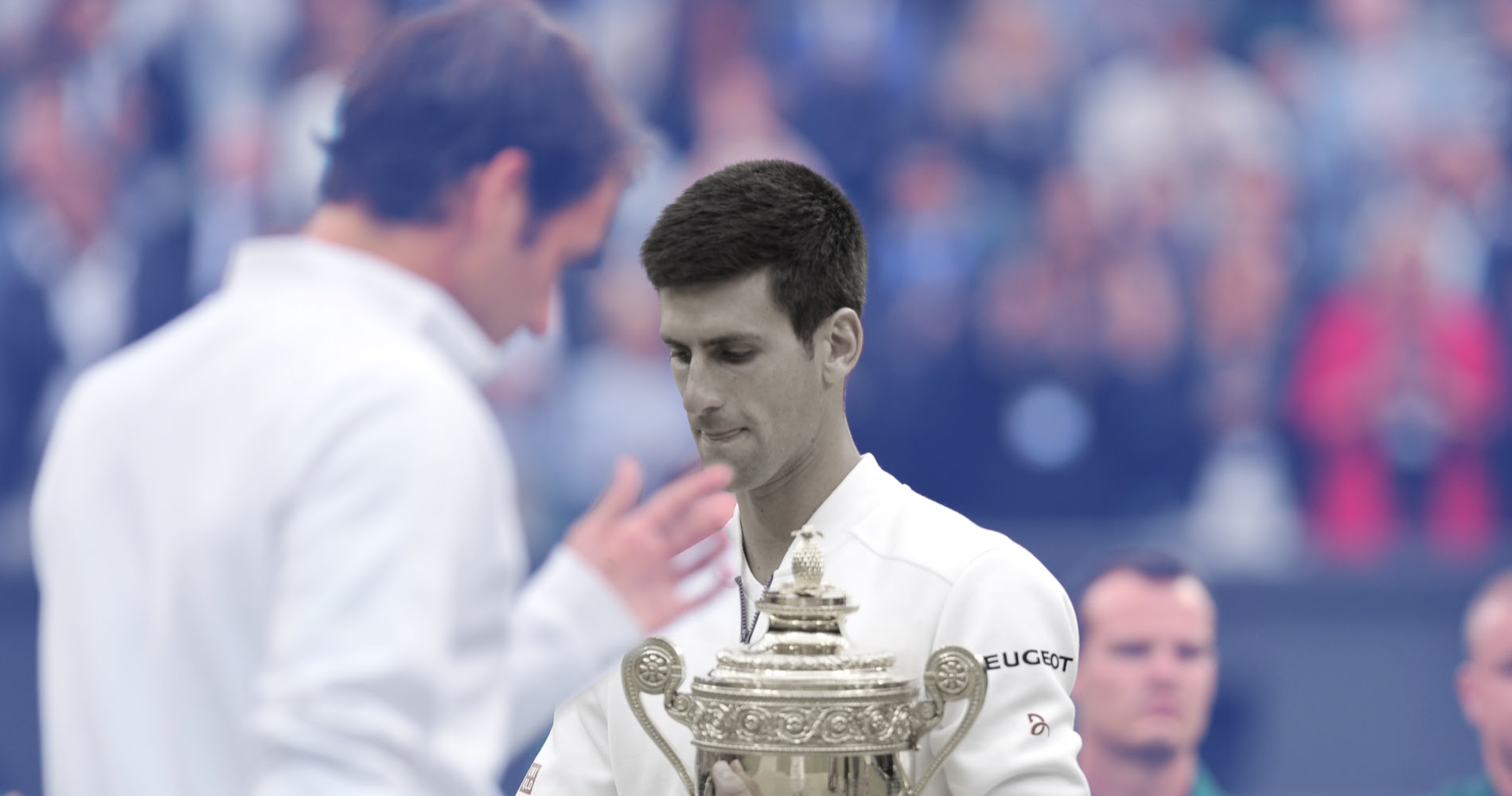
There was a moment midway through Novak Djokovic’s press conference on Friday when the 24-time grand slam champion gave a fascinating insight into how he feels about his tennis.
At 39, reaching the semi-finals of Wimbledon is a phenomenal achievement, there can be no doubt about that. Only Ken Rosewall, who made the final in 1974 closer to his 40th birthday, was older, but tennis was very different then, grass was different then.
Djokovic also stressed the achievement, but the frustration of being outplayed by Jannik Sinner in straight sets was clear to see when he was asked by The Guardian’s Sean Ingle a question about returning Sinner’s serve.
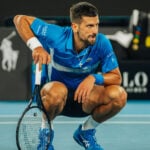
“Could you talk a little bit more about how you tried to deal with his serve. Everyone says you’re the best returner that has ever been,” Ingle asked. The response came quick as a flash. “Was, was,” Djokovic said. “That’s the reality. Was, was.”
It was the golfer Lee Trevino who once said: “The older I get, the better I used to be.” It would be churlish to suggest that that’s the case with Djokovic, who continues to play outstanding tennis, as he did at Wimbledon and especially in Australia this year, where he beat Sinner to reach the final. Still few players can beat him when it matters, but it’s getting harder and harder to add to his 24 grand slams, the most recent of which came at the US Open in 2023.
The stats from Friday’s semi-final – “a real blow-out”, as Djokovic himself called it – back up his feeling. He won just 12 percent of points on the Italian’s first serve and only 39 percent of points on his second. Sinner’s serve, as Djokovic said, is incredibly difficult to read, and the World No.1 had a very good day on serve. With a nod to Jimmy Connors, the best returner of his generation, Djokovic will probably go down as the best returner of all time, but he was almost powerless against Sinner.
Djokovic’s return vs. Sinner’s serve is…
“You cannot attack his first serve. You can try to read it, chip it, block it, get it back in play,” he said. “Very unpredictable serve, great variety, great balance, great pop. He’s using his height extremely well. Also second serve very deep in the box. A lot of rotation. He can go for speed. He doesn’t make many double-faults. He’s just super solid. He backs it up with first aggressive shot. If you play a shorter return, you’re, again, on your back foot. It’s really, really tough to play him, particularly when he serves (like that).”
Djokovic also took issue with a suggestion that he’s more competitive than he was last year, pointing out that he made the semi-finals of all four majors in 2025. Instead, he focused on the fact that Sinner was too good. “I just lost to a better player. I have to accept it. Obviously tough one. Once you get out of the court, it’s tough one to kind of accept. But it is what it is.”
That acceptance is surely the hardest thing for Djokovic to take. It happens to all great champions, almost inevitably, perhaps even more so when you keep playing until a late age (in traditional terms). At 34, in 2021, Djokovic came within one win of completing the coveted calendar year Grand Slam; at 36, in 2023, he won three slams and reached the final of the other. His longevity is one of his greatest strengths, but with every year, competing with Sinner and Alcaraz, in particular, is getting more and more difficult.
Proven to myself and others that I can still play at the highest level, and I have.
“I’m proud of what I achieved three nights ago (when he beat world No 4 Felix Auger-Aliassime in an epic five-set battle to reach the semi-finals for the 15th time. “Felix is number, what, three, fourth player in the world. Proven to myself and others that I can still play at the highest level, and I have. I reached the last four of Wimbledon.
“Losing in straight sets against the best player in the world, OK. It is what it is. It’s the reality you have to accept. But the tournament was positive in terms of the attitude on the court, the fighting spirit, the dedication. I mean, it’s still there.
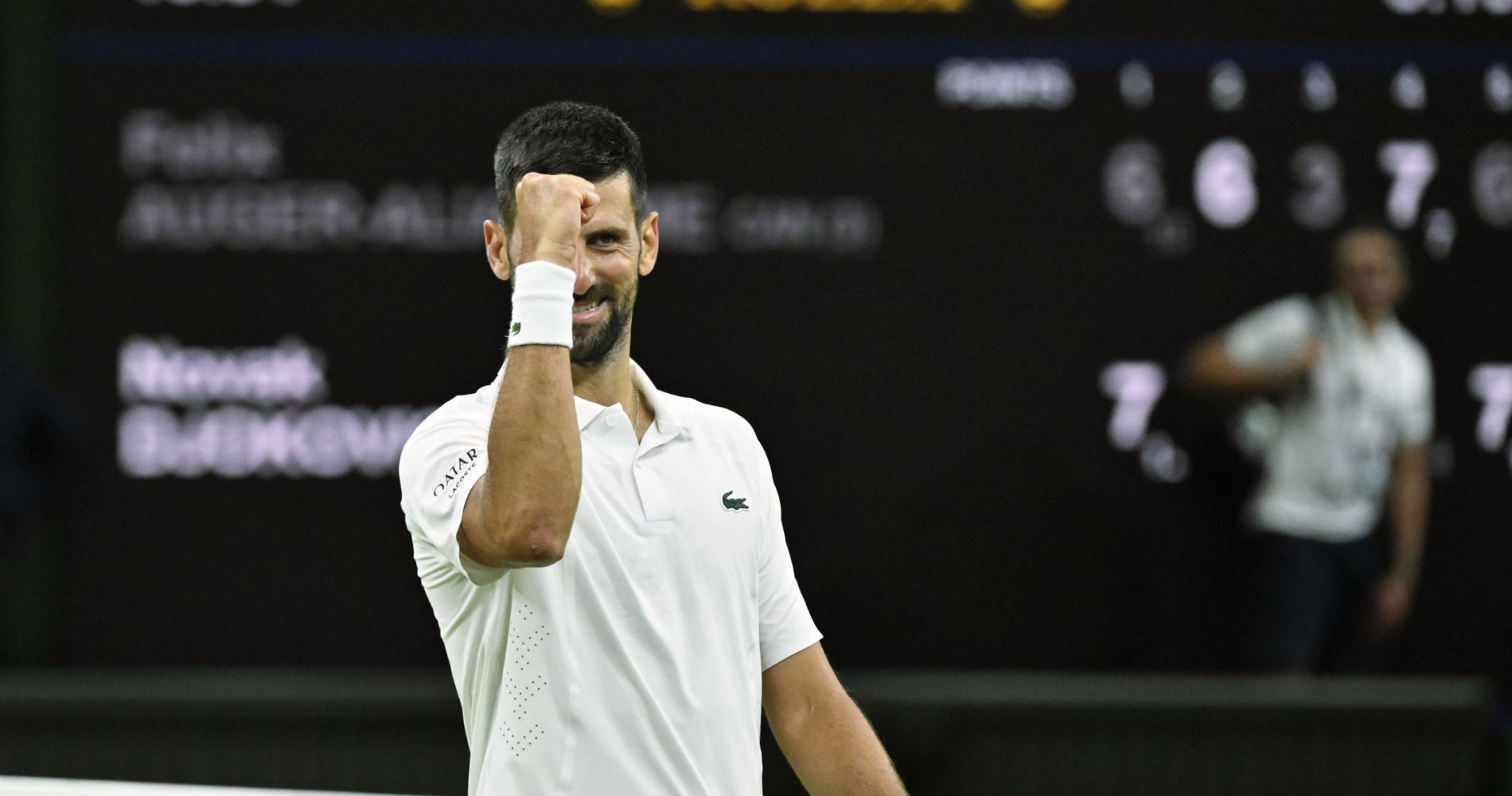
“Game-wise I wasn’t extremely happy. I kind of struggled to find that A game. It was kind of appearing in some moments in matches that I had prior to semis. Today I was just unable. I didn’t have time. I didn’t have time to really regroup and reset. He was just at cruising speed and I couldn’t catch him.”
Djokovic victim of his own success
Most people, as Djokovic said, would be more than happy with reaching the final of one slam and the semis of another in the same year. The difficulty for him, no doubt, is balancing the feeling that he’s still ultra-competitive with the fact that he’s not been able to convert good runs into more slam titles. As he admitted, in some ways he’s a victim of his own success; he’s won so much that unless he wins a title, it’s almost looked at as a failure, which is crazy, but also human nature.
“This year, out of three slams, I reached one final and one semifinal. I guess for 99% of the players, that would be a very good Grand Slam result,” he said. “For me, it’s good but not good enough, because I’m blessed and cursed to be used to something of a highest degree in terms of results and achievements.
I still enjoy the thrill of competition. Maybe I don’t enjoy all the hard weeks that are leading up to big tournament
“In some way, I’m also dealing with myself in a sense that I’m telling myself: Look, this is amazing that you’re still able, as people around me are telling me, to play at such a high level and push the youngsters to the limit for Grand Slam titles, which is true. But at the same time, I always have the highest expectations for myself.
“It’s kind of that internal battle really of what I’ve been through for the 20-plus years of my career, what the goals were always, the expectations, and trying to balance it out and really be a little more humble in that sense.
“Of course, I still enjoy the thrill of competition. Maybe I don’t enjoy all the hard weeks that are leading up to big tournament, putting myself over and over again through a lot of pain, physically mostly.”
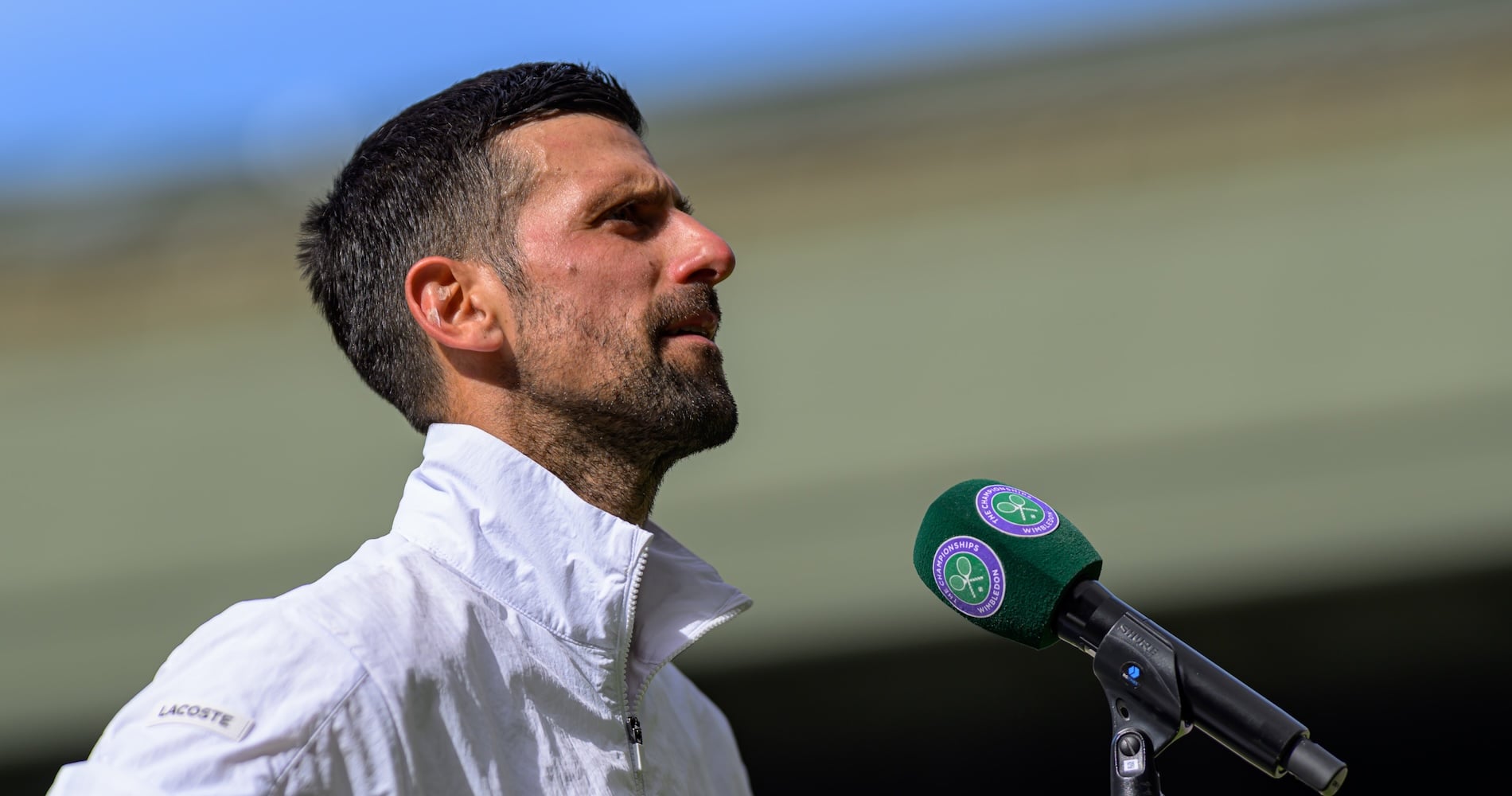
This statement echoes with Stan Wawrinka’s last words at Wimbledon last week aged 41, after a great battle against Matteo Berrettini, when he was asked if he shouldn’t push a little bit: “Being a professional tennis player takes a lot of energy, a lot of discipline, a lot of time, and especially even more at my age. It’s more difficult than what it looks, I guarantee you. Every day is a challenge. Every practice, you need to push yourself, even more you need to do, way more than before. I know how much I’m suffering. I feel how harder and harder it is at 38, 39, 40, 41. The joy and the emotion are only at the match day.”
Djokovic said he was fine physically: “I’m glad that this tournament, the body held pretty well. Pretty much every other tournament in the last two years it was always something. That’s the main thing. I feel when I’m healthy, I’m still able to play as a top-five player, still able to compete at the highest level. I like it. I like this life. I mean, tennis has given me everything in my life and has allowed me an opportunity to become who I am.
Djokovic : “How far you want to go”
“At the same time, you know, of course there’s always a question how far you want to go, what you want to play, how you want to play, et cetera, et cetera. I go through that process, but I try to take it, in a sense, a day at a time, see how I really feel. I don’t have any pressure or no one is forcing me to play. I do it because I really want to and because I still can. I still can play as a top-10, top-5 player. Let’s see what’s future brings.”
Speaking after the English portion of his press conference in his own language, Djokovic expanded on those feelings, revealing added frustration at the fact that consistency is harder and harder to maintain, that some days he’ll be playing amazingly well in practice but then unable to repeat it the following day, or on the match court.
tHE HARDEST THING FOR ME TO accept is that one day I play phenomenally in training or in a match, and then another day it’s like I’m not in my own skin. Biology I guess.
“The hardest thing for me to accept is that one day I play phenomenally in training or in a match, and then another day it’s like I’m not in my own skin, like I’m a completely different person,” he said. “I suppose, biologically, that’s simply how it goes – there are more of these swings now, physically.
“Today in practice – and it’s not the first time and won’t be the last – it wasn’t ideal. You’re searching for that feeling on the court, that timing, and if it doesn’t come together, it creates more nerves. You try to get past it, reset, and focus on what you need to do.”
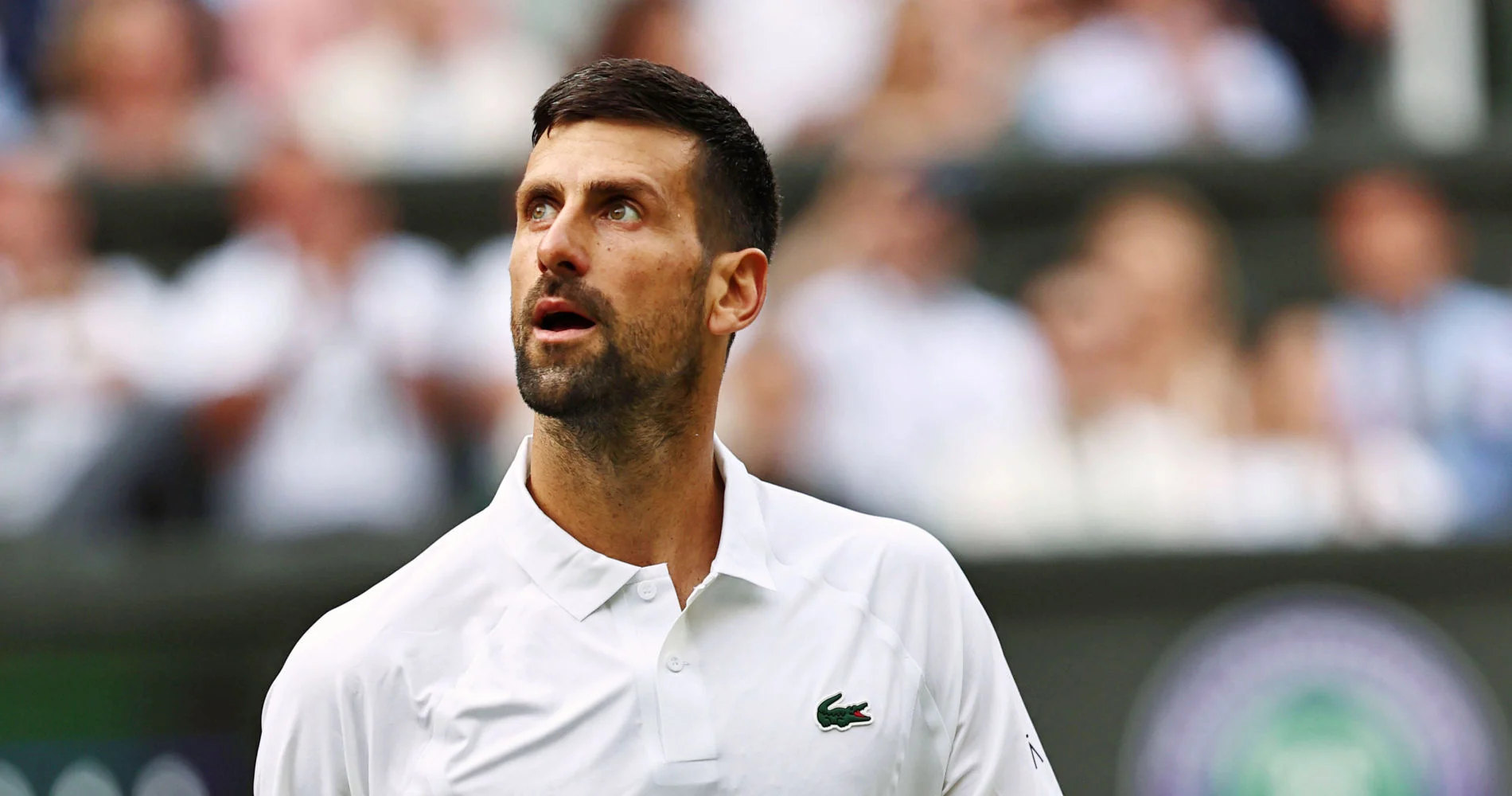
Djokovic said he still loves to compete – you can see that on the court – but the internal dialogue is tense. “Of course it’s hard, with the experience and everything I’ve achieved, to accept feeling on the court that my level suddenly drops, that I can’t anticipate where the ball’s going,” he said. “You feel like you’re a step slower than the guy across the net. That drives you crazy. But that’s the situation as it is, and I carry on – always with an optimistic mindset, charting my way forward.”
Djokovic said he still wants to win his 25th grand slam title but wants to find that equilibrium, where he accepts that what he has already achieved in the game is incredible, and unmatched, but he also admits he doesn’t know how long he will be happy to do all the hard work, get himself ready for the biggest events.
Still a Grand Slam contender
For now, though, he still has the motivation, the desire, the belief. He remains a huge contender for every grand slam title, and with Carlos Alcaraz not yet ready to return from a wrist injury, only Sinner, it seems, is able to make him feel like he did on Friday. He did beat Sinner in Australia and who knows what will happen at the US Open, especially if he lands in the opposite half of the draw.
“I understand people really want it. I want that 25th one too, but it’s not the ultimate goal,” he said. “Somehow, I’m never enough for myself, and then other people add even more weight on top of that – whatever I’ve achieved isn’t enough, it always has to be one more. Let’s celebrate a bit and be glad for what’s been achieved, and in that sense be a little more modest, realistic and grateful – not just in words, but truly.”
A question often raised of Djokovic – and all great champions that find themselves in this position; should he win another slam, would he then retire, going out on an all-time high? Or would he just carry on, thinking that if he could win one, then why not more? In the end, it’s his decision, and only he can decide.
“What I said last year still stands – I’d like people to respect my choice, and when the time comes to make that decision, to respect my space and my decisions. When it comes, there will be more reasons to celebrate than not,” he said.