Medvedev, a rare fan of the long Masters 1000, has an idea to fix the calendar
After reaching the Wimbledon third round, Daniil Medvedev, a rare champion of the long Masters 1000 events, argued they should carry even more weight, warning that the crowded points chase around them wears players down.
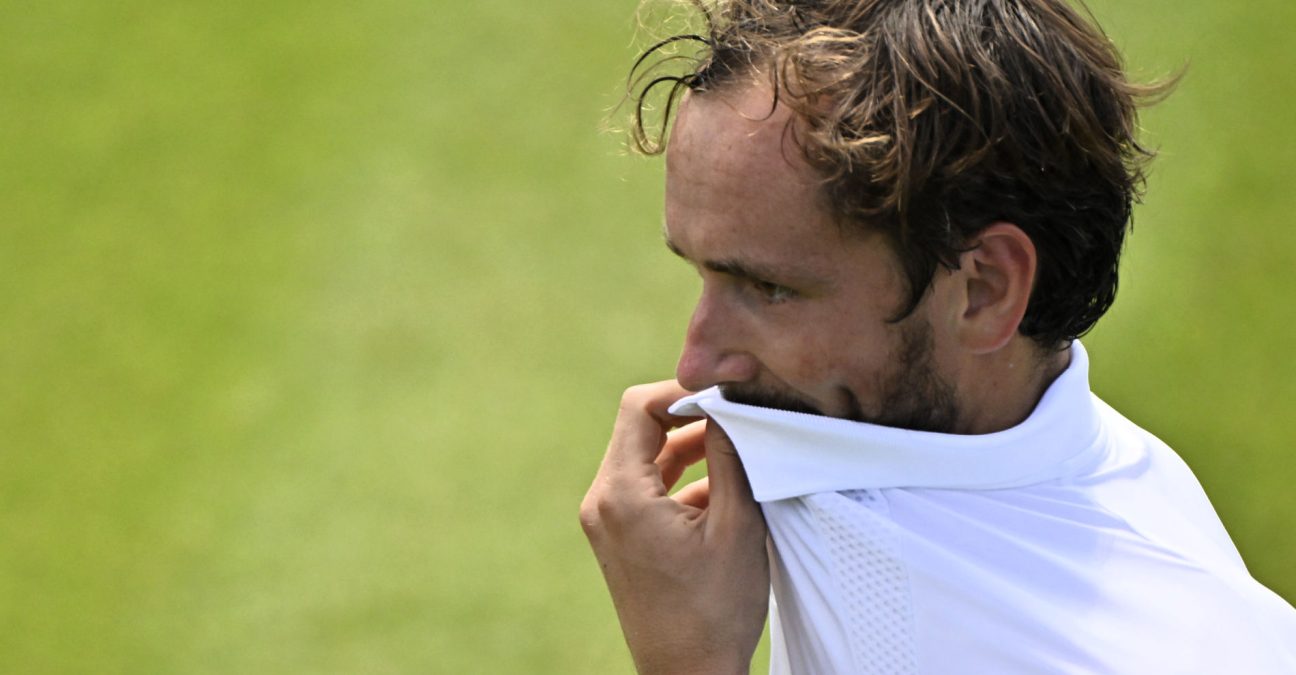 Daniil Medvedev, Wimbledon | © Ch. Caillaud / PsNewz

Daniil Medvedev, who defeated Spanish debutant Daniel Mérida Aguilar 3-6, 6-3, 7-5, 6-2 at Wimbledon on Wednesday, has long been one of the few players willing to defend the expanded, week-and-a-half-long Masters 1000 events. So when the eighth seed was asked about the growing concern that a bloated calendar is wearing players down, his answer carried a particular weight: even the format’s advocate now places himself “somewhere in between.”
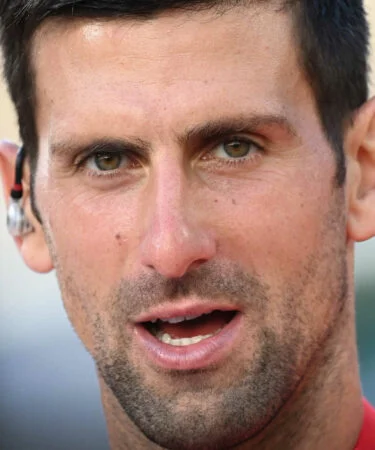
Speaking after the match, Medvedev was responding to comments made earlier in the week by Novak Djokovic, who linked the lengthened Masters events and a congested run-in to the Grand Slams to the rise in player injuries.


Medvedev did not fully endorse the causal claim, but he recognised the underlying problem. “I don’t know if there’s exactly a correlation with injuries,” he said, “but I see the point that it can be too long, and then it gets too congested.”
His central argument was not about length but about value. If the big tournaments are going to demand a fortnight of a player’s time, he said, they should be worth prioritising above everything else. “They should have even more importance, so people really prioritise them,” he said. As things stand, he argued, the points system distorts the incentives. “You win two 500 events and maybe Hamburg, which I love, but it’s not the biggest draw, it’s not a Masters 1000 – and it’s the same points as winning Indian Wells,” he said. “That’s not exactly right, in my opinion.”
8 of the 9 Master 1000 are mandatory
The scale of the commitment is considerable. In 2026 there are nine Masters 1000 tournaments — Indian Wells, Miami, Monte-Carlo, Madrid, Rome, Canada, Cincinnati, Shanghai and Paris — and a tenth is on the way, with a new event in Saudi Arabia scheduled to join the calendar as early as 2028.
For the leading players, these are not optional. Under the tour’s rules, a player ranked high enough for direct entry is required to play eight of the nine Masters events each year, with only injury as an exception ; Monte-Carlo alone is non-mandatory. The Saudi tournament, when it arrives, is set to be non-mandatory too – but with prize money expected to match the other big events, few eligible players would want to skip it.
In practice, a top player does not choose whether to enter the biggest events; he is entered, and must formally withdraw – with the attendant penalties – if he wants out.
96-draw tournaments over nearly a fortnight
That obligation now stretches across a longer calendar. Several Masters 1000 events run as 96-draw tournaments spread over nearly a fortnight, and the withdrawal rules are correspondingly strict: in such an event, if the withdrawal occurs after the qualifying or main draw is made, whichever comes first, the player shall receive a late withdrawal fine unless an on-site medical examination excuses it.
The remedy he floated was a clearer hierarchy, one that would let players plan a season around the events that matter and rest around the rest. “Maybe there’s room to move, where the Masters should be really, really big tournaments where you go full,” he said. “And then if you play them well, you don’t have to play other tournaments. If you don’t play them well, you have time and you can play other tournaments.”
Under the tour’s rules, any player who finishes a season in the top 30 becomes a “commitment player,” obliged to contest all four Grand Slams, eight of the nine Masters 1000 events, four of the biggest ATP 500 tournaments and the season-ending Finals if he qualifies – some 16 compulsory events before he chooses a single tournament of his own.
Medvedev recalls his pursuit of a place at the season-ending finals in Turin. “I played seven or eight tournaments in eight weeks, because 250 points can matter,” he said. His preferred alternative was a season built from the top down. “You come into a year and you’re like, ‘my plan is to play four Grand Slams, all Masters 1000’, and then I see which tournaments I add here and there.”
Medvedev, as ever, was careful to leave the wider fixes to others. “I prefer to leave this to more competent people,” he said of reshaping the sport. But on the specific question of how the calendar treats its biggest events, he was clear that something is amiss – and that the players, himself included, are paying for it in fatigue.