Serena Williams can compete at the highest level, says ex-coach Patrick Mouratoglou after Wimbledon return
Patrick Mouratoglou, who coached Serena Williams for a decade, argues her three-set Wimbledon defeat to Maya Joint confirmed the 23-time major champion can still compete at the top, four years after her last singles match.
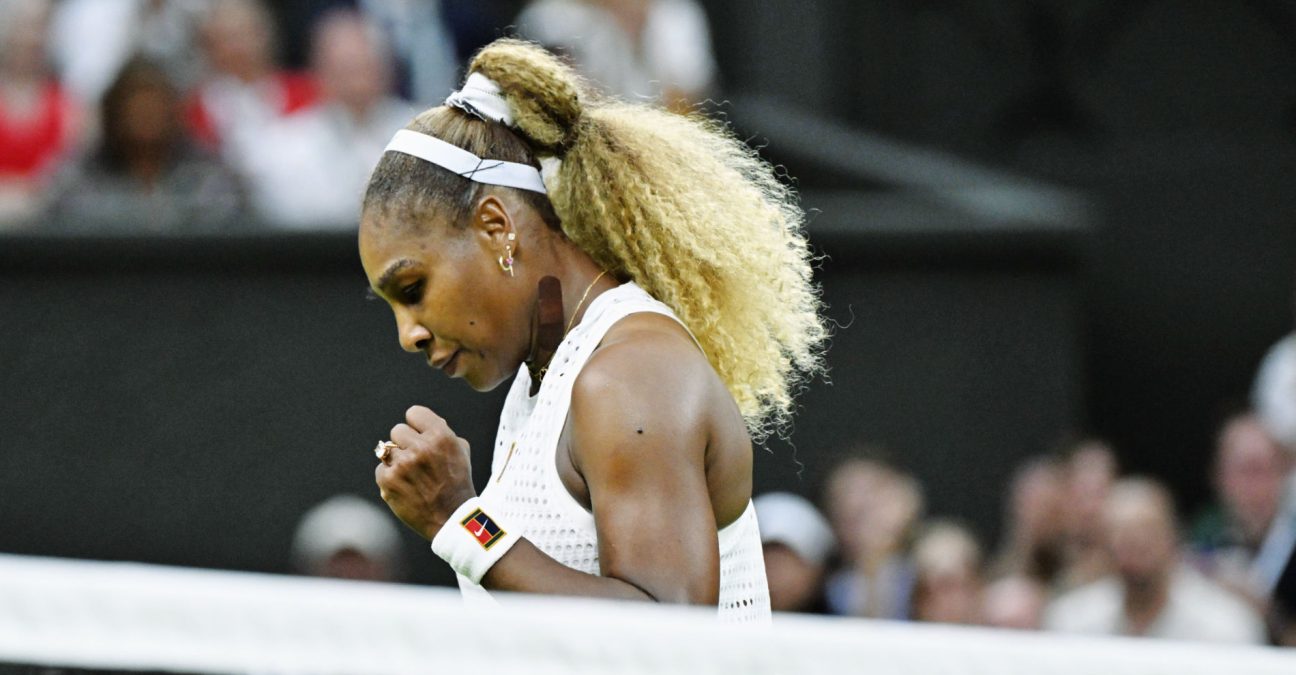 Serena Williams, Wimbledon 2026 | © Chryslène Caillaud / PsNewz

Patrick Mouratoglou, the former coach of Serena Williams, says her Wimbledon first-round defeat proved she can still play elite tennis, four years after her last singles match.
The verdict from the man who guided Williams for a decade (2012-2021) was unequivocal. “Serena can still play at the highest level,” Mouratoglou wrote on LinkedIn after watching the 44-year-old lose 6-3, 6-7 (6), 6-3 to Australia’s Maya Joint on Centre Court on Tuesday. “That, to me, is no longer a question.”


It was Williams’ first singles match since the 2022 US Open, played on a wild card with her two daughters watching from the box. She saved a match point in the second-set tiebreak to force a decider before world No. 87 Joint, less than half her age, broke twice to close it out.
she produced that level from her very first singles match back. Honestly, that’s unbelievable.
For Mouratoglou, the scoreline was almost beside the point. “She walked onto Centre Court with the whole tennis world watching and judging every shot,” he wrote. “And she produced that level from her very first singles match back. Honestly, that’s unbelievable.”
He was careful not to frame the result as a Williams failure, crediting the opponent. “Maya Joint might not currently be in the top 20, but she played at that level,” Mouratoglou wrote. “Serena had to face someone producing outstanding tennis.”
The Frenchman broke the match into phases. “It took Serena about a set and a half to really settle into competition again,” he wrote, before the level lifted midway through the second. Williams ran behind the score til 6-3, 3-1, before getting back into the match.


“Then we saw the Serena we know.” The drop in the back half of the third, he argued, was simply the cost of four years away. “Matches demand something that practice simply cannot reproduce.”
His diagnosis centred on the serve, long the foundation of her game. “Her serve wasn’t where it can be,” Mouratoglou wrote, singling out the slice delivery. He cited a 59% first-serve percentage, 68% of first-serve points won and 46% behind the second. He wants her return more aggressive, too.
On the one area most observers fixed upon, her movement, he refused to join in. “Serena has never needed to move like Coco Gauff,” Mouratoglou wrote, arguing that when serve and return function, she controls points before movement decides them.
Mouratoglou ended not with a verdict but a question, one he framed as the only one left. “The question is no longer: ‘Can she?'” he wrote. “It’s simply: What does she want to do next?”