“A little door is always open”: Sorana Cirstea, into the Rome second week, hasn’t quite shut the door on staying
Sorana Cirstea was going to retire at the end of 2026. Then, at 36, she beat the world No. 1 and reached the second week of the Italian Open. The door, she now says, is slightly open.
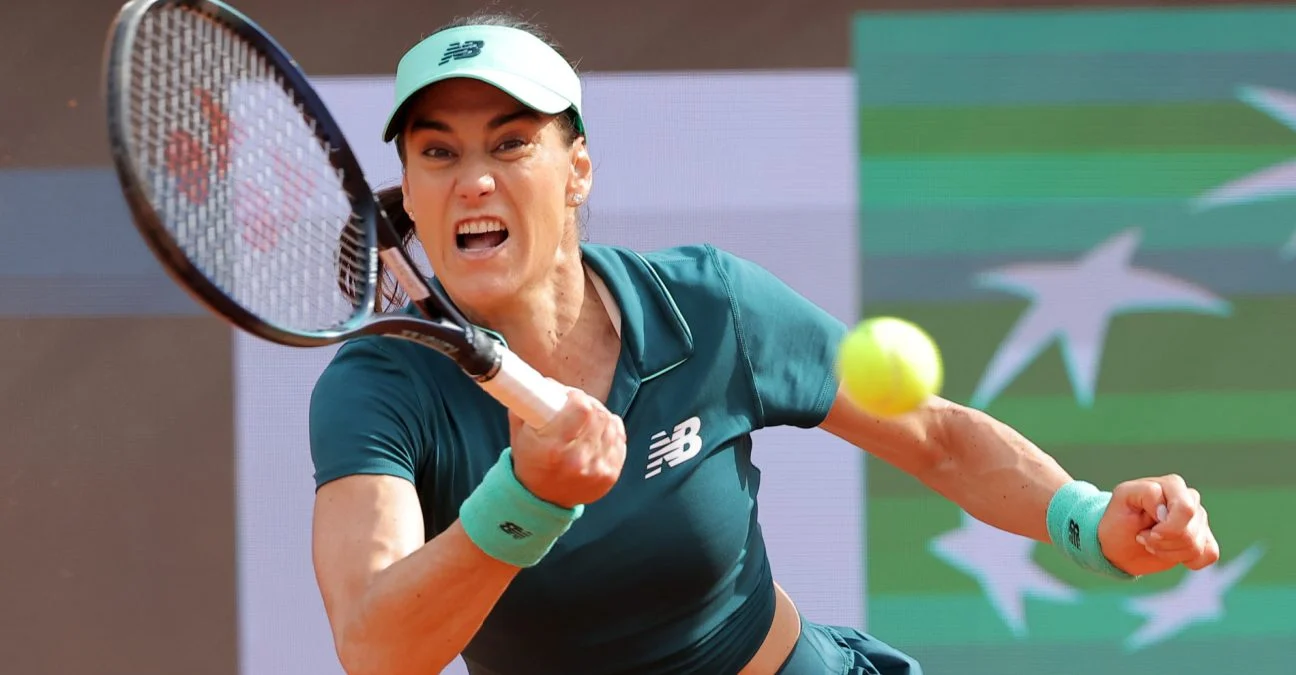 Sorana Cirstea, Rome 2026 | © Foto FITP

Sorana Cirstea is into the second week of the Internazionali BNL d’Italia. Forty-eight hours after beating Aryna Sabalenka 2-6, 6-3, 7-5 – at 36 years and 28 days, the oldest player since 1975 to beat a world No. 1 on clay, the oldest to come from behind to beat one, and the oldest to claim a maiden win over one – the Romanian has moved through the round of 16. The week has continued. The retirement story has not stayed where she left it.
For most of 2026, Cirstea’s framing of her own season has been settled: this is her last year on tour. She has said it consistently. She said it in Cluj-Napoca, after winning the Transylvania Open in her home country, describing the title afterwards as a moment that, if it had been her last on tour, would have left her at peace. “If I had to retire after Cluj, I would have been very, very happy,” she said.
Asked in her press conference after the Sabalenka match whether the win – and a question from Sabalenka herself, who said in the WTA-distributed quotes that she felt Cirstea “could stay for longer” – had altered the picture, the 36-year-old gave an answer that wasn’t quite the firm “no” most people would have expected.
“My mind is quite set that at the end of the year, I want to retire.”
“My mind is quite set that at the end of the year, I want to retire,” Cirstea said. “We will see how this year will go. Like a little door is there always open, because you never know how things go in life. You always plan things, but then it doesn’t always happen like you plan.” She added: “We will see what life has to offer for me.”
That answer has aged into something more substantial now that the week has continued. Cirstea is no longer a 36-year-old who beat the world No. 1 on a Saturday and goes home on a Monday. She is a 36-year-old in the second week of a Masters 1000 (vs. Linda Noskova), still in the draw, still in form.
The reflective material is consistent. Asked about regrets, she split her career cleanly down the middle. “If I do have regrets, it’s for the beginning of my career,” she said. “I could have been more disciplined. There are lots of things I could have done better. The last part of my career, I feel I’ve really given everything to tennis. I worked hard. I was disciplined.”
What she has found, by her own account, is the balance she didn’t have when she was younger. “I’m happy that I managed the last couple of years to also enjoy. Be competitive, have ambition, want to do, but also be able to enjoy. I love tennis. I love the sport. I found that balance.”
The Cluj memOry
It is the language of a player who has made peace with leaving – and who is, partly for that reason, playing the best tennis of her late career. Cirstea is now ranked No. 70, having spent much of 2025 outside the top 100. She has reached the third round or better at three Masters 1000 events on the European clay swing. She has produced a top-ten win, a top-one win, and a deep run in her home country, all inside two months.
Cirstea, twenty minutes later in her own room, was no longer quite as ready to assume the same thing. Now, with two more match wins and a quarter-final place at a Masters 1000 added to the record since, the question has acquired its own gravity.
The little door, in her phrase, is still open. Whether anyone walks through it depends on what the rest of the year brings — and on Tuesday, in the Rome quarter-finals, on how much further the rest of the year is willing to carry her.