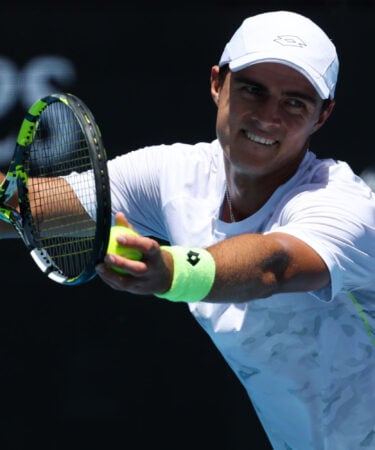
Four reasons Daniil Medvedev’s first-round Roland-Garros loss was not a surprise – if you listen to his open analysis (plus a mysterious one)
A seventh first-round Slam loss in his last ten majors. Daniil Medvedev knows why – and gave four reasons in his press conference. The fifth, he says, would be an excuse. So he won’t share it.
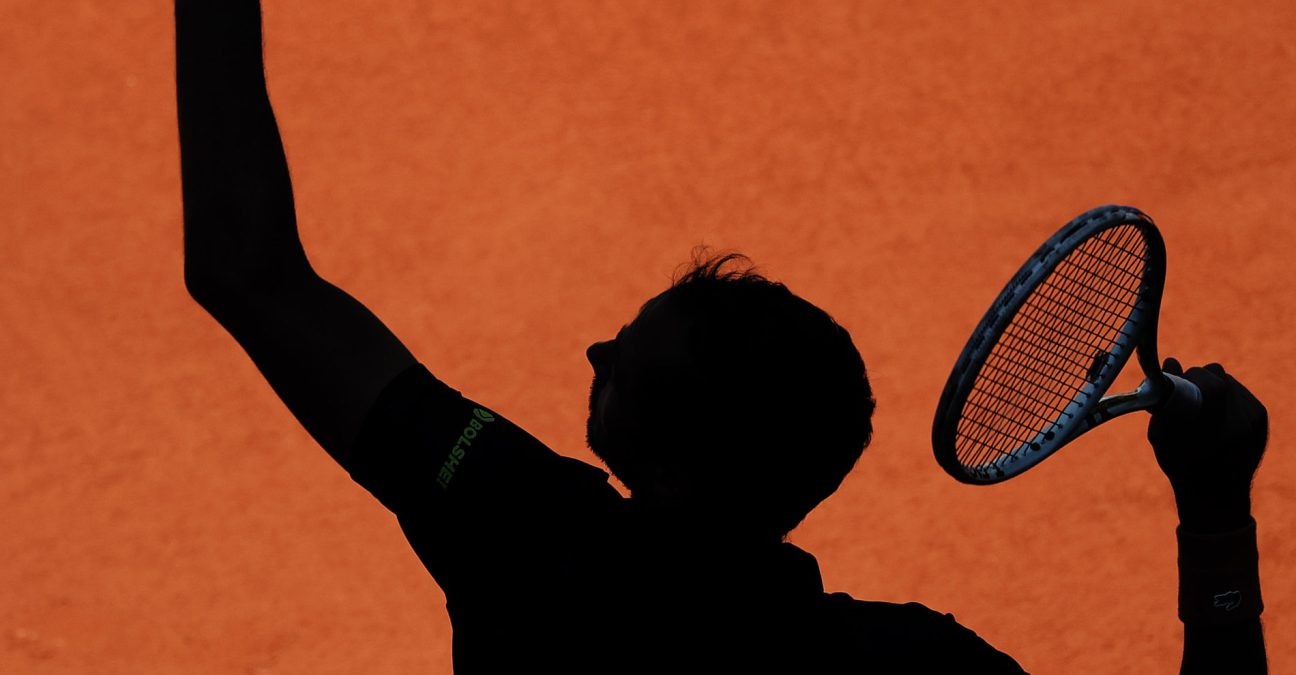 Daniil Medcedev, Roland-Garros 2026 | © Gepa / PsNewz

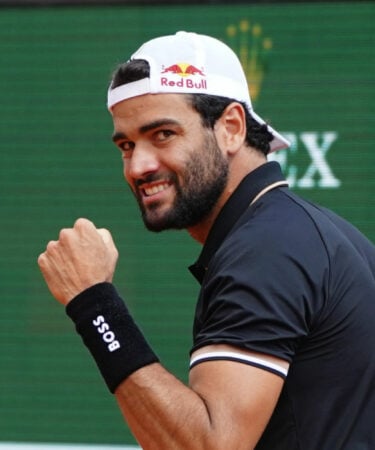
Daniil Medvedev lost his first-round Roland-Garros match on Tuesday afternoon to the Australian Adam Walton, world No. 109, 6-2, 1-6, 6-1, 1-6, 6-4. It was his seventh first-round Slam loss in his last ten majors. The news confirmed that the Russian is unpreditable. The loss came two weeks after he had taken Jannik Sinner to the brink in the Rome semi-final, the strongest performance of his clay swing – and four weeks after a 6-0, 6-0 loss to Matteo Berrettini in Monte-Carlo, the first double-bagel of his career.
The heat , again 30+ degrees on Tuesday noon, was not the reason. “I felt okay with the heat,” he said. “It’s not easy for anyone to play in this heat, but I felt okay with it. Generally, I felt like we were fresh, okay in the fifth, like we were running and stuff like this. Nobody was cramping or something. I don’t think the heat played any role.”
So why did he lose? Medvedev was pretty open to explore with the media.
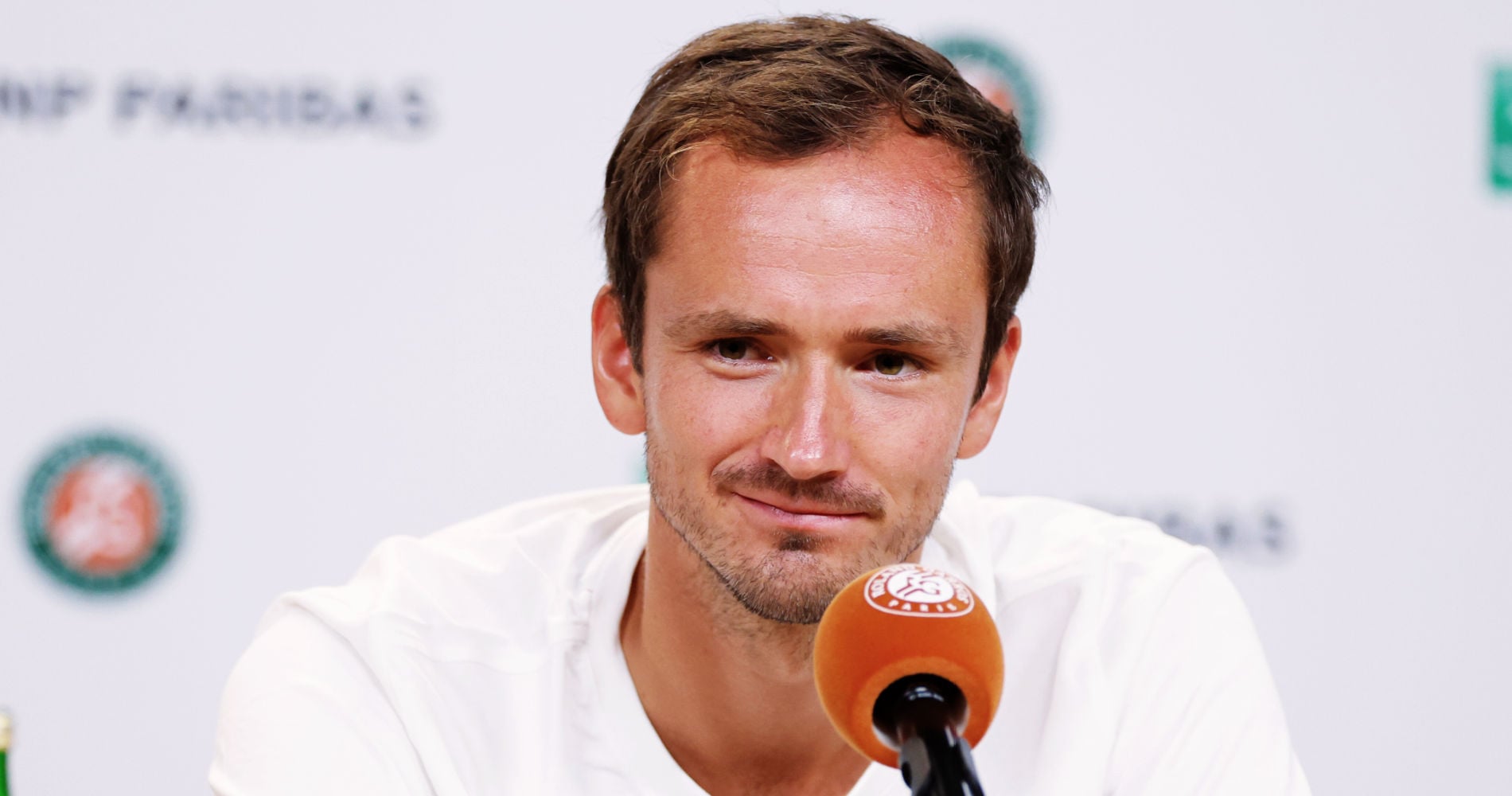
1. Medvedev didn’t increase his level
The score sheet told the story: a 6-2 set lost, a 6-1 set won, a 6-1 set lost, a 6-1 set won, a 6-4 set lost. Five sets of inconsistent tennis, and on his own framing the reason was simple. “He played good some moments, some moments not that good, and I managed to take the match when he didn’t play that well. That’s it. I didn’t manage to raise my level enough to win the whole match, and that’s why I lost.”
The deeper problem, on his account, is what he can and cannot do when the ball is not coming off the racquet the way he wants it to. “My tennis depends on a couple of things that I cannot control. If the ball doesn’t go, I don’t have the power to make it go. For Jannik, it doesn’t matter. If the ball doesn’t go, he hits it full power. If the ball goes, he just makes a big adjustment and doesn’t go full power. Me, if I go full power, and if the ball doesn’t go, it doesn’t go.”
It’s very tough for me to get the rhythm going. The first round is the toughest one, and once I get through it, maybe I can do better.
2. Medvedev just need to adapt
The Walton loss was Medvedev’s seventh first-round Slam loss in his last ten majors. It is a pattern Medvedev now acknowledges as systemic, not coincidental, and he gave the most substantive answer he has offered on it in a year. “I do feel like I was, and I do think I am still usually good at Grand Slams. Yes, I can lose, even now first round, but I don’t think – if I may say – I’ve lost the ability to perform at Grand Slams. So I do think it can come back any moment.”
The structural problem, on his account, is not his form. It is the modern game. “If we compare all four Grand Slams to five years ago, the game is different at these Grand Slams, and I don’t think it suits me well. So it’s very tough for me to get the rhythm going. The first round is the toughest one, and once I get through it, maybe I can do better.”
The “five years ago” timeline puts the change at roughly 2020-2021 — the period in which the men’s game has restructured around heavier topspin baseliners and quicker shot tolerances. Medvedev’s flat, deep, return-everything style was built for a slightly different version of the modern Slam. His own admission is that the Slams have moved without him.


3. He is not an early-morning player
Medvedev’s match against Walton started at 11 in the morning. He volunteered, unprompted, that this is not his preferred situation, and the answer he gave was characteristically self-aware.
“I don’t like to stand up early, and I’m usually less performative when I get up at 6:15 in the morning. I like to sleep in. So this is just part of it. In general, in tennis you need to adapt to the things, and sometimes I’m not good enough to adapt to it, and sometimes I am. That’s basically all I can tell you.”
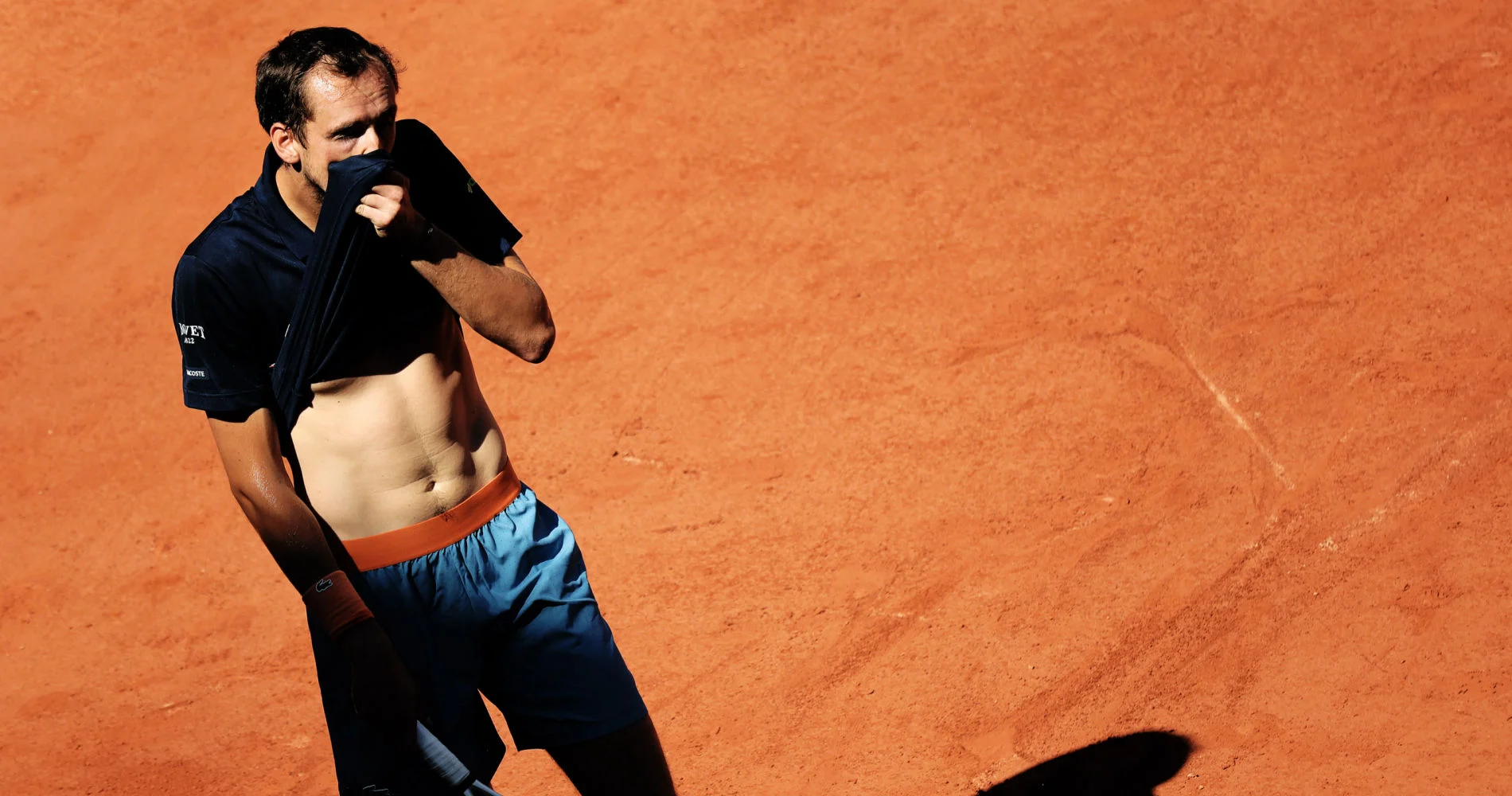
4. Possibly pressure management
Asked directly by Tennis Majors whether the seventh first-round Slam loss in ten majors was the result of pressure, emotion or ambition management at the Slams, Medvedev hedged but did not deny it. “It is possible,” he said. “At the same time, I do feel like I was, and I think I am still usually good at Grand Slams. Yes, I can lose, but I don’t think, if I may say, I’ve lost the ability to perform at Grand Slams.”
The Russian-language portion of the same answer was more revealing. Asked how he processes a tactical mistake during a match, Medvedev described smashing his racquet as a release valve for his anger at himself. “When I do that, let’s say — it means I’m angry with myself. At myself, in moments where I made a mistake or made a wrong tactical decision. And in those moments I get angry, and when I’m angry, I try to relieve the stress that way. Dasha [his wife] is my main support, so sometimes I talk with her.”
5. And the reason he won’t give
Then there is the reason that, by Medvedev’s own framing, sits behind the other four. He brought it up himself and refused to elaborate. “I don’t want to find excuses,” he said in English. “I know why I don’t really always play my best in Roland-Garros. But if I say it, it’s excuses. So I keep it to myself.”
He repeated the same framing in Russian, even more explicitly. “I think I know the reasons for myself, but let’s say – that’s excuses. So I don’t want to get into that. Because it might not be true. Maybe I just wasn’t strong enough mentally, physically, or in some other way, or in tennis, and I lost. But I do consider that one of the reasons doesn’t entirely depend on me. It’s something we can work on, but I’m not managing it.”
“I do think it can come back any moment”, he added. At Wimbledon, for example.”