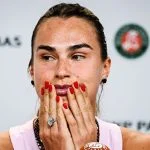
Players snub Wimbledon’s record payout, revive 15-minute media protest over revenue share
The world’s leading players will extend their prize-money protest to Wimbledon, capping media appearances at 15 minutes through the first week despite the tournament’s record 20% purse increase, as the standoff over revenue sharing and player welfare hardens into a campaign.
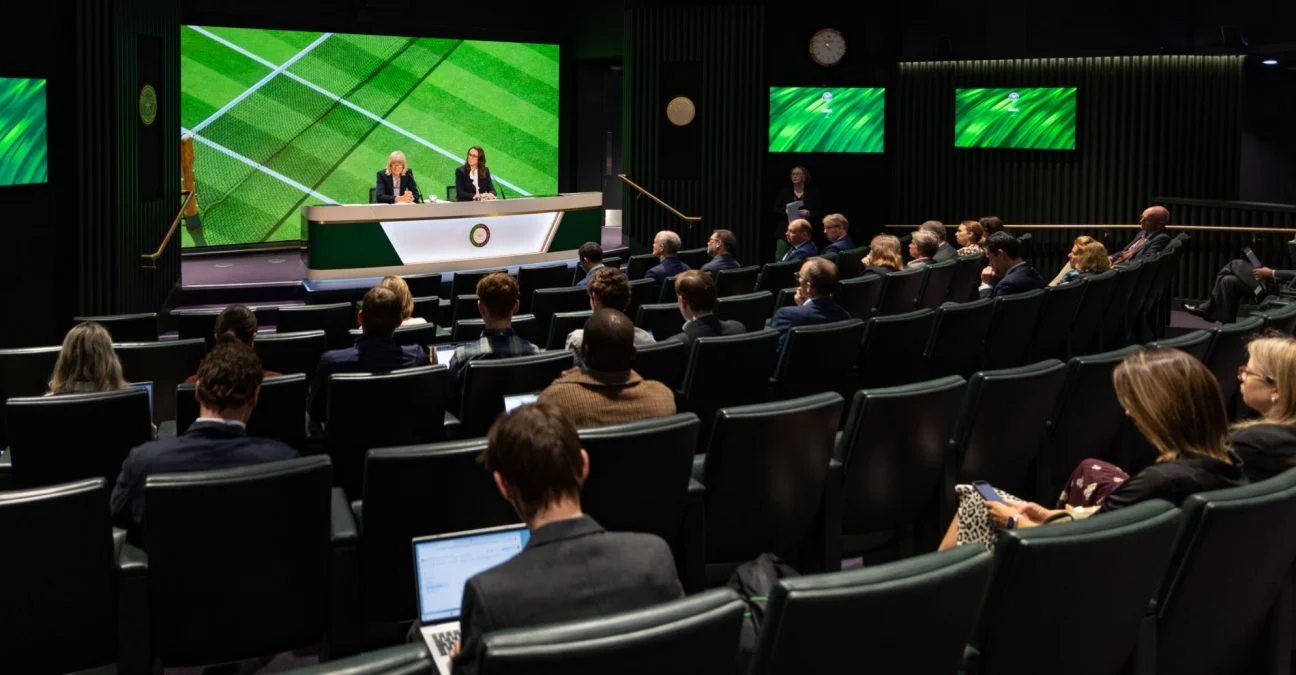 Wimbledon Media Theater | © AELTC/Felix Diemer

Tennis’s leading men and women will carry their prize-money protest into Wimbledon, limiting their contracted media commitments to 15 minutes throughout the first week of the Championships in a direct continuation of the action first staged at Roland-Garros in May.
The decision, confirmed on Wednesday, means the symbolic 15-minute cap – a number chosen to mirror the roughly 15% share of revenue the players say the Grand Slams return to them – will be observed from the pre-tournament press conferences on Saturday.
It revives a tactic that, at the French Open, was mostly observed, occasionally stretched, and never escalated into the boycott that some of the game’s biggest names had floated in the build-up.


Letter to the All England Club
The RedEye player group, the informal alliance operating across the ATP and WTA that drove the Paris campaign, has written to the All England Club to inform its leadership of the planned action. Notably, the letter acknowledges the prize-money increase Wimbledon announced this month: a rise to £64.2 million, up 20% on 2025 and, in the Club’s own description, the largest annual uplift in the tournament’s 149-year history. The men’s and women’s singles champions will each earn £3.6 million.
That the players are pressing ahead regardless points to the heart of the dispute, which has never been only about the headline figure.
Their case at Wimbledon rests on three arguments, and the first is structural rather than financial. Proposals tabled a year ago for a player welfare fund and a formal player council – mechanisms intended to support the rank and file rather than the elite – have, the group says, “received no substantive response from the All England Club”.
14.4%, below the 14.9% of a decade ago
The second argument is one of percentages against raw numbers. Despite the 20% rise, the players calculate their share of Wimbledon’s projected revenues at 14.4%, below the 14.9% of a decade ago, even as the tournament’s revenues have grown by more than £280 million over the same period.
Their July 2025 submission had asked for 16% of revenues this year, approximately £71 million, against the £64.2 million eventually announced. The share of Wimbledon’s purse flowing to the game’s best players has declined steadily since the 2010s, even as the pool for qualifiers and early-round losers has expanded.
The third point is the one most likely to determine whether this dispute moves at all. The players note that recent public comments from Wimbledon’s leadership have questioned the very principle of a revenue-sharing formula, which is the foundation on which their entire proposal rests.
Grand slams under pressure
All England Club chair Deborah Jevans, announcing the increase, urged players to recognise that the Club had listened and that surplus revenues are reinvested in facilities, the grass-court season and the development of the sport, while maintaining that a direct revenue-sharing model is not feasible. As the players’ representatives put it, it is difficult to reach a structural agreement while the structural premise itself is being contested.


The standoff has a familiar shape. At Roland-Garros, the FFT held firm on this year’s purse but opened talks, with tournament director Amélie Mauresmo insisting the players’ concerns were taken seriously even as she ruled out movement for the 2026 edition.
The Grand Slams have consistently drawn a distinction between their own non-profit structures and the investor-backed commercial machinery of the wider tour, in effect inviting the players to direct their grievance elsewhere.