“I can’t move, I can’t eat, I can’t drink”: the morning Matteo Arnaldi’s first Slam semi-final disappeared
Matteo Arnaldi’s Roland Garros semi-final dream ended off-court due to a virus. His withdrawal unexpectedly sent friend Flavio Cobolli to the final against Alexander Zverev, creating a poignant story of intertwined fates, sportsmanship, and an unearned opportunity.
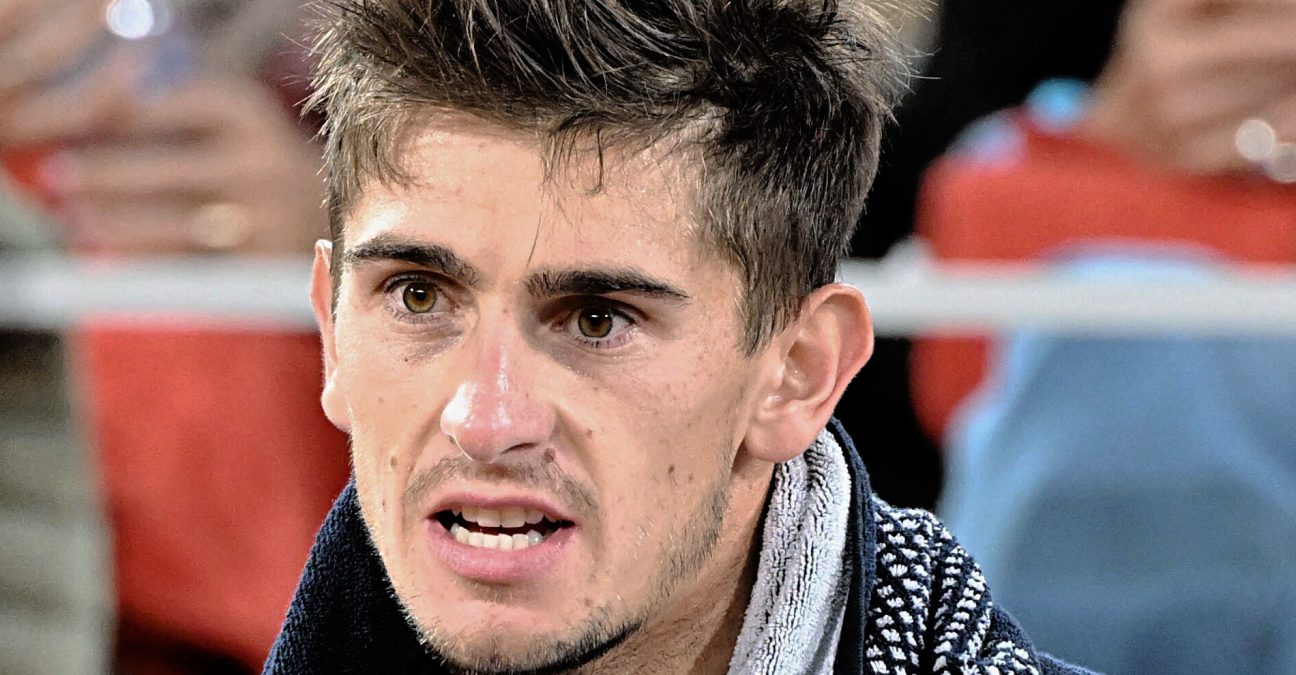 Matteo Arnaldi, Roland-Garros 2026 | © Ch. Caillaud / PsNewz

There is a particular cruelty in the way it happened. Matteo Arnaldi’s first Grand Slam semi-final ended several times over before it started – in a hotel bathroom at one in the morning, and again at six – and never got as far as a tennis court at all.
For two weeks Arnaldi had been the impossible story of Roland-Garros. A player ranked around 150 a month ago, who by one count had spent more hours on court than any semi-finalist here in decades, back from a physical problem that had threatened to define his year. He had reached the last four by beating Matteo Berrettini in the quarter-finals – or rather by watching Berrettini break down against him, the hip giving way mid-match – and arrived there feeling, against all logic, fresh.
“How the tournament went, how many hours I spent on court – I was actually feeling very good,” he said. And then, overnight, a virus took it all away
The timeline he gave was clinical and merciless. Fine at practice. Fine through the afternoon. Then dinner, and a stomach that turned. One a.m., vomiting. No sleep. Six or seven a.m., worse. A doctor in the room, “some stuff,” and the dwindling hope that it was just something he ate. By daylight the verdict was written by his own body: every time he tried to eat or drink, he was back in the bathroom. “I just know I can’t move, I can’t eat, I can’t drink,” Arnaldi said.
“There was really no way I’d be able to play.” A virus is the suspect. He had the chills, what he believes was a fever, and the thing has a precedent: something similar struck him in Acapulco last year.
To withdraw from your first Slam semi-final is not something you wish on anybody.
He came to the press room anyway, grey and apologetic, his eyes narrowed with exhaustion, to answer a handful of questions before being allowed to leave. The phrase he kept returning to was not about himself. “To withdraw from your first Slam semi-final is not something you wish on anybody,” he said, and then: “I feel sorry for everyone who got tickets and came, all the Italians who came to watch us.” There was no self-pity in it, only a kind of bewildered courtesy – a man saying sorry for an illness that was no one’s fault.
Beside him sat Cobolli, who had said he almost cried when the news reached him an hour earlier. It was Cobolli who turned the moment into something more than a medical bulletin. Speaking in Italian, he addressed the friend whose illness had handed him a final. “First of all, I wanted to thank you for what you did these two weeks,” Cobolli said. “You were an inspiration to all of us. You fought for so many hours on court, showing your true worth. You’re an example for me.”
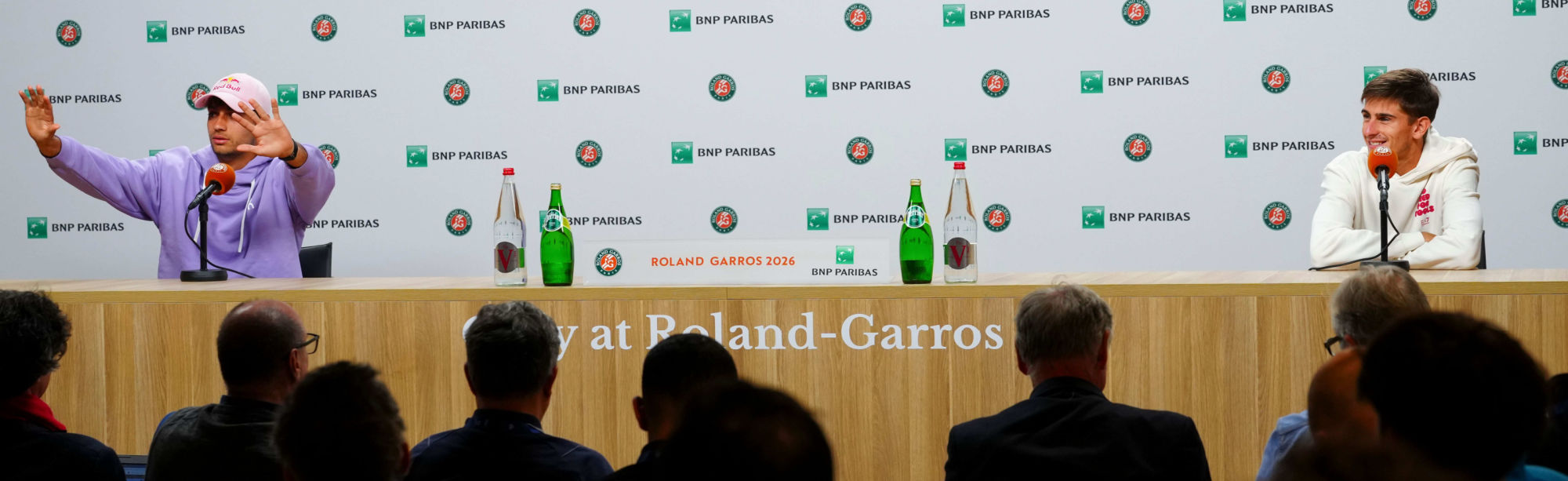
Cobolli’s emotion
For Cobolli, the gift came wrapped in grief. He had spent the day in the ordinary liturgy of a semi-finalist – physio before lunch, lunch with the team, a nap on the sofa, a warm-up on court, ready to compete. At six o’clock, the day collapsed. “It’s something you don’t expect at all. I was completely sad for him.” He had been hugged by his father, and then by his whole team, but the embrace was for a ranking, not a result – “cheering for the top ten ranking,” the milestone that arrives whatever happens next. “So now I’m sad and happy at the same time.”
He found the words to honour Arnaldi that the moment demanded, in English this time – “the best person, outside the court, for how he does things… one of the best on tour” – and then, with the strange practicality athletes summon, he announced he was going straight back out to hit. “I don’t feel satisfied,” Cobolli said. “I need to keep my engine running.” He would try to make a practice feel like a match it could never be, and then go to dinner with his friends, where the talk, he admitted, would be of the top ten “more than this final.” Then Cobolli headed out onto Chatrier for an open practice. The evening would be less demanding physically than originally planned. Less demanding? Not emotionally.