“I wanted to impersonate Roger”: how watching Federer in Paris shaped Andreeva’s title run
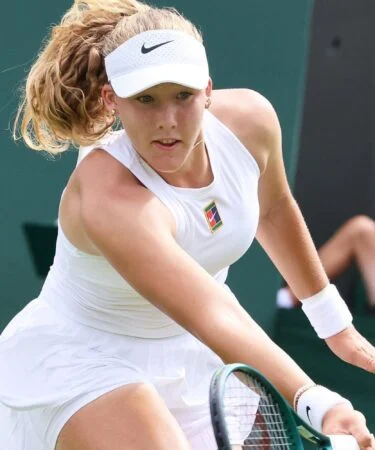
After a spring of frayed nerves, Mirra Andreeva spent her Roland-Garros fortnight watching old Roger Federer matches and trying to carry herself the way he did. At 19, the newly crowned champion explains how impersonating her idol’s calm helped her choose to be a fighter.
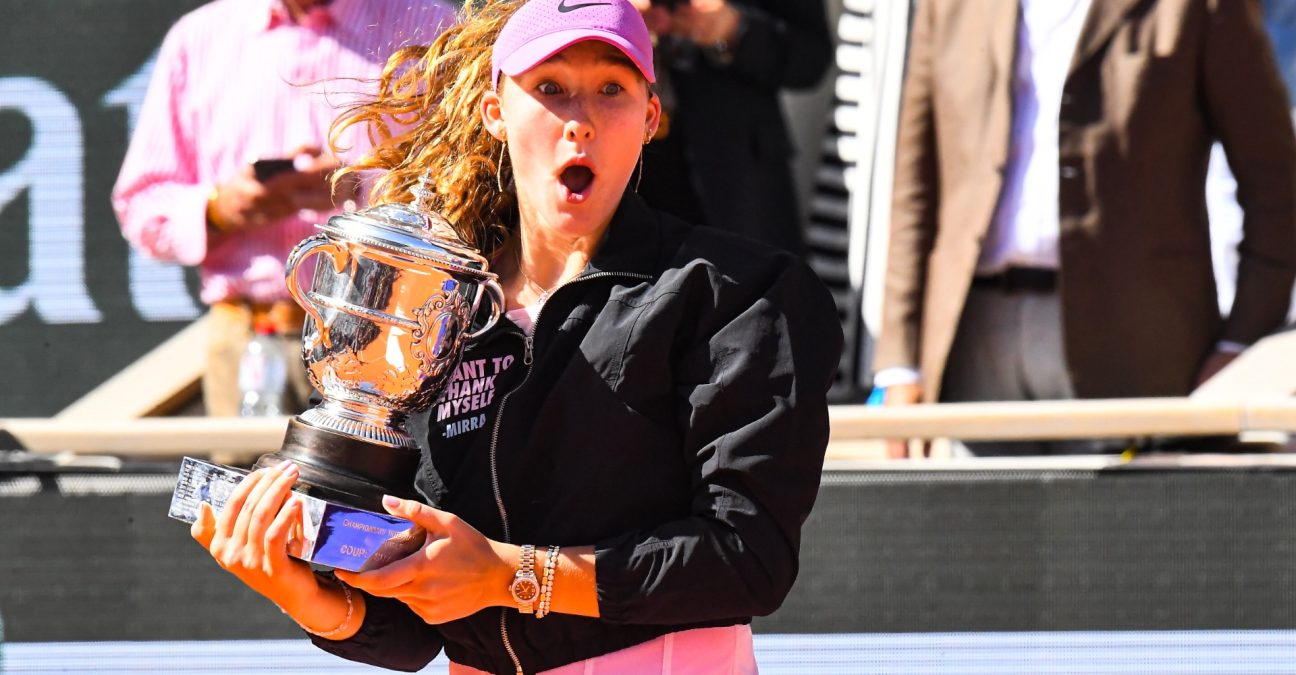 Mirra Andreeva, Roland-Garros 2026 | © PsNewz

Mirra Andreeva said she modelled her on-court demeanour on Roger Federer during her run to the Roland-Garros title, watching the Swiss great’s old matches in Paris and consciously trying to carry himself the way he did. That’s what the young champion answered when she was asked about the help of her psychologist, which she mentionned during her speech.
The 19-year-old, who has spoken often about her struggles with on-court emotion, said the shift from a difficult spring to a calm, controlled fortnight came not from a tactical overhaul but from a decision about who to be. “I wouldn’t say there was a big reset,” she said. “I just decided, like my psychologist says, you can always choose how you’re going to be on court, who you’re going to be as a person. So I decided to choose to be a fighter.”
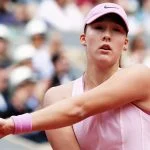
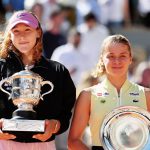
Part of that choice, she revealed, was emulation. “I watched a lot of Roger’s matches here,” she said. “Obviously I’m never going to have the same aura – no one’s going to have the same aura – but I wanted to try to impersonate the way he behaves a little on court, because I love watching how he used to play.”
The goal, she said, was as much about appearance as result. “I really wanted to look good out there, not be frustrated or unhappy with how I play. It’s also nice for people to watch players try their best and fight and compete.”
The mysterious psychologist
Andreeva credited her psychologist heavily, saying she had spoken to her before both the semi-final and the final – “the most important matches of my life” – for 20-to-25-minute calls. She described a “non-standard” method built on breathing techniques and focus tools, declining to name the psychologist or share specifics. The partnership, she said, began at the end of 2024, when her team decided to bring in outside help and her agent found a practitioner who had worked with other players.
The composure was tested in the final. Leading 5-love in the second set, Andreeva lost two games, including her serve, before closing out the win. She put the wobble down to conditions rather than nerves. “On that side the wind was blowing forward, so you couldn’t hit as hard,” she said. “I told myself it was fine. I like the other side better.”