Mouratoglou defends Alcaraz against the charge of complaining about the calendar while playing the Laver Cup
Patrick Mouratoglou says the critics who mock Carlos Alcaraz for calling the season too heavy while playing the Laver Cup have misread the complaint: “It’s not physical, it’s mental. Carlos is a player that saturates when he plays too much tennis.” A points-free team week, he argues, is not the contradiction but the remedy.
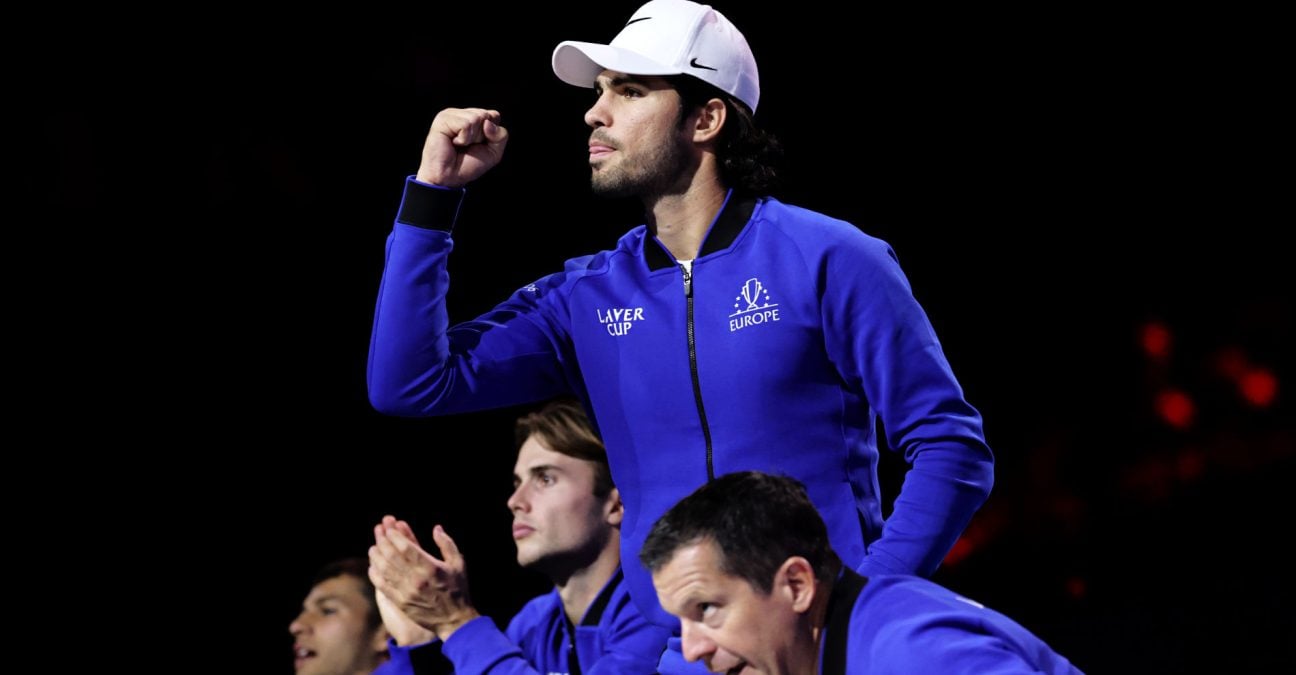 Carlos Alcaraz, Laver Cup 2026 | © Getty Images / Laver Cup

Patrick Mouratoglou has taken Carlos Alcaraz’s side in the argument that followed him around the Laver Cup, and says the criticism misreads what the world No. 1 is actually describing when he calls the season too heavy.
The charge is familiar: Alcaraz has been among the loudest voices on the length of the season, and he spent a free week in London at an event that awards no ranking points, then explained on Thursday that he was there because “we are not used to playing team events, during the whole year we don’t have team events at all”, and that “these kind of weeks help me a lot to bring my joy back on the court”.
Mouratoglou on Alcaraz : “Makes a lot of sense”
“When it comes to Carlos Alcaraz, people are criticising that he says the calendar is too heavy, but that he plays a lot of exhibitions or competitions,” Mouratoglou said in a video posted on his social channels. “It’s not physical, it’s mental. Carlos is a player that saturates when he plays too much tennis. At some point he doesn’t have the pleasure any more, the joy any more. He’s not creative any more on the court, and his level drops a lot. So for him to participate in other competitions can make a lot of sense.”
In a longer post published alongside the video, the coach took the objection head on. “People laughed when he complained about it during the US Open. ‘Too heavy? Then why does he play the Laver Cup?’ That question comes from someone looking at the wrong problem,” he wrote. “When players say the calendar is too heavy, people think physical. With Carlos, it’s probably not physical. He can handle the amount of matches easily. It’s mental.”
His account of what saturation costs Alcaraz is specific: the joy goes, the creativity goes, the level drops, and the danger is arriving at a major already emptied out, “not motivated enough to win, or to stay at the venue and the hotel for days and weeks”.




Carlos doesn’t need more tournaments that give points. He needs to love tennis when the big ones come.
Seen that way, he argues, the team week is the cure rather than the symptom, and the absence of ranking points is the point rather than the contradiction. “Carlos is not chasing points,” Mouratoglou wrote. “He doesn’t need more tournaments that give points. He needs to love tennis when the big ones come. That’s not dodging the calendar. That’s managing it as a champion.”
He also widens it beyond one player. “Is he an isolated case? Probably not, and I think it’s difficult for players playing the same kind of competitions,” he said. “Imagine one year, then a second year, then a third year. At some point they get bored, tired mentally, and this affects their results, and potentially can also bring some injuries.”
Alcaraz’s week ended with Team Europe winning the Laver Cup 13-5 at the O2, a tournament he began by saving two match points against Taylor Fritz and finished without needing to play his scheduled Sunday singles.