Prop bets in tennis: which stats matter, and when markets get noisy
A practical tennis prop betting framework: ace rate by surface, hold/return strength, and when recency bias makes markets noisy, with a Stake.us angle.
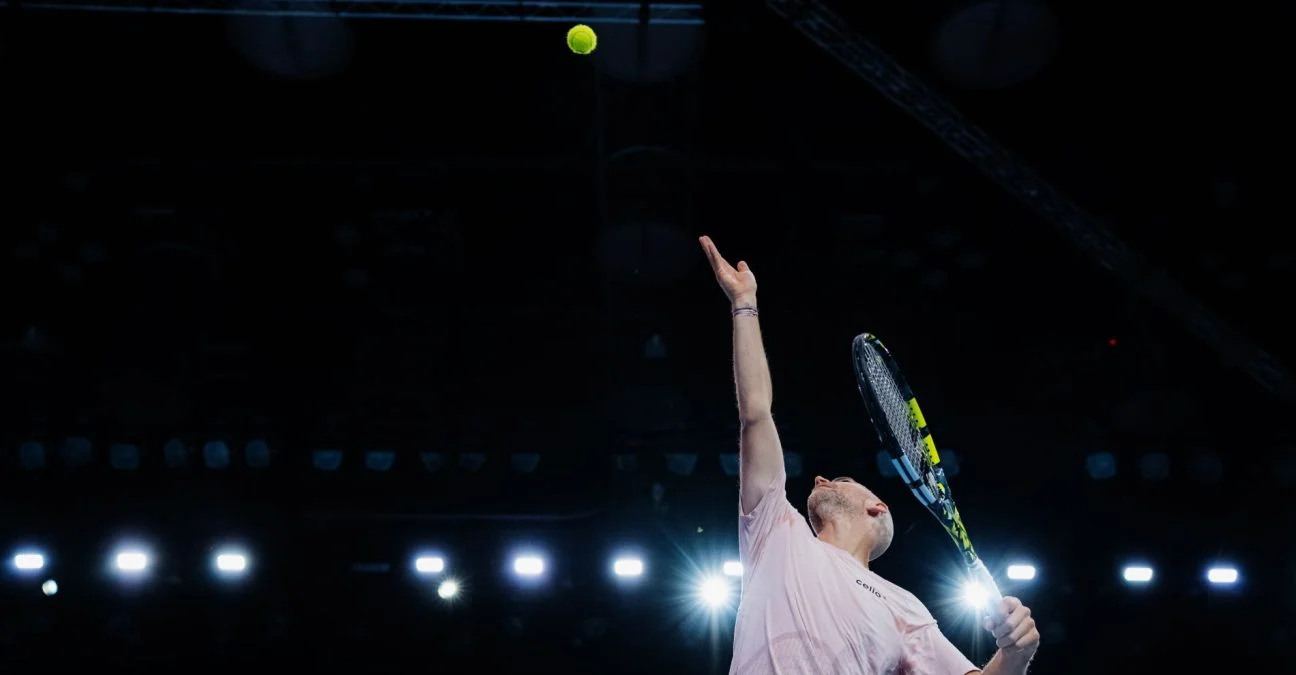 Adrian Mannarino, Londres 2025 | © UTS / Tennis Majors

Tennis prop betting has grown up fast. Match betting is still the main course, but props are the side order everyone keeps adding. Part of it is simple: props let you stay involved without taking a full stance on who wins. You can be right about the shape of a match (serve-heavy, scrappy, break-heavy) even if the result goes sideways.
Props also behave differently from match markets. They usually have smaller limits, thinner liquidity, and quicker line movement, which means prices can shift fast after early action. That is great when you spot something the market has missed. It is brutal when you are chasing a previous match’s box score like it is a trend.
Core idea: some stats are genuinely predictive for tennis props, while others are mostly hype, reputation, and short-term variance.
Understanding Tennis Prop Bets
Tennis prop markets tend to fall into a few familiar buckets:
- Aces (player totals or match totals)
- Double faults
- Games won (by player, by set, or match total)
- Break points (created, converted, saved)
- First-serve percentage
Here is the important bit: props are often more sensitive to matchup, surface, and conditions than match odds. A match line can be “about right” even if an ace line is off by three or four. A player can win comfortably while serving fewer aces than usual. A player can lose while still piling up aces. Props are less about “who is better” and more about “what kind of match is this going to be?”
Stats That Actually Matter for Tennis Props
If you want a repeatable edge in tennis prop bets, start with stats that travel well from match to match. They still need context, but they are not pure noise.
Serve-related stats
1) Ace rate by surface Ace props are not universal. Aces behave differently on grass, clay, indoor hard, and slower outdoor hard courts. A big server can look unstoppable in one environment and ordinary in another.
2) First-serve points won This is one of the cleanest tells for serve dominance. First-serve percentage is fine, but it can lie. Landing lots of first serves does not matter if opponents are getting clean returns in play and starting rallies on even terms.
3) Service games held Hold rate matters for:
• Games won props
• Total games props
• Break point props
A sneaky amount of ace props, since more holds often means more service rhythm
In the men’s game, serve dominance is so strong that top-100 ATP players win about 80% of their service games on average (with return games won sitting far lower), which is exactly why hold rate is the backbone for games and totals props.
A high hold profile pushes sets toward 6–4, 7–5, and tiebreak territory, which changes the whole prop menu.
Surface, Conditions, and Match Context (Where Props Are Won or Lost)
This is where tennis props get fun, and where most people get lazy. Match odds can survive a bit of “general form” analysis. Props cannot. Props are built on the shape of the match, and the shape changes fast once you factor in surface speed, environment, and tournament context.
Surface speed changes prop baselines Grass usually pulls everything toward serve dominance. More cheap points, more holds, and more natural pathways to ace overs and longer sets. Clay tends to do the opposite. It slows the first strike, stretches rallies, and turns a lot of “comfortable hold” service games into grindy scorelines with more break chances. Hard courts sit in the middle, but they are not one-size-fits-all. Some hard courts play quick, some play sticky, and that difference matters a lot more for ace and games props than people expect.
Indoor vs outdoor changes serve and break rates Indoors is often cleaner for servers. Less wind, fewer weird toss games, and more consistent ball flight. Outdoors can add chaos. A little wind can turn “normal” serving into a double-fault creep. Sun and temperature can change bounce and timing, and suddenly a returner is seeing the ball better than they did yesterday.
Weather, altitude, and ball changes Altitude can make the ball jump and fly, which can lift ace and hold environments. Heat can speed courts up. Heavier balls can take pace off and stretch points out, nudging matches toward breaks and longer rallies.
Now add tournament context. Quick turnarounds, late finishes, and short recovery windows can show up in serve rhythm and decision-making. This is also why it helps to read solid match framing before you touch a prop line, especially when you need surface-specific expectations for a specific event.
A quick scan of tournament previews and match context coverage can help you sanity-check the environment and spot when a prop baseline is being priced like a generic surface, not the actual conditions that week.
When Tennis Prop Markets Get Noisy
Prop markets get noisy when the line starts reacting to the last thing everyone saw instead of the matchup in front of them. Tennis is perfect for this because a single match can look like a “trend” when it is really just conditions, opponent style, or a random hot serving day.
The three classic overreactions
1) One-match ace spikes A player bangs down 16–20 aces, social media clips the highlights, and suddenly the next ace line is priced like every opponent returns like a ball machine. If the upcoming returner blocks serves back all day, that “obvious over” becomes a trap.
2) Tie-break heavy recency Two straight matches with tie-breaks can inflate totals and games props, even if the next opponent is the type who breaks early and kills the tie-break pathway before it starts.
3) Big-name servers, regardless of opponent The public loves backing the “brand” server. Books know it, and popular-player props can get shaded because casual money piles in on the name, not the return matchup.
Why public betting distorts popular props Props are thinner than match markets. That means public action can have a bigger impact, and books will move faster to protect themselves. The result is lines that sometimes reflect sentiment and recency more than true expectation. Academic work on sports betting behavior finds evidence consistent with recency bias and overreaction in betting markets, which is the exact psychological leak that shows up when a single match spikes a player’s prop perception.
Signal vs short-term variance
- Signal: opponent return quality, surface speed, indoor/outdoor stability, and repeatable serve/return indicators.
- Variance: one hot serving day, a couple of missed returns early, a weird wind pattern, or a set that turns on two points.
If your prop angle is basically “he served huge last match,” you are usually buying variance at a premium.
If you want to zoom out and understand how books price these softer markets (and how promos can change the real value of a bet), our latest Stake.us offers that breaks it down in plain English.
Practical Framework for Evaluating Tennis Props
Use this checklist before you touch a tennis prop. It is not glamorous, but it stops you paying the “I watched one match” tax.
Is the stat opponent-dependent? Aces, double faults, break points, and even first-serve points won can swing based on who is returning. If the opponent is a top-tier returner or an elite blocker, your ace over needs a serious reason.
Does surface history support the line? Compare like with like. Grass numbers do not translate cleanly to clay. Indoor hard does not behave like windy outdoor hard. If you cannot justify the baseline for this surface and this event, you are guessing.
Is the sample size meaningful? One match is noise. Two matches can still be noise wearing a nicer jacket. Try to anchor to a broader sample, then adjust for matchup and conditions rather than building the whole bet on a spike.
Is the market reacting to narrative or data? If the main argument is “they have been serving huge lately” or “they are a big-name server,” that is usually narrative. Data-driven angles start with repeatable indicators: hold strength, return resistance, and surface-adjusted serve performance.
Props to Treat With Extra Caution
These are not automatic fades. They are just the props that punish lazy logic.
Tie-break yes/no Tiebreaks are high-variance and hinge on a handful of points. One early break can kill the whole angle, even in a serve-dominant matchup.
Player to win most games in mismatched contests Mismatches can produce weird game counts. A favorite can win comfortably but still drop a set. An underdog can inflate games by stealing one long set without ever being close to winning the match.
Overs tied to reputation rather than matchup “Ace over because big server” is the classic. The matchup matters more than the nickname. A strong returner can turn a famous server into a very normal ace profile for one day.
The Takeaway: Props Pay Context, Not Hype
Tennis props reward context, not name recognition. The best angles usually come from repeatable indicators like surface-adjusted serve performance, hold strength, return resistance, and pressure discipline, then layering in conditions like indoor stability, wind, altitude, and tournament context. That is how you separate a real edge from a box-score illusion.
Prop markets also get noisy fast. One ace spike, one tie-break marathon, and the public piles in. Your edge is patience. If the story is louder than the setup, skip it. There is always another match, and the best prop bet is often the one you do not force.



More tennis news
October 6, 1986: The day Pat Cash clashed with Brad Gilbert en route to Davis Cup glory


Djokovic into Beijing final vs. De Minaur after Medvedev is disqualified


Alcaraz recovers from a set down against Munar to set up Tokyo final with Lehecka

October 5, 1918: The day French aviator Roland Garros was killed during World War I

Vintage Djokovic wins high-intensity battle with Zverev to go 32-0 in Beijing