“It’s serve, then movement, then mis-hitting everything”: how the loose Kostyuk beat the tense Świątek at Roland-Garros
Marta Kostyuk defeated Iga Świątek at Roland-Garros. Świątek cited a breakdown in serve, movement, and mis-hitting, linked to persistent stress, as reasons for her loss. Kostyuk’s aggressive returns exploited these vulnerabilities, securing her first quarter-final and extending her clay streak.
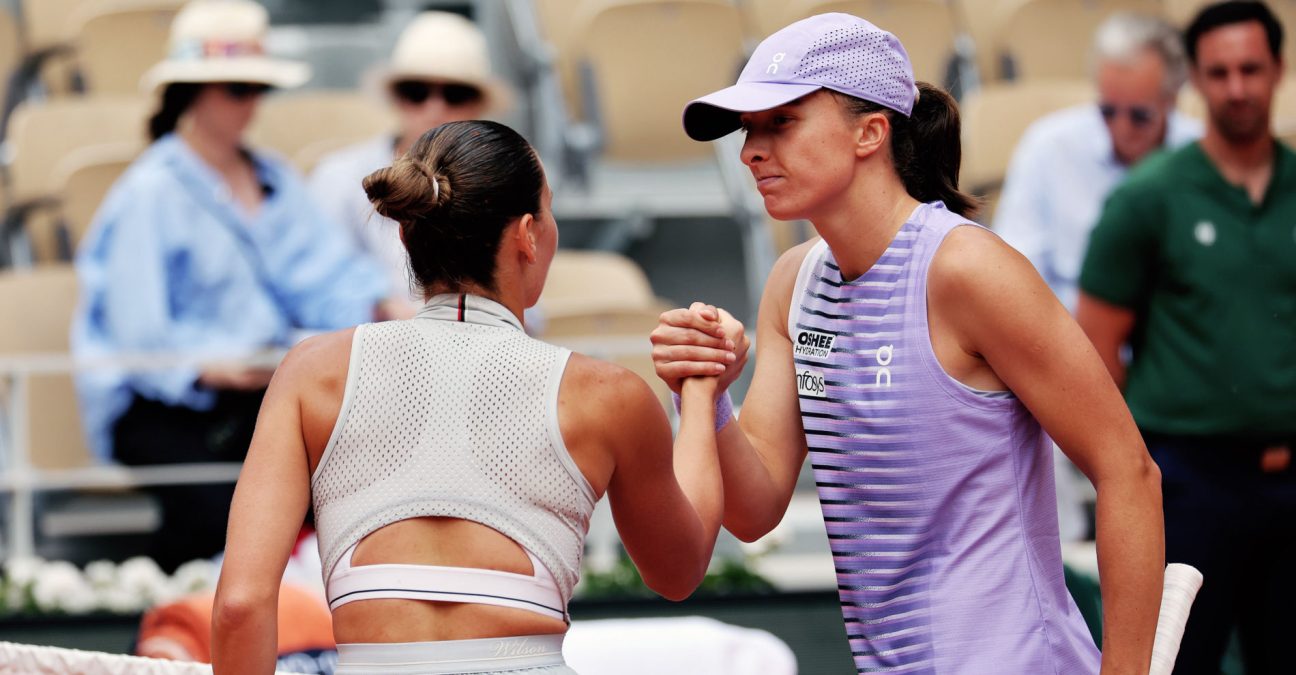 Marta Kostyuk and Iga Swiatek, Roland-Garros 2026 | © Gepa / PsNewz

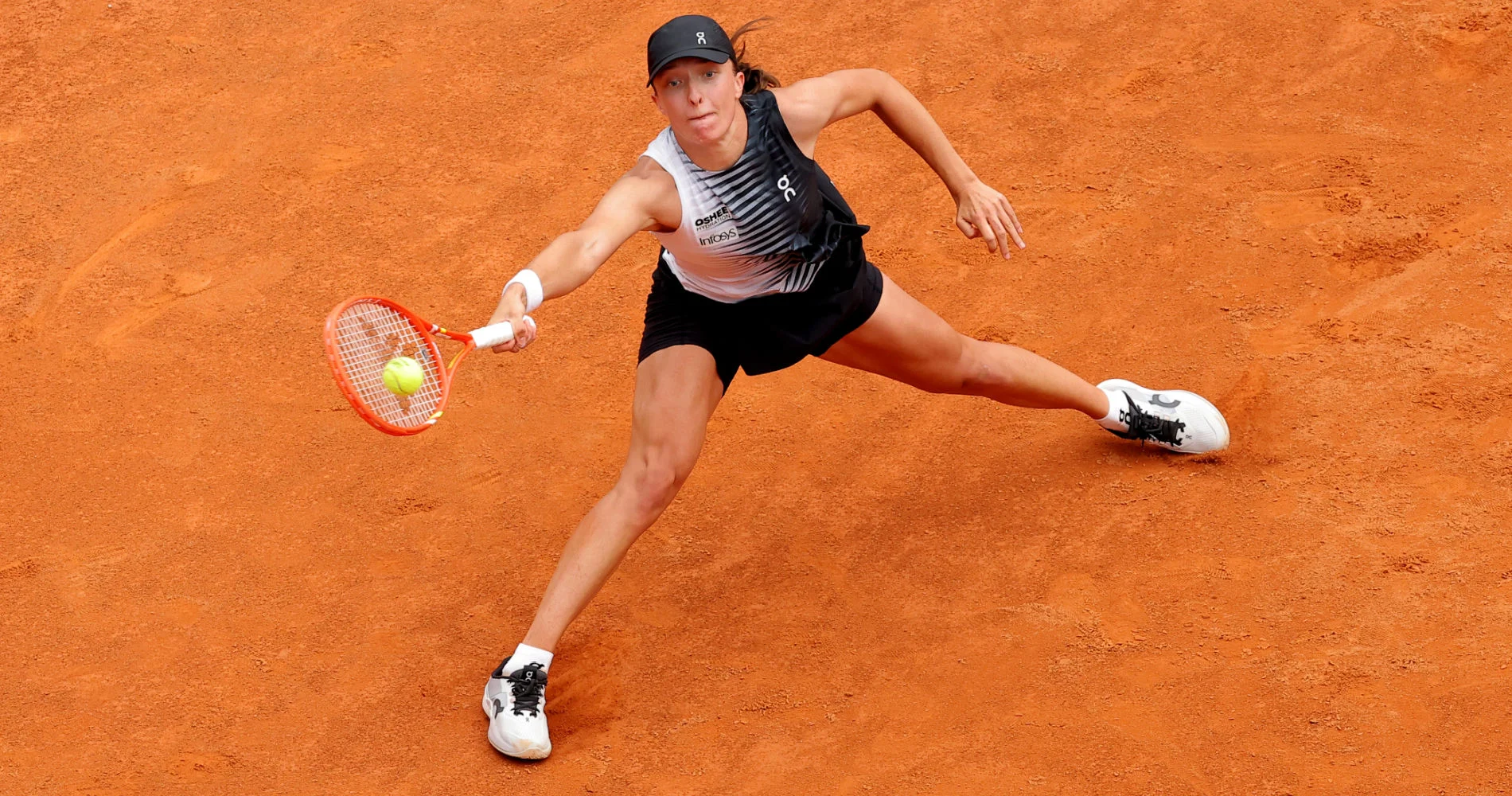
By the end, in the seventh game of the second set, the ball Świątek hit was already a long way past her own intention. The serve had been the first thing to leave her. The movement had been the second. By 1-5, she was, in her own description twenty minutes later, mis-hitting everything.
The 7-5 6-1 by which Marta Kostyuk beat Iga Świątek on Court Philippe-Chatrier on Sunday, taking the world No. 15 into her first quarter-final at this tournament on a 16-match clay-court winning streak, arrived in three layers, each of them named by the players themselves.
There was the tactical one: a Ukrainian who has stepped in on the second serve all year, returning everything, denying the kick. There was the technical one: a Świątek serve that has been the subject of a mid-season rebuild since April, with the elbow more flexed behind the head than before, and the first shot to crack under the strain.


Pressure on Swiatek’s second serve
And there was the deeper one, the one Świątek named herself, walking the reporter back from the question rather than into it: the stress that has been with her since the US Sunshine swing earlier this year, and the answer that she did not yet have.
Begin with the tactical, because that was Kostyuk’s choice. “I was putting a lot of pressure on her second serve,” she said, after the win. “She wasn’t hurting me much with the first serve today. I was just returning everything.”
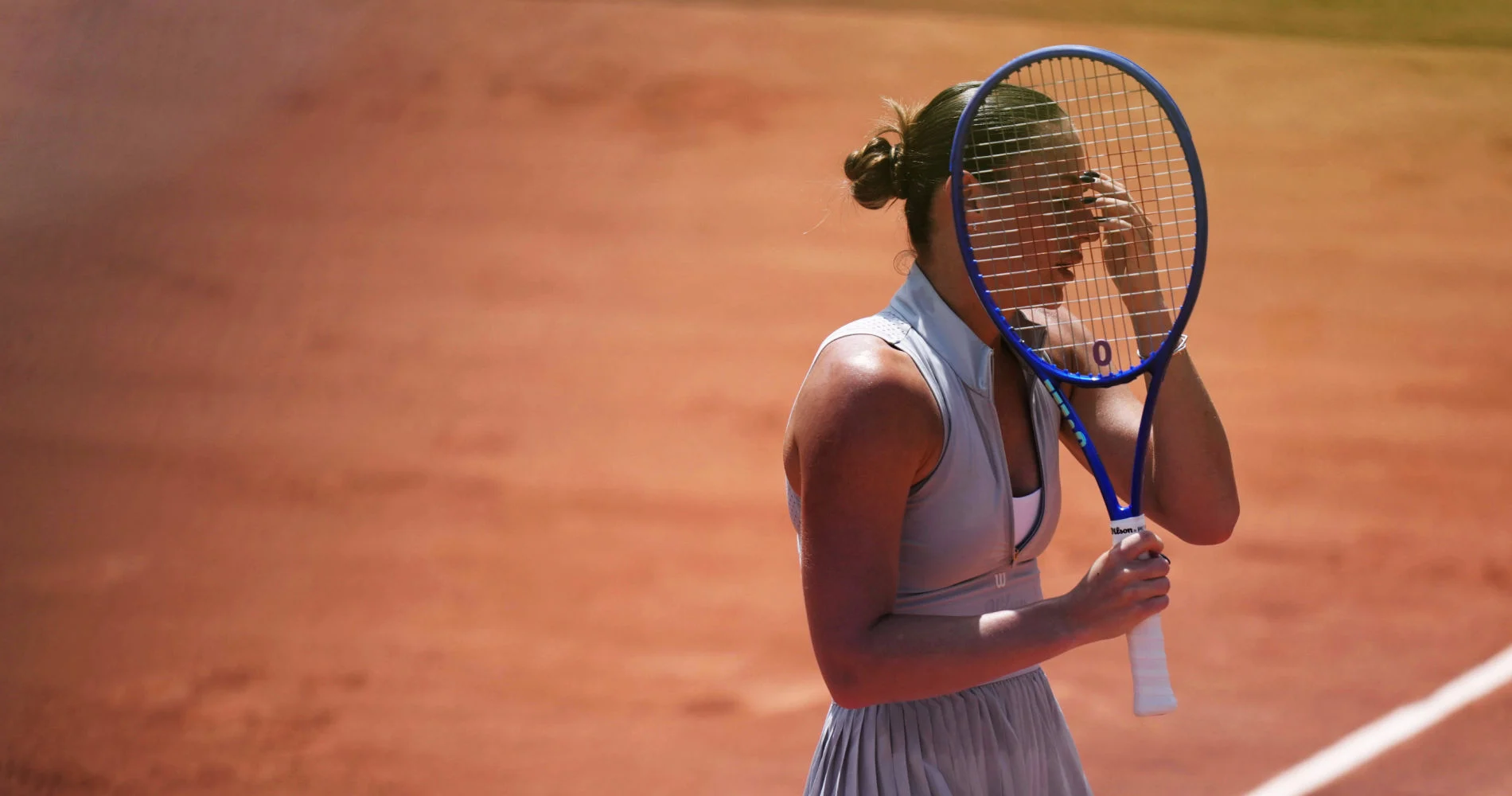
The structural element was the kick. The kick serve, normally a routine first weapon at the top of the women’s draw, is a problem for many of the players Kostyuk had grown up alongside – they took a half-step back, gave themselves time, played the kick from height. Kostyuk does not. “I have a good return,” she said, “and I don’t mind stepping in on the kick serves, which is a problem for a lot of girls. And for guys too. Guys, it’s a different story entirely.”
She walked through Świątek’s deterioration in chronological order, as if she had been watching the same television feed everyone else had: “As the match was progressing, she was feeling it more and more. Her serve was becoming either more desperate – in the sense that she would serve harder – or make more double faults, or actually serve slower, so I had more time to step in.” That is the shape of a player losing her tool in real time, described by the person on the other side of the net.
Swiatek’s motion changed
The numbers from the live feed and the official wires confirm it. Świątek won 41 per cent of points on her own serve and Kostyuk won 56 per cent on return against Świątek’s second serve. Świątek hit five double faults in critical games, including two while serving for the first set at 5-4 (broken to love) and two more in the twelfth game, the one Kostyuk took on a low cross-court backhand pass to claim the set. The match turned, in the way most matches do, on the single game in which Świątek could not close the set out.


In April, before the Stuttgart Open, Świątek introduced a mid-season change to her motion: the elbow more flexed behind her head, an idea that Roig brought with him when he replaced Wim Fissette after the US Open. “I’m trying to bring my elbow slightly more flexed backward,” she said at Stuttgart, “something that I think can give me more speed and more dynamism later on.”
She asked for patience. “If you’ve been serving in a certain way for months and then you spend two weeks with another, you need time to automate it.” The change attracted criticism from outside – Greg Rusedski, on Tennis Channel a few days later, called the timing of a mid-season serve change “an off-season thing” and warned of injury risk – and on Sunday Świątek herself acknowledged that the work is not finished. “I still don’t put the elbow how I exactly want to,” she said. “Technically, when we have more time to practise, I want to repeat, repeat, repeat a hundred times to get it better.”
“Not on a therapy session”
What an unfinished service motion does under pressure is what happened to Świątek on Sunday. “If something will fall apart a bit under pressure, I feel it’s serve, then movement, then just mis-hitting everything.” It is a chain of three: an unconsolidated first link pulls the second link, which then pulls the third.
The deepest layer is the one Świątek almost did not name. The journalist who asked her, plainly, why she had become tense gave her the easy opening. “We’re not on therapy session,” she said, with a small smile. Then she did, in fact, name it. “It is harder a bit to handle stress for me. Especially last year, I feel like the peak was in U.S. this year. So today I felt off, and I did mistakes I didn’t want to do.”
Not one point is that important. There is always another one coming.
Twenty minutes later, Kostyuk’s framing for her own form was almost the inverse. She has, in her own words, stopped letting any single point carry weight. “The biggest thing I do is that nothing is that big. Not one point is that important. There is always another one coming.”
It is, by her own account, an evolved version of the discipline she has been working on for some time, and one which has reordered her relationship to her own ambition: “What kind of player do I want to be, and where do I want to be? You can do the right things, but miss the balls, or lose the match, and you still did the right things. This is the priority for me.”
She’s now 16-0 on clay in 2026. Kostyuk plays Elina Svitolina on Tuesday to feed this trend, with the underdog framing she still insists on. “Technically, I’m still the underdog,” she had said. “We will see. Maybe a lot of things will change after this tournament. I don’t mind being in both positions.”