“I don’t care anymore about the results”: Świątek concedes her level after Wimbledon loss to Eala
Iga Świątek’s Wimbledon title defence ended in a third-round defeat to Alexandra Eala, the six-time major champion admitting she no longer cares about results and must rebuild her game as a difficult season deepens.
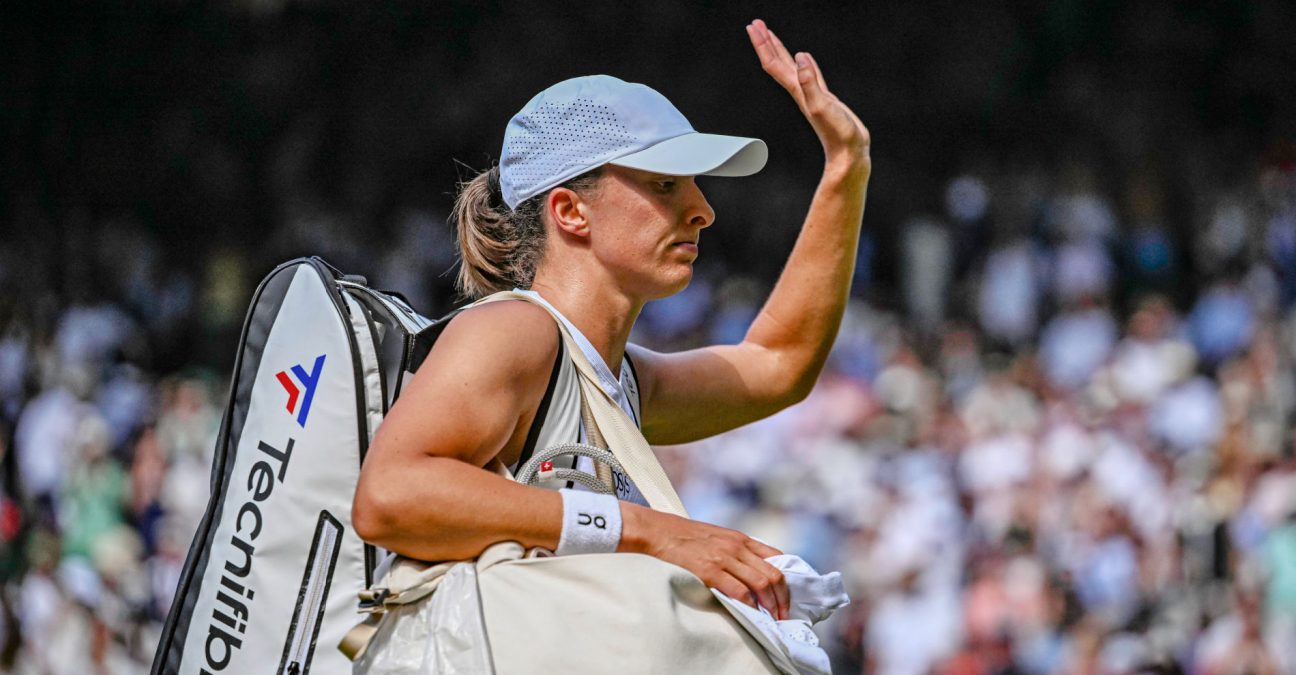 Iga Swiatek, Wimbledon 2026 | © Action Plus / PsNewz
Iga Świątek’s Wimbledon title defence ended in the third round on Saturday, the defending champion beaten 7-6 (11-9), 6-2 by Alexandra Eala, and afterwards the six-time Grand Slam winner offered a startling admission about the state of her game.
“Honestly, I don’t care anymore about the results,” Świątek answered to a question abut the process she’s into. “I’ve been so focused on them that it’s hard to continue like that, so I’m really trying to let it go.”
She went further, describing a rebuild rather than a blip. “I’m not on that level yet. I need to work from the beginning and try to just get my tennis better.”
The numbers frame the fall. Świątek leaves Wimbledon with a 2026 record of 23-12 and, for the first time in years, nothing to show for it: no title, no final, and a best run of only the quarter-finals, reached in Australia. Roland-Garros, the tournament she has ruled, brought a fourth-round exit; Wimbledon, which she was defending, a third. She sits 11th in the season race and has slipped out of the world’s top five, a descent that would have been unthinkable during the two years she spent at No. 1.
The defeat handed Eala, the No. 29 seed, was built on an unlikely tactical problem, she said. Świątek, one of the game’s finest returners, could not handle her opponent’s slow serve. “It’s much tougher to return a serve like that than a normal serve,” she said. “It’s such a different rhythm than what I usually have a chance to return.”
Świątek won just 44% of receiving points, with almost the same ratio behind first serves (43%) and second (45%). Whether Eala slowed her serve by design or simply plays that way was left unresolved. She did not claim the tactic was deliberate – only, when told of Świątek’s difficulty, offering with a smile: “I guess I did my job well.”


Swiatek : “She serves slower and slower”
She had steadied herself after the loss of a marathon first set, only to fray again. “I wanted to be present in the second set but I made some unforced errors at the beginning,” Świątek said.
“She was serving slower and slower, and it became tougher and tougher for me to return.” The rhythm, she conceded, exposed a flaw she has carried all season: an inability to balance aggression with control. “That’s made me lose some matches this year, because I was playing too fast,” she said.
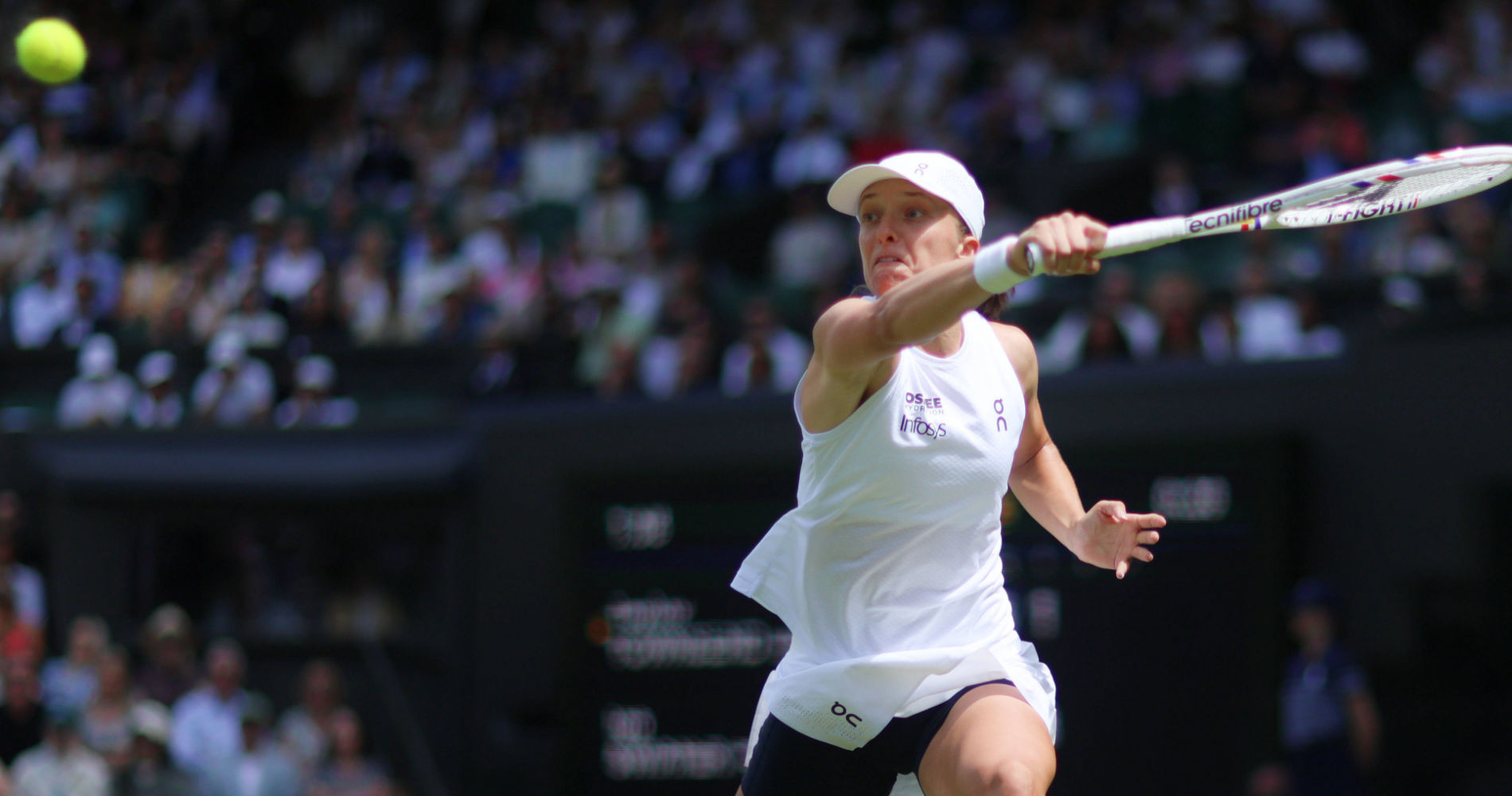
Świątek drew a distinction between this loss and her defeat at Roland-Garros against Marta Kostyuk, where she said nerves had undone her. “In Paris it was completely about me not handling the pressure well,” she said. “For me today was more about tennis.” She took some solace in her resistance. “I’m happy how I came back in the tiebreaker, after being a break down, because in Paris I would just lose it straight. I was there to fight. It wasn’t enough.”
The result is another marker of a difficult year for a player who once dominated the tour, and it comes at the tournament where, twelve months ago, she claimed a maiden grass-court major. She offered no excuses for the errors that defined the day. “Sometimes it was like that. I can’t really explain the frames on the drive volleys. Usually I play them well,” Świątek said. “Shit happens.”


People in this post
More tennis news
September 12, 1992: The day Stefan Edberg beat Michael Chang in the longest-ever US Open match


Zverev’s US Open final mission: “Not make the American dream come true”


Zverev survives two tie-breaks he was losing against Khachanov, to reach a third straight Grand Slam final


Fifty-eight years after Ashe’s triumph, two Black Americans meet for a place in the US Open final

September 11, 1999: The day Serena Williams won her first Grand Slam title at the US Open
