A step forward, not a blank cheque: players respond to Wimbledon’s record prize money
Players have welcomed Wimbledon’s record 20% prize money rise as “a genuine and significant step forward” – while calculating that their share of revenues, at 14.4%, remains below its 2015 level. Welfare, revenue formula and representation stay unresolved.
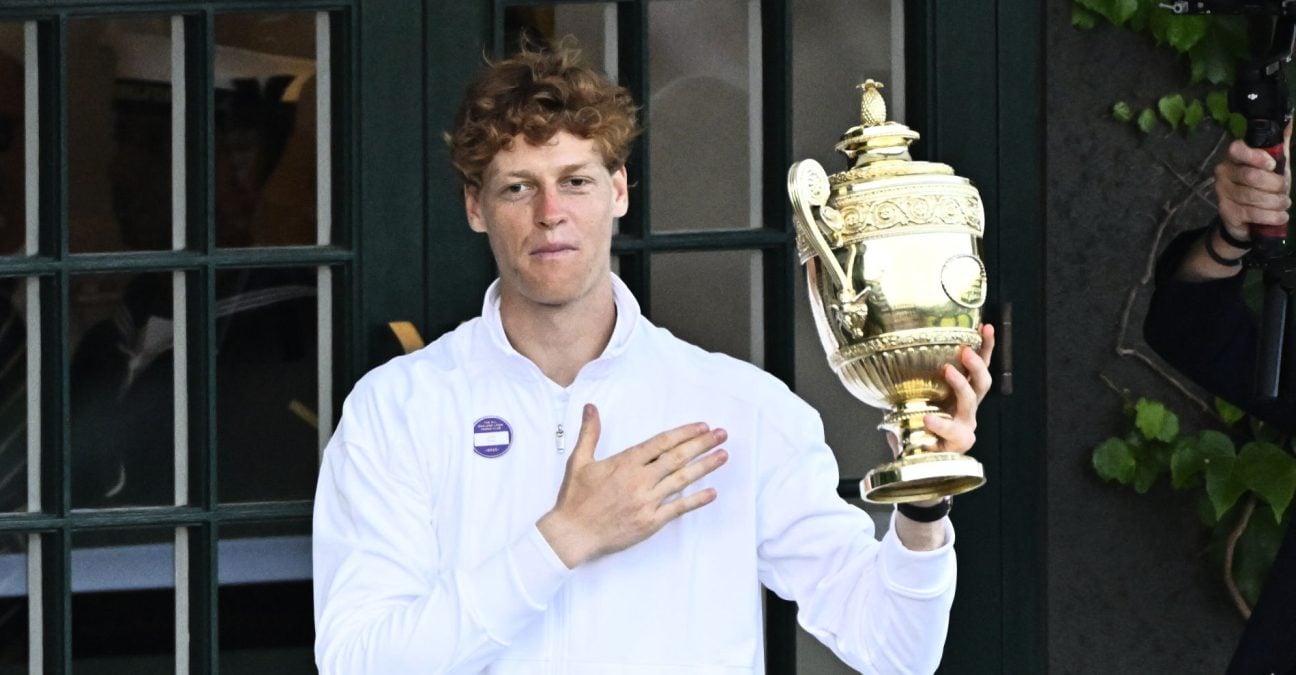 Jannik Sinner, Wimbledon 2026 | © Ch. Caillaud / PsNewz

The group of leading players in dispute with the Grand Slams has welcomed Wimbledon’s record 20 per cent prize money increase while making clear it does not settle their case: by their own calculation, the £64.2m fund represents 14.4 per cent of the tournament’s projected revenues – below the share players received in 2015.
In a statement issued on Friday, a day after the All England Club’s announcement, the players of the “Red Eye project” described the increase as “a genuine and significant step forward” and the largest single-year uplift in the tournament’s history. They also confirmed that Wimbledon has committed to negotiations after The Championships.
The rest of the statement is built on numbers, and the message they send is that the hardest ground is still uncovered. Applying the methodology from their formal July 2025 proposal to the club – 2025 revenues grown at 5 per cent, giving a projected £444.8m for 2026 – the players calculate that the new fund amounts to 14.4 per cent of revenues, against approximately 14.9 per cent in 2015.
Beyond the money
Over that decade, they say, Wimbledon’s revenues have grown by around £280m, with player compensation growing significantly slower. The figures are the players’ own and the club has not commented on them; the statement also notes that Wimbledon’s stated revenues exclude income from the issuance of debentures, which is reported separately by The All England Lawn Tennis Ground plc.
The gap to their own proposal is quantified too. Last July, the group formally asked Wimbledon for £71.2m this year – 16 per cent of projected revenues, framed as an interim step towards 22 per cent by 2030, the share they say players receive at the biggest ATP and WTA events. Thursday’s announcement falls approximately £7m short of that figure.
Beyond the money, the players list three structural proposals submitted to all four Grand Slams nearly a year ago that they say remain without a formal reply: direct contributions to a welfare fund covering long-term health, pensions and maternity protections; a transparent revenue-sharing formula so that prize money rises automatically with tournament growth; and a player council giving athletes a voice in decisions that affect them.
“Not seeking confrontation for its own sake”
The statement lands in a sequence that has accelerated since May. A group headed by the two world No 1s, Aryna Sabalenka and Jannik Sinner, expressed “deep disappointment” over the Roland-Garros prize money during the Rome tournament, where Sabalenka raised the possibility of a boycott; in Paris, the protest took the form of pre-tournament press conferences limited to 15 minutes, a nod to the roughly 15 per cent of revenue the Slams allocate to prize money. The FFT promised detailed proposals within a fortnight of the finals.
Wimbledon, which begins on 29 June, is now the first of the four majors to have both moved on money and agreed to talk afterwards. The players’ closing line frames the stakes in their terms: “Players are not seeking confrontation for its own sake. They are seeking a fair deal, one that reflects the central role athletes play in making these tournaments what they are.”