Did you think Sinner had shown fragility against Medvedev? The world No. 1 is already turning the experience into capital for Roland-Garros
The forty-eight hours that nearly broke Jannik Sinner against Medvedev have already, by his own framing, become Roland-Garros capital.
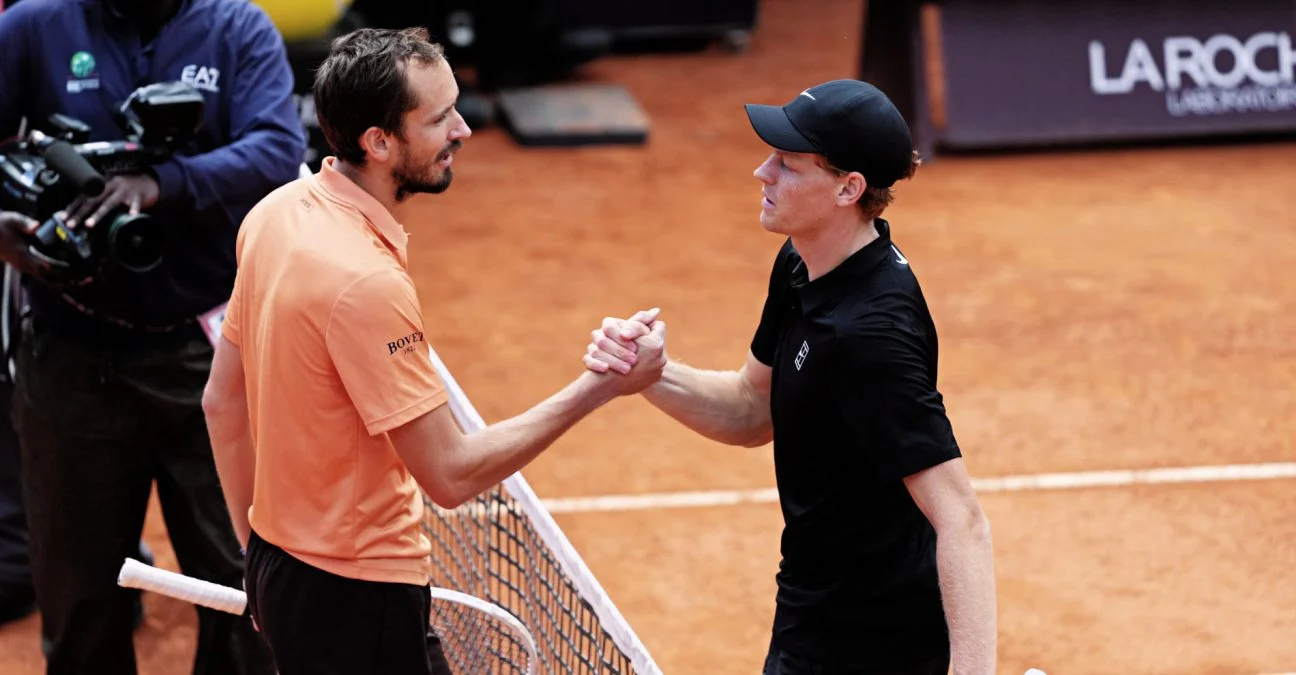 Daniil Medvedev and Jannik Sinner, Rome 2026 | © Inside / PsNewz

Jannik Sinner has just lived through, by his own description, the most physically and mentally difficult forty-eight hours of his career – and by the time he reached the press room in Rome on Saturday after his semi-final win against Daniil Medvedev (6-2, 5-7, 6-4), he was already framing them as preparation for Roland-Garros.
“It helped me a bit. Knowing yourself better is the most important thing,” Sinner said. “The more years you’re on the tour, the more you know how to manage yourself in the best way. Staying as calm as possible is fundamental, staying lucid. But you can’t always be at 100%. I’m happy with how we resolved this.”
The forward-looking framing came two answers later, and it was explicit.
Sinner: “a help for Paris”
“A match like this can help us for Paris. It was very difficult, especially yesterday. I tried to pull myself out of a difficult situation.” The forty-eight-hour epic in Rome also lands a small reminder. Sinner has lost all nine Grand Slam matches that have crossed 3 hours and 50 minutes, including the Roland-Garros final against Alcaraz last June. The longest-match question is the one his body has yet to answer.
What Sinner has decided to absorb into his Roland-Garros preparation is, on his own account, a first in his career – and the texture of that experience came through in unusual detail in the Italian press conference.
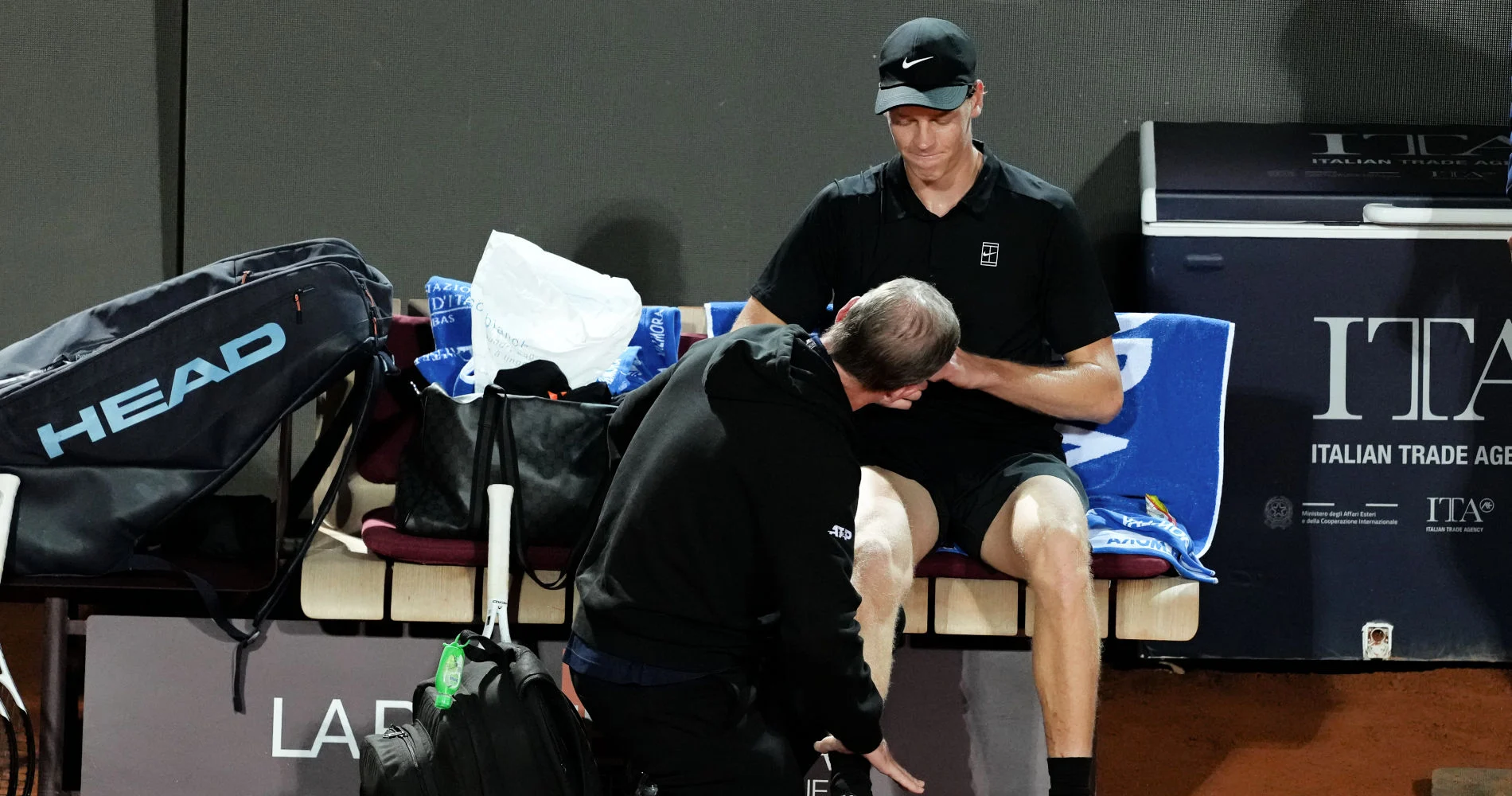
“It’s the first time I’ve lived through something like this. Yesterday I was suffering physically in the second set, and in the third I looked for the strength inside me – I connected with the crowd, and then I went 4-2 up.” That’s where the rain delayed the match.
sounds like Nadal’s ethic
The “connection with the crowd” line is the structural admission. Sinner does not usually credit external factors with his wins; he frames everything as internal, controlled, his own. On Friday night, with the body failing and the match slipping toward a place he had not been, he reached outside. The Foro Italico responded. What followed was, by his own description, unlike his usual nights.
“A very different challenge from yesterday. Usually I don’t struggle to sleep at night ; this time I did. The third set was almost over, but you never know what can happen in cases like this. It was a new beginning. It was a difficult day, I’m very happy this match is finished.”
“I don’t know. It’s a question I cannot answer. Sorry.”
That is Sinner saying out loud what champions normally only think. The struggle to sleep, the uncertainty about the next day, the framing of Saturday as “a new beginning” rather than a continuation – all of it uncharacteristic.
What is characteristic, and what makes the answer worth watching, is what came next. Asked whether playing at home had been decisive, whether he could have come back from where he was without the crowd, Sinner declined to engage.
“I don’t know. It’s a question I cannot answer. Sorry.”
The “if” is not a place he goes to. Rafael Nadal had the same trait throughout his career. Even more, defeat is not a legitimate part of the conversation until it has happened, and even then only briefly. Sinner is, on Saturday’s evidence, of the same school.
Champion always look forwards. Sinner did. “We’ll try to recover for tomorrow,” he said. “He’ll be fresher”, he said about his opponent Casper Ruud.