Doha and Dubai’s future, a 2028 calendar shake-up, clay to hard: what’s on the table as Gaudenzi speaks in Turin
Replacement options for the two Gulf 500s, Acapulco’s exit in 2028, Rotterdam moving to the autumn and several clay events eyeing hard courts: the files reportedly on the ATP’s table in Turin.

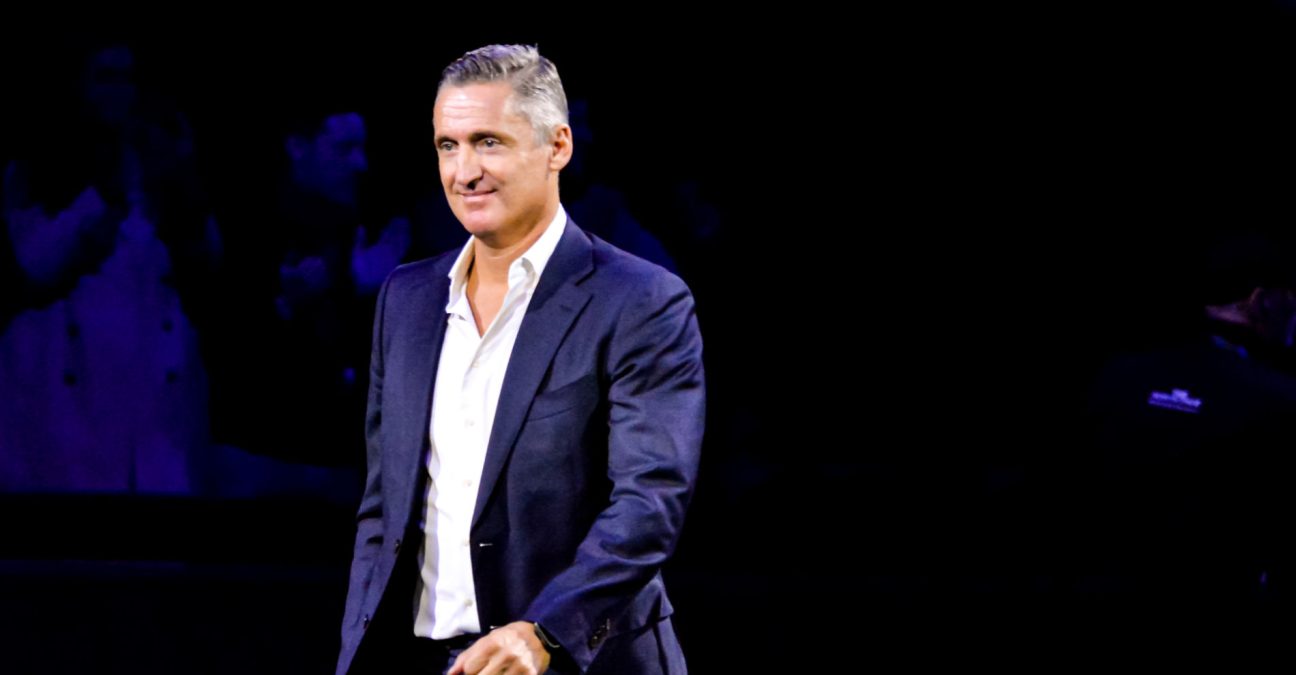 Andrea Gaudenzi, Paris 2026 | © Baptiste Autissier / PsNewz
Whether Doha and Dubai will be played in February 2027 is the first question on the table as ATP Chairman Andrea Gaudenzi holds his press conference in Turin on Friday. On Thursday, in a leak posted on X, Italian journalist Lorenzo Ercoli revealed that the two Gulf ATP 500s may still go ahead, but that replacements are already being studied, and that a 2028 calendar would lose Acapulco and move Rotterdam to the autumn.
According to Ercoli, the ATP has given itself December 1 as the ideal date to decide on 2027, and the uncertainty comes from the Gulf situation, still unstable. The WTA faces the same problem with more at stake, since both events are WTA 1000s.
Gaudenzi is expected to address the press during the ATP Finals, as he usually does. The files discussed in Turin include those below.
Doha and Dubai 2027: the plan B options
Doha and Dubai are scheduled for 15 to 21 February and 22 to 28 February, and each carries 500 points for the winner. If they fall, the options Ercoli lists are:
- Rio de Janeiro, which has offered to expand its draw. That would only partly solve the problem, since it is still played on clay.
- Rotterdam or Delray Beach hosting two consecutive weeks, an idea that, as far as he knows, no tournament is keen on.
- The Phoenix Challenger 175 moving its dates and upgrading to an ATP 500, the new option in his latest post.
- A brand-new ATP 500 on a one-year licence, which would need a country, federation or sponsor willing to back a one-off event, as with the Covid-era tournaments in Parma, Naples and Florence.
2028: Acapulco out, Rotterdam to the autumn
For 2028, Acapulco should leave the Tour and Doha and Dubai will be played in the same week, before the Saudi Masters 1000. Rotterdam moves to the autumn and rotates with Vienna and Basel: each year, one of the three is the only 500 of its week, sharing it with the Stockholm 250, while the other two share the following week. Ercoli adds that the Asian swing would also change, with Astana and Hangzhou played the week before Beijing and Tokyo, while Chengdu, Athens and Metz would disappear.
Clay to hard, between 2029 and 2030
Rio is expected to switch to hard courts, and Ercoli says Gstaad, Kitzbühel, Umag and Båstad are also asking to follow, with a possible move between 2029 and 2030. These events, played after Wimbledon, have lost top names as players head to North America for the hard-court swing.
Points and Tennis Ventures
On ranking points, Ercoli says the work aims to reward intermediate rounds at major events more, such as the third round of a Masters 1000, and to rework qualifying points. On Tennis Ventures, he says the ATP wants to relaunch the project to sell media rights jointly with the WTA, whose new leadership has reportedly cooled the talks.
Doubles: the reform the players are fighting
The most contested file is doubles. According to Ercoli, the proposal would move prize money from an 80/20 to a 90/10 split between singles and doubles from 2028, with draws halved to 16 teams at Masters 1000s and eight at 500s. The plan has been in the news since July, when, according to the Associated Press, the ATP told doubles players at Wimbledon that their share of prize money at ATP events would drop from 20% to 10% in 2028, with Masters 1000 draws cut from 32 to 16 teams and 500 and 250 draws to eight. The Grand Slams would not be affected.
The ATP has never confirmed those figures. In his open letter of 15 October, Gaudenzi only mentioned “potential adjustments to doubles draws, with the aim of enhancing the sustainability of doubles and its role on the Tour”. He added that “any prize money reallocated from doubles would remain dedicated to player compensation and is expected to be reinvested into singles qualifying and early-round prize money.”
Doubles players have pushed back since the summer. In a joint statement in July, they called it “a plan to end doubles as a viable profession, dressed up as a cost-saving measure”. On 26 October, an open letter against the cuts was signed by 137 active players, 33 former players and 20 federations, according to Reuters.
The row reached Turin this week. On Monday, as he received the year-end doubles No. 1 trophy with Harri Heliovaara, Henry Patten took aim at the ATP leadership. “It’s a real shame that the ATP chairman and the ATP CEO don’t feel the same,” he said, according to the AP. Neither Gaudenzi nor CEO Eno Polo attended the ceremony.
On Thursday, Patten told Italian outlet TennisTalker that Gaudenzi had already made up his mind. By his and Heliovaara’s calculations, doubles players would lose 30 to 40% of their earnings for an average gain of around 4% in singles. According to the AP, the ATP board, made up of four player representatives, four tournament representatives and Gaudenzi, was due to vote on the reforms this week. No decision had been announced by Friday morning.