How Daily Fantasy Sports Platforms Fit the Way We Look at Major Tennis Events in 2026
Tennis Grand Slam events have been played since the late 19th century, with the sports world undergoing massive changes since those days.
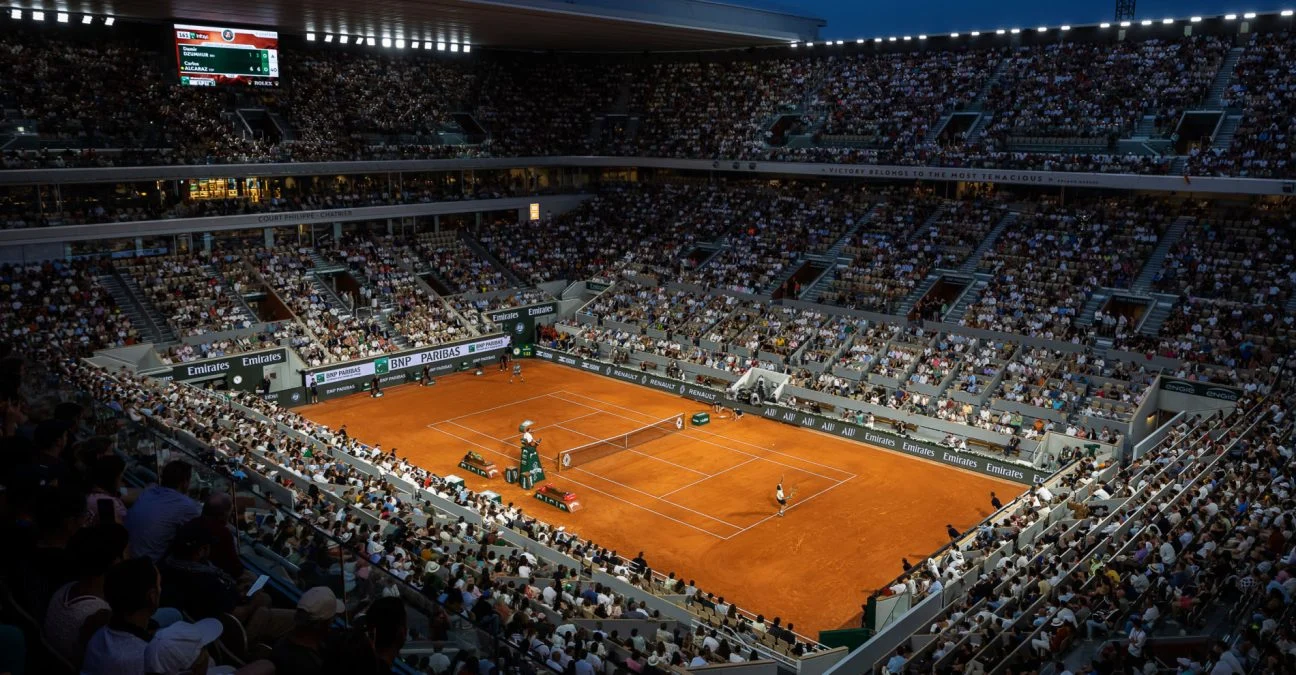 Night session on te Court Philippe-Chatrier | © FFT

In recent years, the emergence of daily fantasy sports tournaments has given us new ways to look at these tournaments by encouraging us to look more closely at the details.
A Deep Dive into Player Statistics
In the past, even the keenest tennis fans only knew a limited amount of information about players. This changed when we started getting easy access to online sites that gather everything from the number of aces and double faults a player makes to their average serve speed. Interactive heat maps let you instantly see whether each player has specific strengths or weaknesses, while these ATP Tour stats provide a solid starting point.
This level of detail is incredibly useful for fans who want to pick the players who are most likely to collect points in their daily fantasy competitions. Simply knowing who is most likely to win the US Open is no longer enough, as we need to see more details to make a series of good choices for the event, which begins in New York on August 30.
Why Each Surface Requires a Different Approach
The statistics that we just looked at can’t be used in exactly the same way for every Grand Slam. One of the reasons for this is that the different surfaces play a huge role in the way the top players approach these games. The clay courts at the French Open and the grass at Wimbledon give a different set of challenges when they try to judge the speed and bounce of the ball.
Some players have traditionally performed better on a certain type of surface, as we can see by the fact that the French Open has been dominated by Rafael Nadal. Known as the King of Clay, the Spaniard has won 14 French Open titles, as well as performing strongly on other clay surfaces around the world. Clay courts suit patient players with a high level of physical endurance and strong tactical baseline play.
On the other hand, Wimbledon’s grass tends to produce lower, uneven bounces and shorter rallies, favoring a faster, more aggressive style. The US Open games are played on hard courts, which are designed to create a consistently higher bounce than grass and clay. It’s a surface that suits all-rounders, with power and intensity being rewarded.
How the Pick’em Format Works
One of the major changes in the fantasy world has been the move toward the pick ‘em format, which lets users choose up to eight athletes and predict whether they will perform above or below the specific projection listed. This works well for tennis, particularly in Grand Slam events where you don’t want to just choose the overall winner.
The latest promos from Boom Sports include an offer worth $55 in free lineups when a new player deposits and uses $5. Their app has four different game modes: Favorites, Toss-ups, Longshots, and Pick & Spin. With a variety of sports available, this is a platform that lets you decide exactly what you want to predict and how, showing the flexibility that is now offered.
The way that daily fantasy sports is changing makes it more suitable for a variety of sports fans, including those who love tennis Grand Slams. By giving us new ways of predicting these events, we can make use of the latest statistical insights and tools.


More tennis news
October 12, 1998: The day Lindsay Davenport became world No 1 for the first time


“That’s already a small death”: beaten in Shanghai, Mannarino describes what it costs to keep up at 38


Wildcard Zheng stuns Andreeva to win first WTA 1000 crown on home soil in Beijing


Gea stuns Shelton for first Top 10 win and reaches Shanghai last 16 on Masters 1000 debut

October 11, 1940: The day Wimbledon was bombed during World War II