“First, I didn’t believe I’d won”: Zverev on the stress and release of a first major title
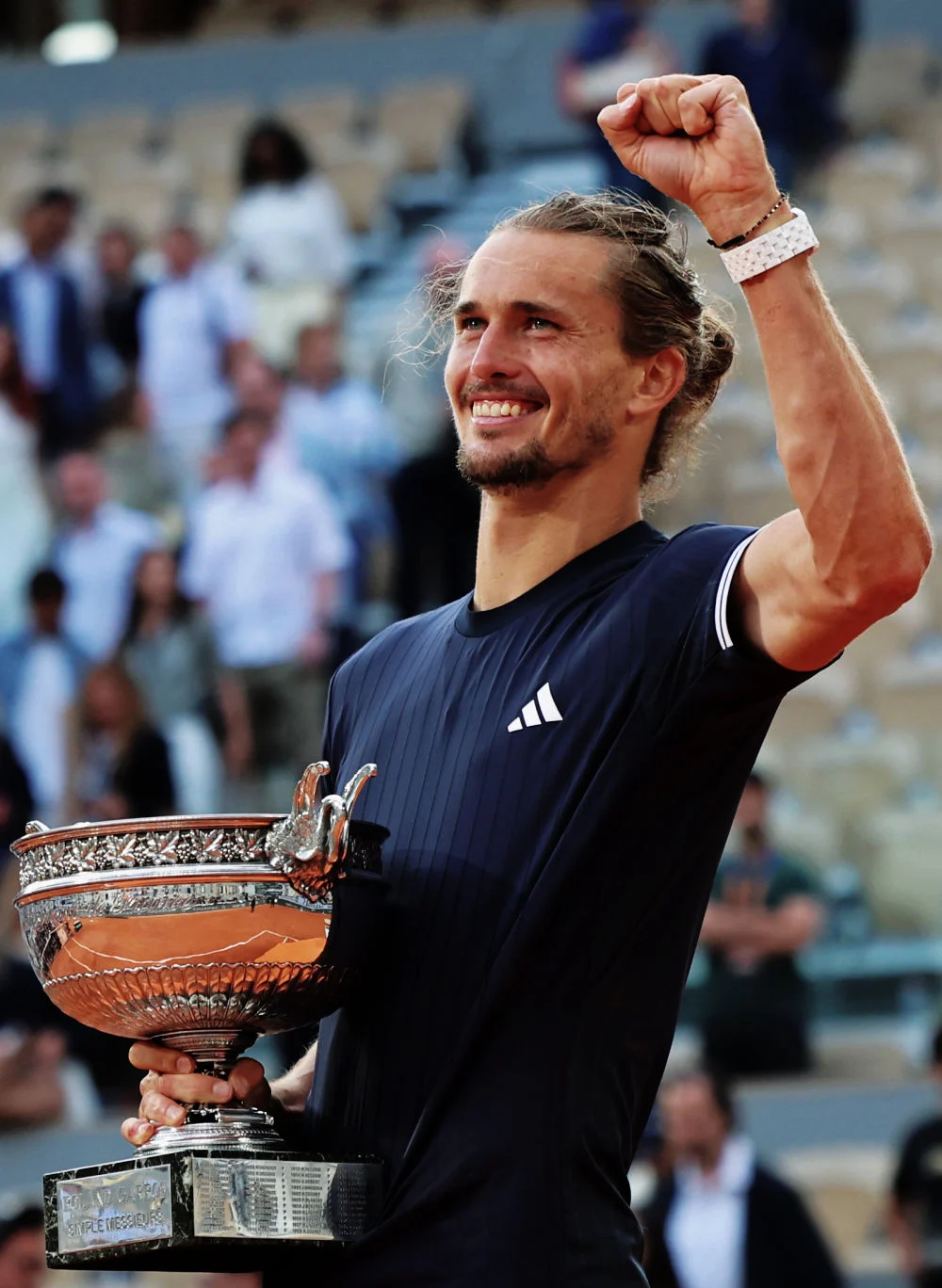
Tight, unstable and on the edge of physical collapse in the fourth set, Alexander Zverev found an unlikely release in his own cramps: forced to let go, he swung freely to claim, at last, a first Grand Slam title. On court, the German did not at first believe he had won.
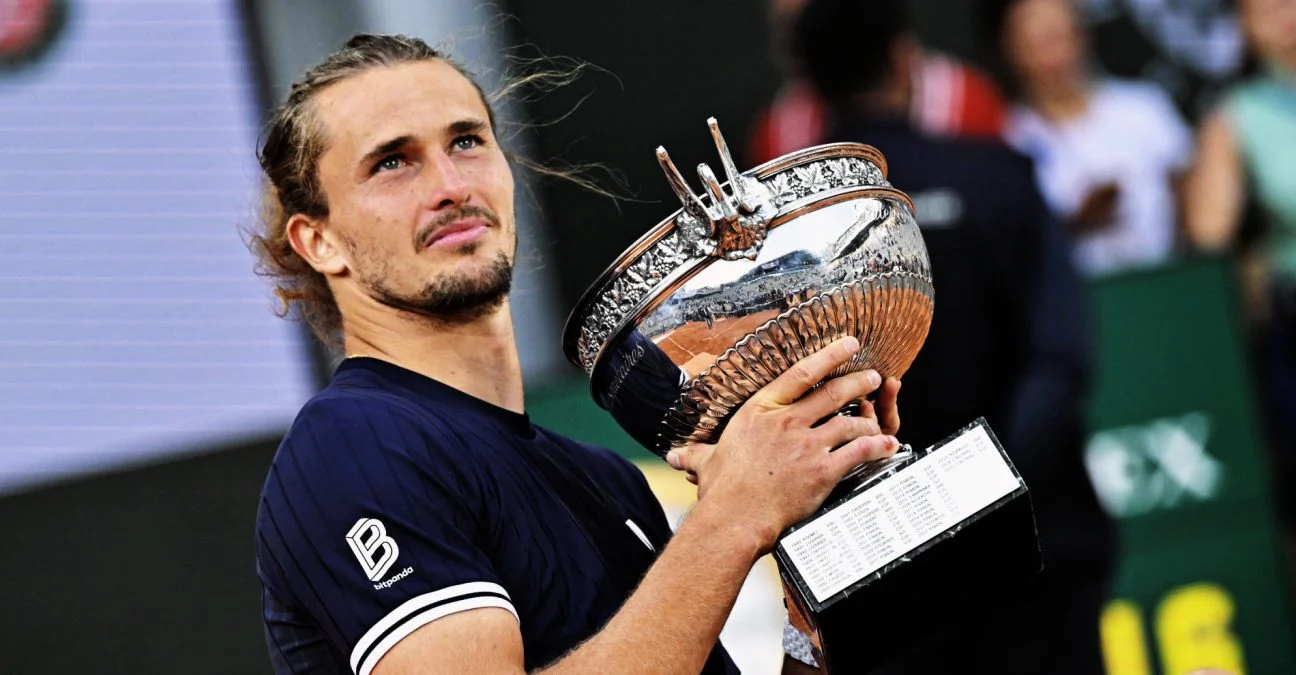 Alexander Zverev, Roland-Garros 2026 | © PsNewz

He had not looked this happy in years, not since the Olympic gold of Tokyo 2021. By his own admission “a little bit drunk already,” yet still strikingly composed, Alexander Zverev sat beside his first Grand Slam trophy as the embodiment less of pure joy than of relief, a weight finally set down. And he confirmed what the court had shown for five sets: it had been a long, tense day, and stress, more than anything, had been the driver of the final. When the press conference was over, Zverev waved away the trophy bearer’s offered help and took the Coupe des Mousquetaires in both hands himself. He would carry it out alone: proudly in charge of it, it seemed, until the end of time.
You seemed to struggle at the end of the fourth set of the final. What did you tell yourself, and how did you overcome it to take the title?
ZVEREV: I was cramping. I was struggling physically, though I think it was more mental, very tight, very emotional. I was a bit unstable in the fourth set. But I actually think the cramps helped me, in a way. I let go and hit my shots a bit more, and just let go. And of course the fifth set went my way. I’m happy about that, and happy to be sitting next to this beautiful trophy for the first time.
Were the mental cramps tied to memories of past incidents during that fourth set?
ZVEREV: No, I was just very tight today. I honestly feel I managed the last two weeks extremely well, with all the losses early on, Jannik (Sinner) going out, Novak (Djokovic) going out, I stayed composed and played really, really good tennis. But today I didn’t manage so well. The match was a lot more up and down, the level not as stable as my previous matches, and I was a lot more nervous, which at some stage is human. That’s why I say the cramps helped me: my mind let go, I started swinging more freely, hitting the ball more aggressively. I couldn’t focus on being tight anymore, I had to let go, and that’s why I played the fifth set the way I did.

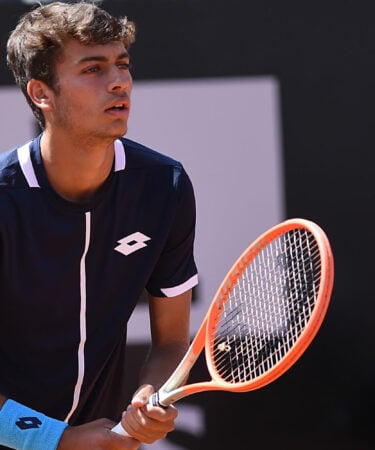
Did you realise Cobolli was struggling physically, and did it affect how you played?
ZVEREV: No, I didn’t realise until after the match, because he told me then. I was more concerned with my own physical level, because I started cramping in the fourth set too. By the end I started hitting the ball a lot harder, letting go of my arm a bit, and the result was very positive for me.
Looking at the start of the fifth set, how do you sum up the match emotionally?
ZVEREV: As I said, I managed my emotions very, very well over the last two weeks – and today not so well. My level had more ups and downs than before. But at the end of the day, none of that matters to me. I’ve won my first Slam. I’m incredibly happy. Emotionally I had highs and lows in the match, of course – I’m human too, it’s normal to have those. What matters is that in the end you have the control, and you’re good in the important moments.
I saw my box, they all celebrated, and that’s when I realised, especially seeing my father raise his arms.
What went through your mind after match point, when you were down on the court? Was it relief?
ZVEREV: It was a combination of things. First, I didn’t believe I’d won, then I saw my box, they all celebrated, and that’s when I realised, especially seeing my father raise his arms. That’s when it hit me: okay, I’ve won. And then, on the ground, all the emotions came out.
You’ve said you’d rather be the worst player to win a Slam than the best player never to win one. How do you comment now?
ZVEREV: If you call me the worst player to win a Grand Slam, I could not care less (laughs). If somebody thinks that, that’s fine. For Germany, after 30 years, it’s important – on the men’s side I think it’s the first time in a long while, while on the women’s side we had Steffi (Graf) winning a lot of these. It’s a very big trophy for Germany. To be honest, I’m a little bit drunk already, so I’m repeating myself more than usual – but I’m just going to keep sitting next to this trophy.
Billie Jean King was among the first to point out that you’re also the first Grand Slam champion with diabetes. What message do you want to send?
ZVEREV: I try not to make too much of it, because I’ve always said I don’t want it to have an outsized impact. But I think it’s important, not for me, but for many children and many parents out there, to really see that you can achieve a lot, achieve everything, despite it. At least to say that openly.