No injury, no fatigue: Jodar rules out every explanation but one
Rafael Jodar, who rose from No. 168 to No. 11 this season, suffered a surprising 6-2, 6-1, 6-1 loss in his US Open debut. The 19-year-old dismissed injury, fatigue, and rain delays, attributing the defeat solely to his opponent playing better.
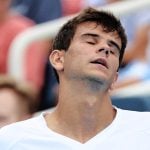
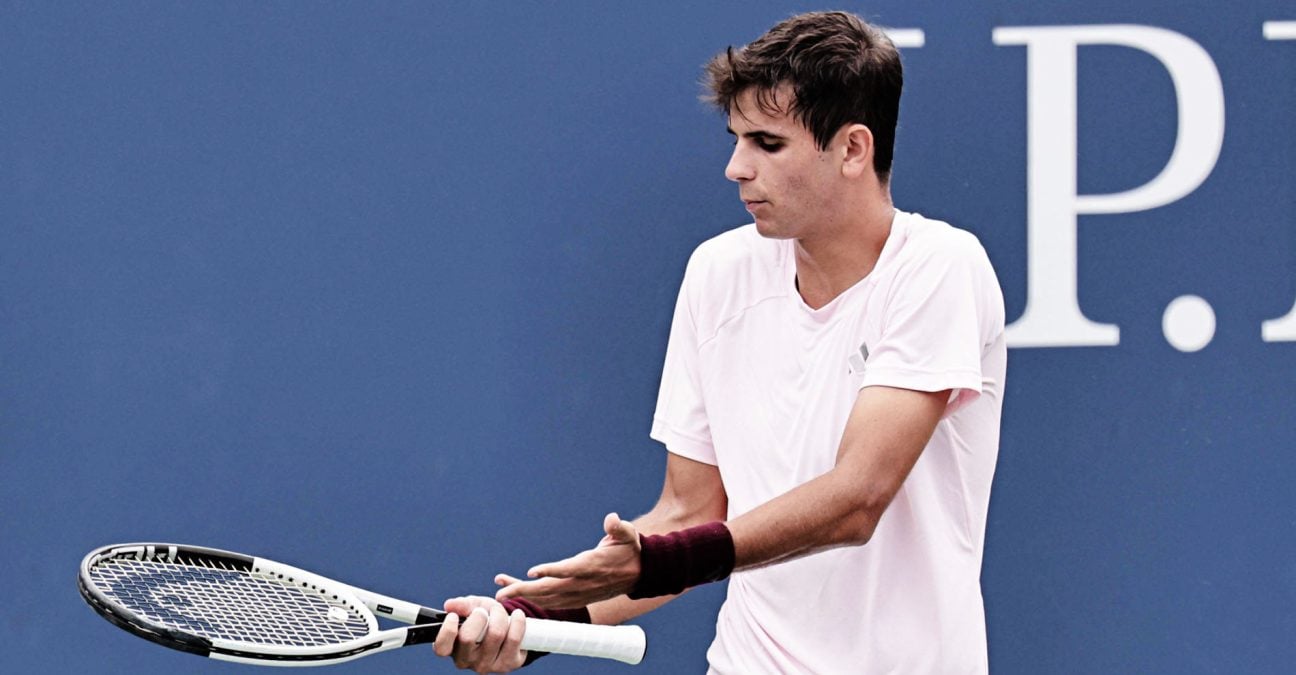 Rafael Jodar, US Open 2026 | © Juergen Hasenkopf/Psnewz

Rafael Jodar had spent two days waiting to play his first US Open match, lost it 6-2, 6-1, 6-1 to a lucky loser ranked No. 124, and won four games. He sat down afterwards and declined, one by one, every explanation the room offered him.
Was there something physical? “Physically good.” Had a season of deep runs finally caught up with him? “No, no, it’s not getting tired for me.” Had the rain delay and the two-day wait cost him? “It is what it is. We cannot control the rain, so it’s difficult for both players.”
What he offered instead, three times, was the same sentence.
“He played better than me, and that’s the reason why he won today”
“He played better than me, and that’s the reason why he won today,” the 19-year-old Spaniard said. And again: “That’s how the match went. He played better than me, so he deserved to win today.” And when pressed on whether the ball had felt worse off his racquet than usual: “I tried to give my best today. It wasn’t meant to be today.”


A season that made Jodar’s result look impossible
The refusal matters because of what preceded it. Jodar began 2026 ranked No. 168. He was inside the top 100 in March, the top 50 in April and the top 20 in August, reaching a career-high World No. 11 on the tenth of that month.
He won his first tour title at Marrakech, in his first tour-level event on clay, then reached the semi-finals in Barcelona and the quarter-finals in Madrid, becoming the third Spanish teenager after Rafael Nadal and Carlos Alcaraz to make the last eight at both in one season. He qualified for his Australian Open debut, entered Roland-Garros as the No. 27 seed and reached the quarter-finals there at the first attempt, and in Montreal became the first man born in 2006 to reach a Masters 1000 semi-final.
Since July he was 10-3 on North American hard courts, with a final in Washington and the fourth round in Cincinnati. He arrived here as the first man to be seeded in the top 16 on his US Open main-draw debut since Stefanos Tsitsipas in 2018, on the same courts where he won the boys’ title in 2024. A win would have made him the eighth teenager this century to reach the second round of all four majors in a season.
The match gave him nothing to work with
The only moment Jodar sounded like he was thinking rather than answering came at the end, and it was about being 19.
“Match has just finished, so I don’t really know what can improve and what I should do for the next time,” he said. “I’m new on the tour. There are going to be things like this because I’m new. Just try to learn from it so it doesn’t happen again. First time can happen to anyone. We are human. Second time, it could be bad if I haven’t learned from this one.”
Nobody left the room any the wiser. But it was true also after Jodar’s wins this season.