Andreeva, 19, ends Kostyuk’s clay-court streak and reaches her first Grand Slam final
Mirra Andreeva defeated Marta Kostyuk 6-1, 6-3 on Thursday. She’ll play the winner of the match between Russian Diana Shnaider, the No 25 seed, and Pole Maja Chwalinska in the final
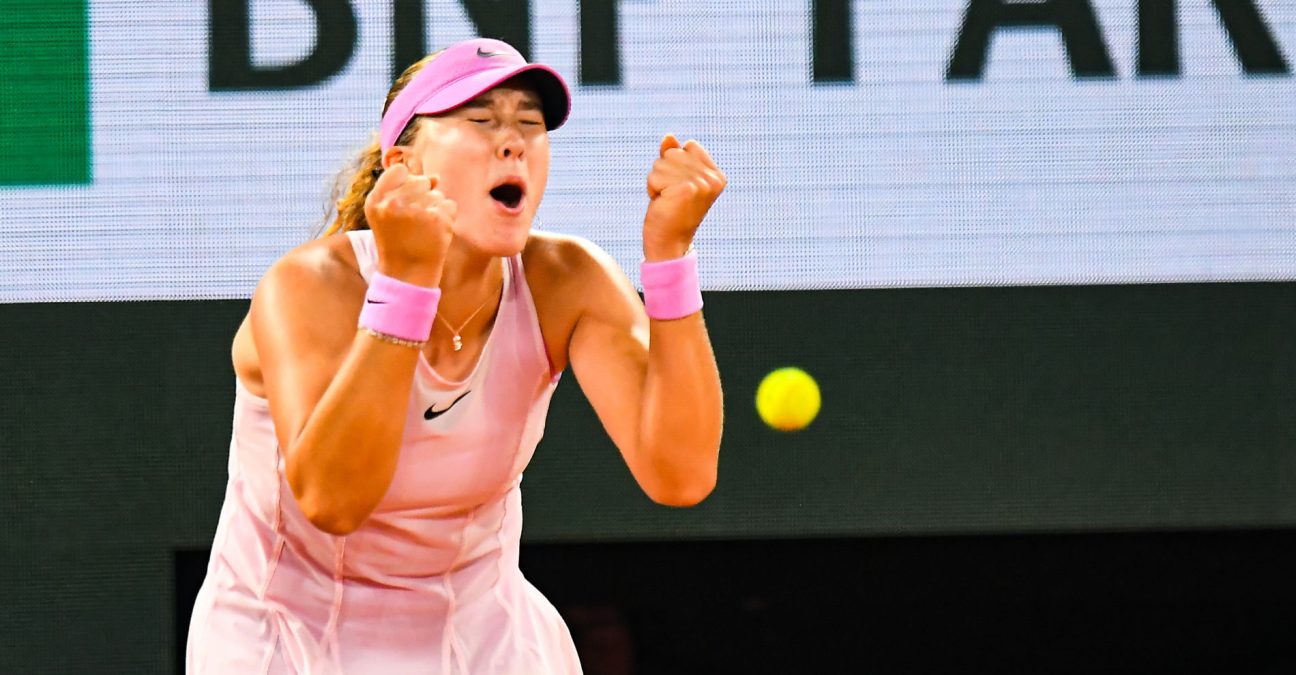 Mirra Andreeva, Roland-Garros 2026 | © B. Autissier / PsNewz

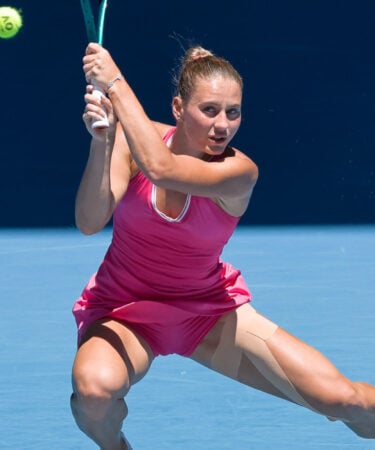
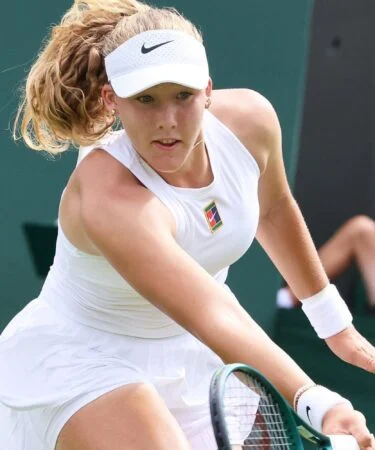
Mirra Andreeva, the eighth-seeded Russian, beat 15th-seeded Ukrainian Marta Kostyuk 6-1, 6-3 on Court Philippe-Chatrier on Thursday afternoon to reach the final of a Grand Slam for the first time in her career —–a result that ended a 17-match Kostyuk winning streak on clay and reversed an 0-2 head-to-head against the Ukrainian, with both of those previous defeats having come in 2026.
At 19 years and 39 days, Andreeva is the seventh-youngest player to reach a Grand Slam final for the first time since the start of the 2000s – after Maria Sharapova (17 years and 76 days, Wimbledon 2004), Kim Clijsters (18 years and 2 days, Roland-Garros 2001) and Coco Gauff (18 years and 84 days, Roland-Garros 2022), who “lead” this list.
She is the 5th youngest woman to reach the Roland-Garros final in the last 30 years behind Hingis (16 in 1997), Clijsters (17), Gauff (18) and Hingis again (18 in 1999). “I just told myself that no matter what happens, I’m just gonna fight, give my best”, Andreeva said on court. “If she ends up winning, she’s gonna have to really work for it. With this mindset, I ended up winning.”
Kostyuk, who had been undefeated on clay since April and had carried titles in Rouen and Madrid into the second week in Paris, never settled into the contest. Her first-serve percentage held at 51 per cent across the match, meaning nearly half of her service points started with a second delivery – and she won only 34 per cent of those.
Four double faults compounded the damage. Across two sets, Kostyuk held only three of her eight service games and was broken five times.



Kostyuk produced 34 unforced errors
The unforced-error count carried the same story. Kostyuk produced 34 unforced errors to 15 winners – a deeply negative ratio that meant she was beating herself more often than Andreeva was beating her. Andreeva, who finished with 14 winners to her own 22 errors, did not need to play flashy tennis to win. She held seven of her eight service games, was broken once at 6-1, 4-2 for her.
It is Andreeva’s first Grand Slam final at any tournament – three years after her first Roland-Garros semi-final at the age of 17, and on her second visit to the same stage of the same tournament. With this win she rises to 35-3 in 2026, more match wins than any other woman on tour this season, and to a guaranteed top-seven ranking when the new lists are published. Kostyuk will be No.12.
“Everything that could go her way went her way; everything that could not go my way didn’t go my way”, Kostyuk said after the match. “This court suits her best of all the tournaments that exist. The court is crazy slow and she was retrieving everything, so I felt like I had to go for more. She played solid, she wasn’t missing. I was missing more, obviously felt pressure.”
Andreeva, only 19
The 19-year-old is the youngest player to have won a WTA 1000 title, the youngest into the top 10 of the WTA rankings since 2007, and now the youngest player into a Roland-Garros final since 2017.
She will face the winner of Russian 25th seed Diana Shnaider against Polish qualifier Maja Chwalinska in Saturday’s final, Shnaider’s victory over Aryna Sabalenka on Wednesday afternoon, and Chwalinska’s run from qualifying to the round of four, having between them ensured that the final on the other side of the draw will contain a Grand Slam first-time finalist regardless. The 2026 women’s Roland-Garros champion will be a first-time Grand Slam champion. That has not been the case at any major in three years.