One-handed backhand: Tsitsipas has a 149-year “streak to save”, and Shelton is standing in front of it
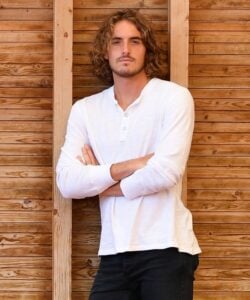
Stefanos Tsitsipas is the last man with a one-handed backhand left in the 2026 US Open, and by one count a one-hander has reached a Grand Slam semi-final in every year since 1877, a run that has not yet been extended in 2026. Tsitsipas, ranked No. 53 and into the fourth round here for the first time, must beat Ben Shelton and then Carlos Alcaraz or Tommy Paul.
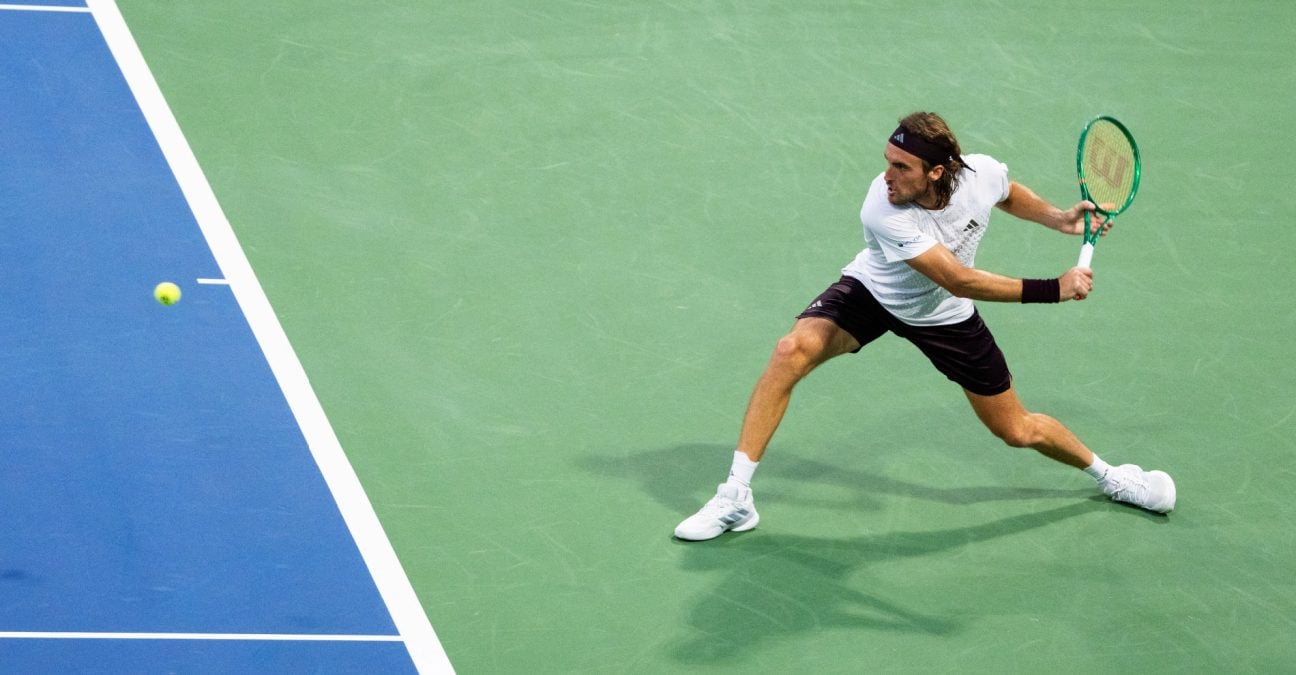 Stefanos Tsitsipas, US Open 2026 | © Virginie Bouyer pour Creafeed / MTG

Four or five years ago, Kosuke Owaki from Japan got in touch with Stefanos Tsitsipas because his son, Yunosuke, wanted to play a one-handed backhand and needed someone to tell him it was allowed. Tsitsipas has mentored the boy ever since. He mentioned it on court at Flushing Meadows on Friday night, unprompted, in the middle of an answer about his own game that lead him to the US Open fourth round for the first time.
“I’d like to start some sort of a movement, hashtag keep the one-hander alive,” he said. “The future generations need plenty of those players. I really don’t want this shot to vanish and disappear. I’m hoping the younger generation can carry it through, and of course I’m here to help as much as I can.”
Four days later the campaign acquired a deadline. A man with a one-handed backhand has reached the semi-finals of a Grand Slam in every year since the first one was played, at Wimbledon in 1877. In 2026 it has not happened yet, and this is the last major of the season.
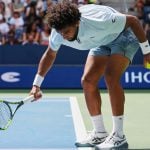

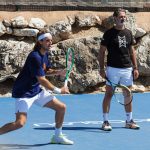
The other three majors of 2026 have already answered the question. Melbourne’s semi-finalists were Carlos Alcaraz, Novak Djokovic, Jannik Sinner and Alexander Zverev. Paris produced Zverev, Flavio Cobolli, Jakub Mensik and Matteo Arnaldi. Wimbledon gave Sinner, Zverev, Djokovic and Arthur Fery. Twelve places, twelve two-handed backhands.
The closest the shot came was at the All England Club, where Grigor Dimitrov reached the fourth round and was beaten by Fery, who went on to the semi-finals himself. That leaves New York, and it leaves Tsitsipas.
I’ve got a 150-year streak to save.
Tsitsipas is the last one-handed backhand left in the draw. He posted four words about it: “I’ve got a 150-year streak to save.”
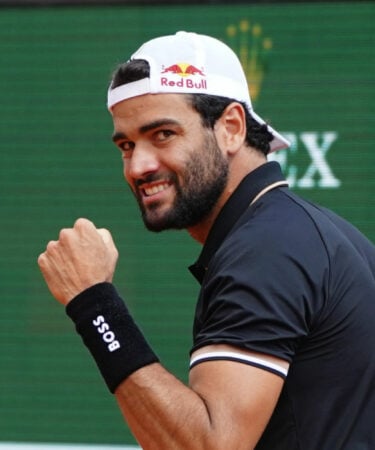
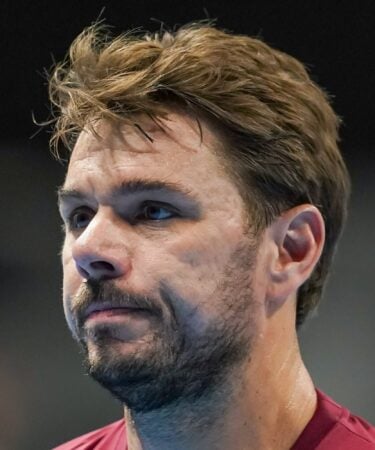
Only eight men in a draw of 128 were even equipped to extend the streak, and by Saturday night seven of them were out. Four went in the first round: Stan Wawrinka, in the last US Open of his career, beaten by Matteo Berrettini 7-6, 7-6, 6-0; Grigor Dimitrov, beaten by Alexei Popyrin; Daniel Altmaier, beaten by the American Zachary Svajda 6-3, 6-1, 6-7 (5), 6-2; and Giovanni Mpetshi Perricard, beaten by the Austrian qualifier Jurij Rodionov 7-6 (2), 6-0, 7-6 (4).
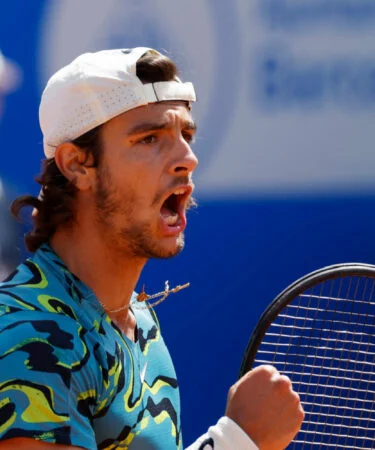
Two more went in the second. Lorenzo Musetti, the No. 13 seed and the only one-hander seeded inside the top 20, took the first set off Australian wild card Dane Sweeny and then won five games, losing 3-6, 6-1, 6-2, 6-2. Aleksandar Kovacevic lost to Valentin Vacherot 6-2, 6-3, 7-5. Then Denis Shapovalov went in the third, to Ben Shelton at 2:15am on Saturday, 7-6 (3), 6-7 (5), 6-3, 6-4. Which leaves Tsitsipas, and the man who
He has been carrying this without ever volunteering for it. Federer stopped in 2022, Thiem in 2024, and the shot lost both of the men who had last taken it deep at a major. What was left was Tsitsipas, a finalist in Melbourne in 2023, and Lorenzo Musetti, a semi-finalist at Wimbledon in 2024 and at Roland-Garros in 2025.


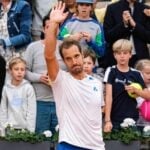
Two matches, and the first is the man who removed the other one
He needs two wins. Ben Shelton in the fourth round, then Carlos Alcaraz or Tommy Paul in the quarter-final, and the streak survives another year. Easy, isn’t it?
Shelton has already taken one out with Shapovalov. On Sunday he can take out the last.
Whether he knows any of this is unclear. Asked about the matchup, the American talked about the tennis and nothing else. “His style of tennis can be very, very effective on all surfaces, all-court game, great athlete. We played once my first year on tour. Really looking forward to it.”
The list is short and getting shorter
The demographic case is easy to make and depressing to read. There are 16 one-handed backhands in the top 224 of the men’s rankings. Lorenzo Musetti, at No. 13, was the only one seeded inside the top 20, and he went out in the second round here to an Australian wild card ranked No. 123, having won the first set and then five games.
Stan Wawrinka, at No. 124, is 41, was playing the last US Open of his career and lost in the first round to Matteo Berrettini in three sets, two of them tiebreaks. Grigor Dimitrov is at 137.
Below them the numbers fall away into the qualifying draws and the Challenger circuit, which is where a shot goes to disappear.
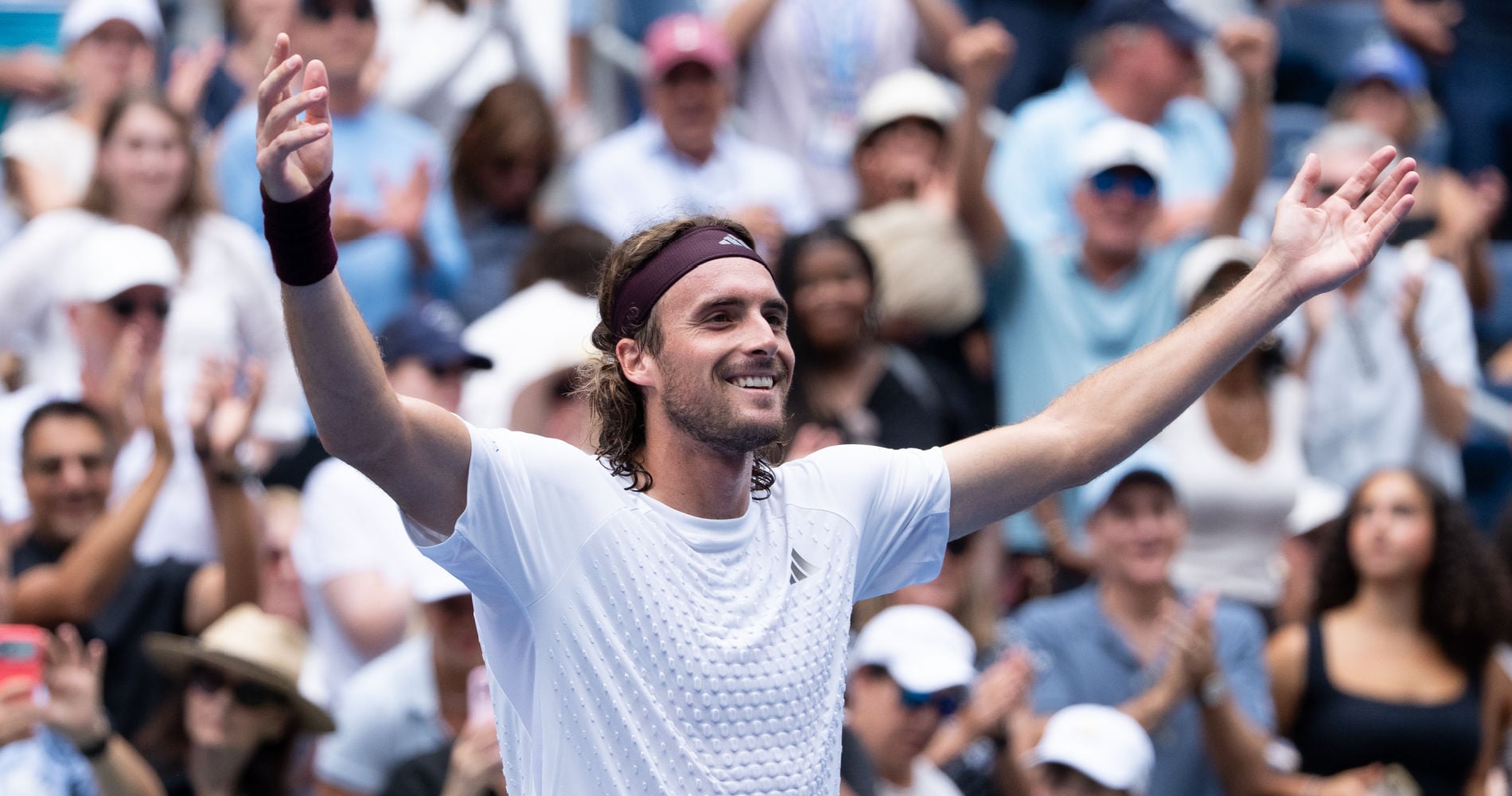
Tsitsipas has spent this fortnight arguing the opposite case with his results. Ranked No. 53, he has beaten two top-20 players, Arthur Fils in the first round from a set and 5-2 down and Jiri Lehecka in the third, and reached the fourth round here for the first time in his career and the second week of a major for the first time in two years.
He has also just gone back to the racquet he grew up with, having switched away from it partly because a back injury had left him unable to generate his own power. He explained the return in terms of the shot in question.
“I’m a player that requires control in my game,” Tsitsipas said. “I know the Blade is the best product out there that will allow me to get control, spin whenever I need it. And for the one-handed backhand, I feel like it’s one of the best racquets out there on the market.”
New York has been kind to the shot before. The last one-handed backhand to win a major did it here, Dominic Thiem in 2020, from two sets and a break down against Zverev. Before him, Federer at the 2018 Australian Open. Tsitsipas has two matches.