Yes Zverev is attacking more than ever – you wouldn’t know it, but the data does
Alexander Zverev’s aggression is often unnoticed, yet highly effective. Stats reveal a significant shift towards ending points faster and dictating rallies earlier. This subtle evolution makes him a quiet, but powerful, force on court, redefining his playing style.
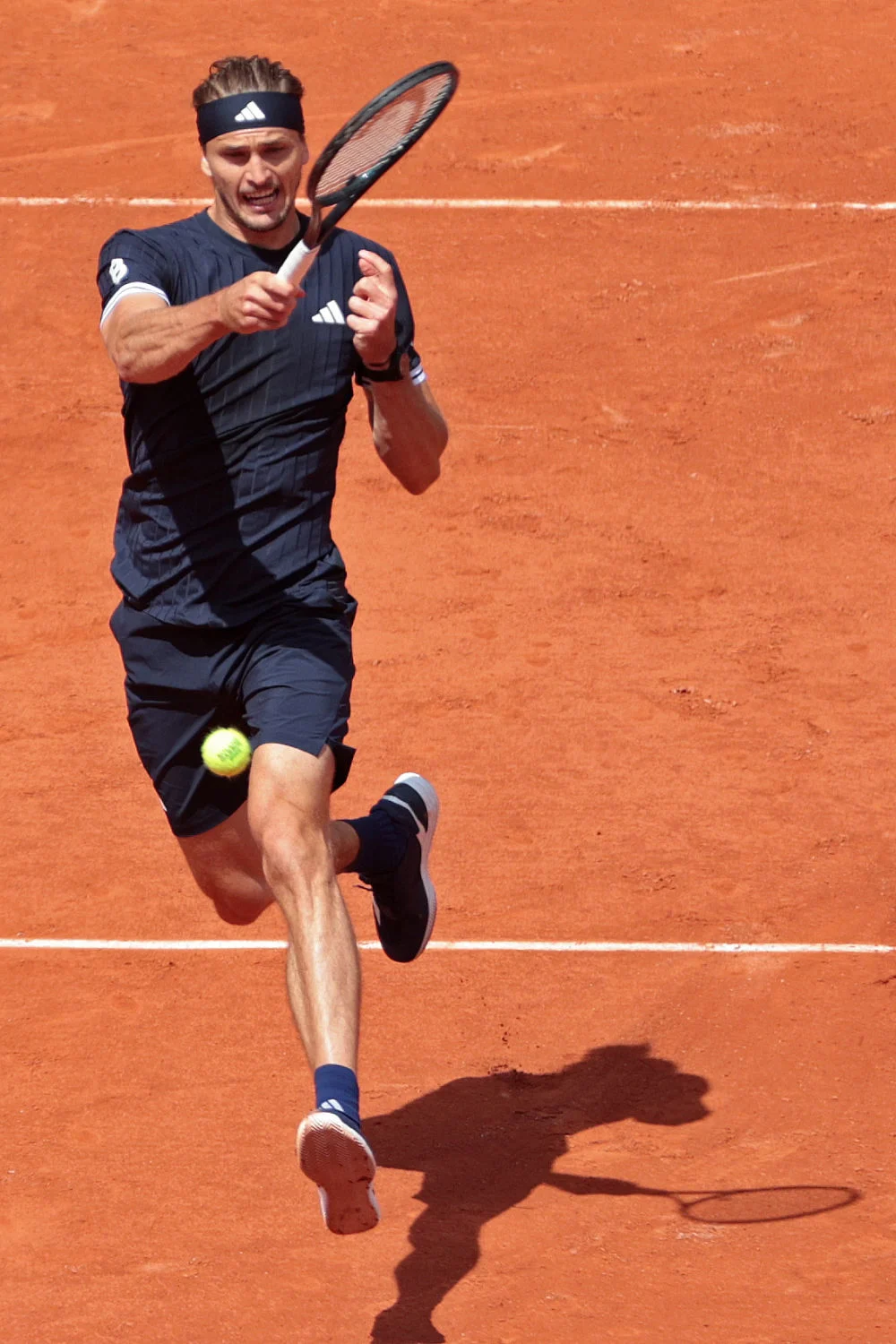
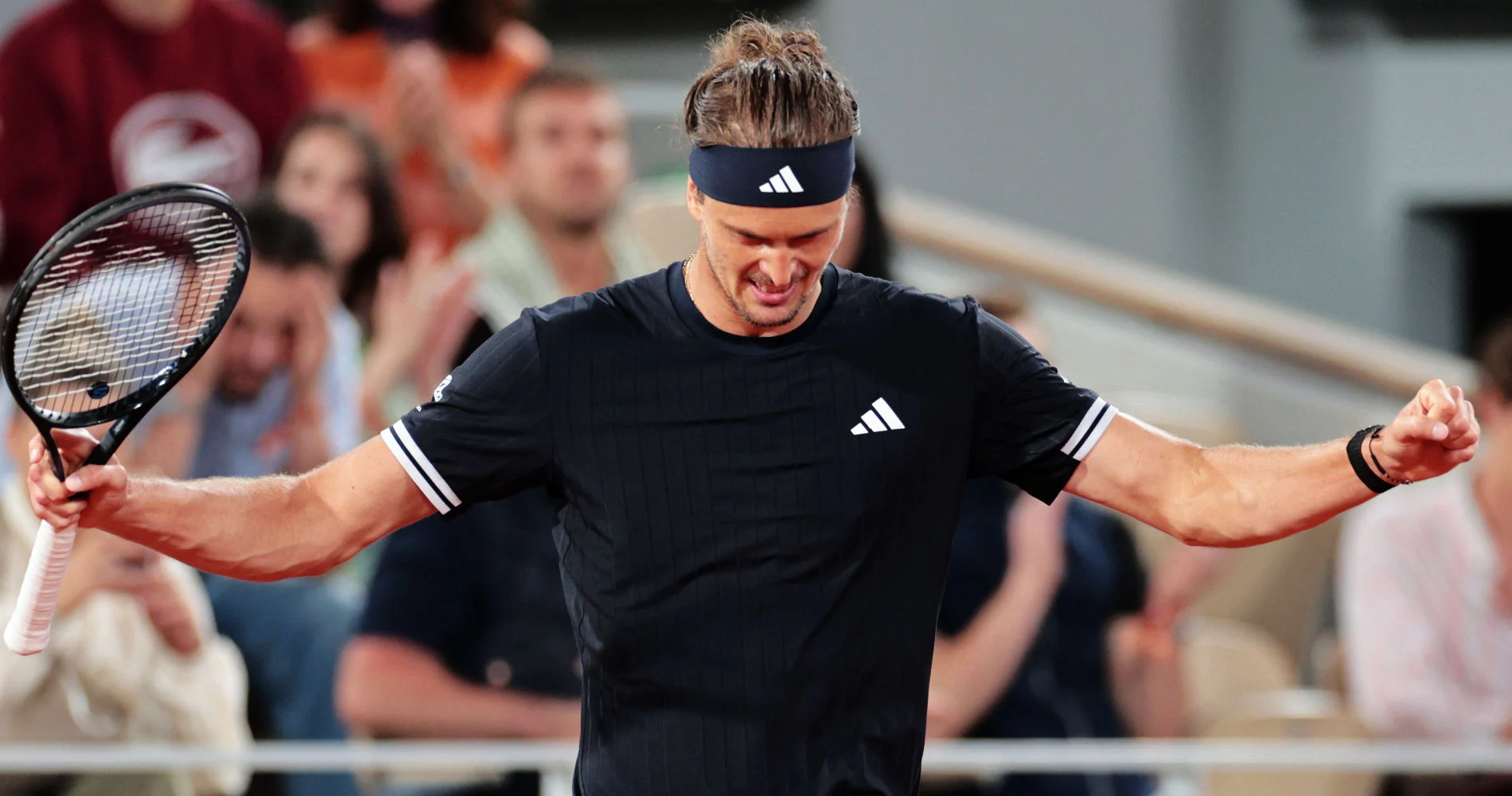
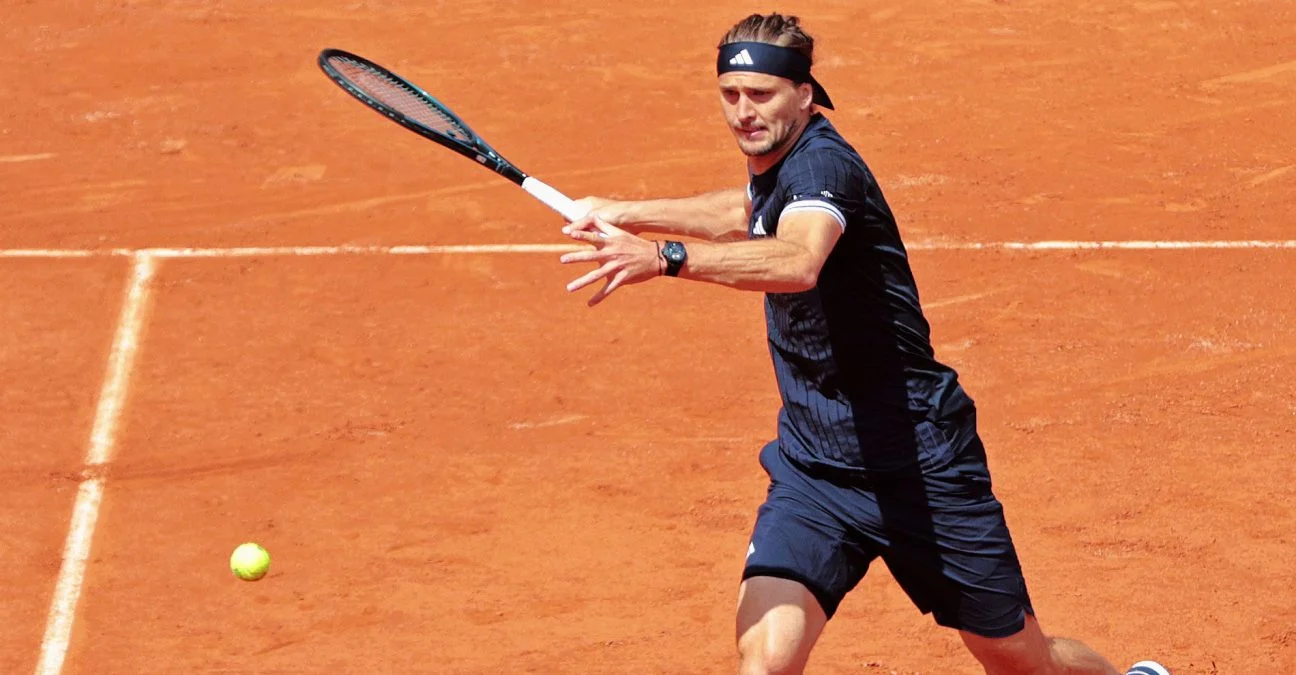 Alexander Zverev, Roland-Garros 2026 | © PsNewz

There is a particular kind of aggression that no one applauds, because no one notices it. It does not arrive at the net with a flourish. It does not announce itself with a thumping, low-percentage winner from an impossible angle. It happens on the second or third ball of a rally, a fraction earlier than it used to, a step inside the baseline that the eye never quite registers – and by the time the point is over in four shots instead of nine, it simply looks like Alexander Zverev being Zverev.
That distinction is not just sugar for tennis geeks. It is the difference, quite possibly, between a fourth Grand Slam final and a first Grand Slam title. Because the story Zverev drags behind him into Sunday’s Roland-Garros final is a cruel one: three major finals reached, three lost, and a single accusation running through all of them like a fault line – that when it mattered most, he shrank. He played not to lose. He stepped back when the moment demanded he step in. The US Open in 2020 against Dominic Thiem, two sets to one up and serving for it, gone. Roland-Garros 2024 two sets to one up against Carlos Alcaraz, gone. The Australian Open 2025, when he was overplayed by Jannik Sonner, gone.
So when Zverev walks out against his friend Flavio Cobolli on Sunday, the question is not whether he has the firepower. He has proven that all tournament. The question is whether he will use it when it matters – and the quietly radical thing the numbers reveal is that, all through this fortnight, he already has.
Zverev: “different perspective”
Zverev has not hidden the plan. Earlier in the tournament, he described the changes he and his team had set in motion. “One thing was the opportunity to take more chances, take more risk,” he said. “Ball speed was another one. Different varieties – the drop-shot, serve and volley sometimes – to give a different perspective to the opponent.” The intent could hardly be clearer – and the man best placed to read it agrees. “It’s not a drastic change,” Patrick Mouratoglou said of Zverev’s shift on social media. “But yes, compared to a few years ago, he’s doing it more.”
The numbers we could read during this Roland-Garros tell the story the eye misses. Zverev is ending points faster than ever: the share of his points decided inside the first four shots has jumped from 58% to 69% in a year, the long rallies of nine shots or more have shrunk from 16% to 9%, and his average rally length has fallen from 5.0 shots to 3.9. Just at the level of the 0-4 length that is so decisive in modern tennis. His time spent “in attack” rose from 27% to 31%.
The serve is the engine
None of that comes from a new shot or a new position on the court. It comes from intent applied early – aggressing a little bit more, a little bit sooner, on the opening exchanges, so that everything downstream is a consequence rather than a gamble. Of course with Zverev, the serve is the engine. Second-serve points won climbed from 55% to 66%, second-serve effectiveness from 35% to 42%, the hold rate from 87% to 93%, and his aces nearly doubled.
A year ago his second serve was merely safe; now it is a weapon, which means he steps into the next ball already ahead, already dictating.
The reward shows up where you would expect: forehand winners up from 8.8 a match to 12.3, backhand winners from 5.4 to 9.7 — and, tellingly, almost no cost. His forehand unforced errors crept up only from 13.6 to 14.2.
The proof in semi-final
What makes this so easy to overlook is that Zverev has not abandoned his patterns. He is still, fundamentally, a baseliner who trusts his groundstrokes. On the ATP Tour this season the core forehand and backhand still account for 86% of his shots – only three points down from 89% last year. But that three per cent matters enormously, because of what filled it. His drop-shot usage has tripled, from 0.9% to 2.8% of shots; he has hit 147 drop shots in tour-level matches already this season, against 75 in all of last year (outside the Grand Slams).
He is spreading the ball to both corners more and going through the middle less. His average ball speed has barely moved – not because he is hitting softer, but because the new variety drags the average down. The aggression is real; it is just distributed so subtly that it never reads as a change of identity.
The clearest proof came in the semi-final. Against Jakub Mensik – himself a proactive, first-strike player, the man who had out-aggressed João Fonseca in a blistering quarter-final – it was Zverev who spent more of the match in attacking situations. Set that against Mensik’s normal attacking profile and the picture is stark: the German did not simply withstand a younger aggressor, he was the more offensive man on the court, while looking for all the world like the steadier one.
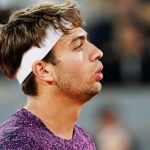
Under pressure
And here is the part that decides finals. Zverev’s instinct under pressure has always been to retreat – to drift back behind the baseline, shorten his swing, wait. You could see it in the first set of the semi-final, before he steadied; you could see it across his three lost Grand Slam finals. In the 2024 Roland-Garros final he won just 57% of his net approaches; in the 2025 Australian Open final, only 54%, with his backhand pinned 73% cross-court and his drop shot all but absent. Those were the matches of a man playing not to lose. The data of those nights is the data of passivity.
So the question on Sunday is not whether Zverev can summon a new game. He does not need one – the more offensive version already exists, and the proof is a season’s worth of numbers. The question is whether, when the tension climbs and the old instinct whispers at him to step back, he can hold his ground and keep aggressing early. The shift is not in his racket; the racket has already done its talking. It is in trusting that the effort is safe to make. If he can hold a step forward when everything in him is screaming to retreat – as it has all his career – the aggression nobody sees may finally win him the title he has waited a career to claim.