The unbelievable story of Maja Chwalinska: the world No. 114 becomes the first qualifier ever to reach the Roland-Garros final
Maja Chwalinska, 24, world No. 114, beat Diana Shnaider (No 25) 7-6(4), 6-4 on Court Philippe-Chatrier. She’s only the second qualifier to reach a Grand Slam final in the Open Era, after Emma Raducanu at the 2021 US Open.
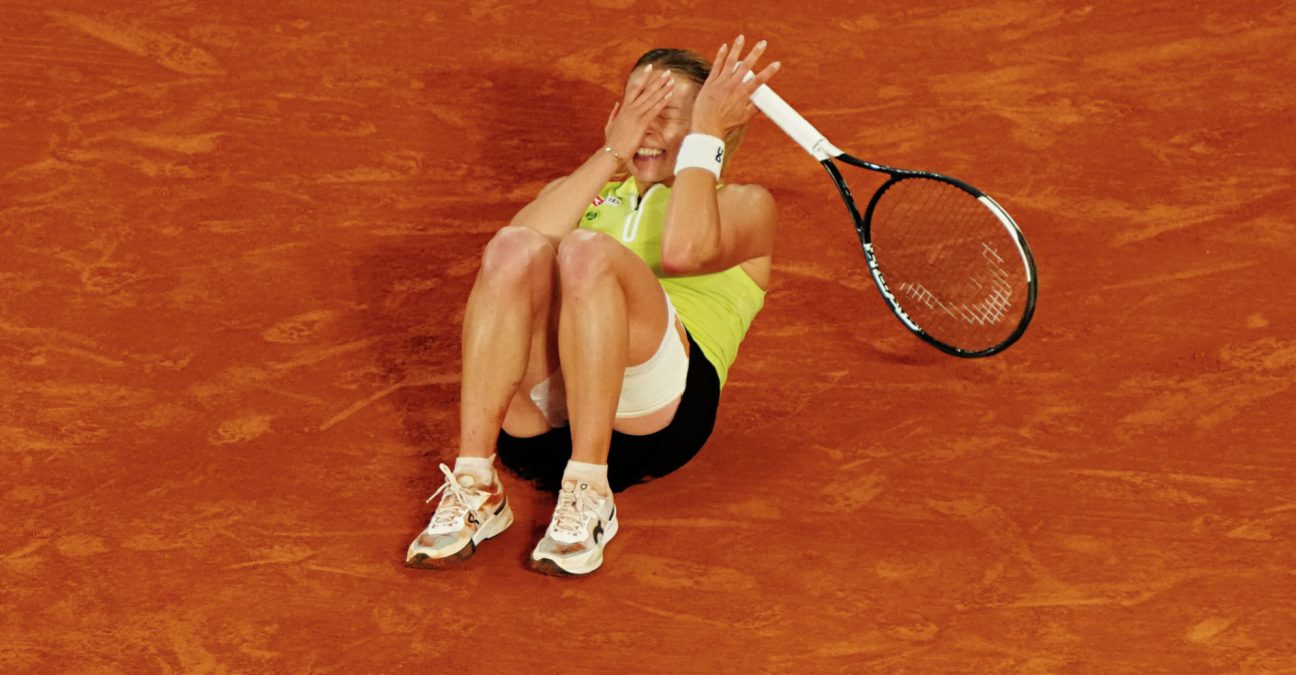 Maja Chwalinska, Roland-Garros 2026 | © Javier Garcia/Shutterstock/SIPA

She came in Paris to qualify for the main draw. Maja Chwalinska finally made history. The 24-year-old Polish world No. 114, beat Russian 25th seed Diana Shnaider 7-6(4), 6-4 on Court Philippe-Chatrier on Thursday evening to reach the final of a Grand Slam in only her third main-draw appearance at a major – and to land in historic company.
She is the first qualifier ever to reach the Roland-Garros final, and only the second qualifier to reach a Grand Slam final in the Open Era, after Emma Raducanu won the 2021 US Open. She is also the third player in the Open Era to reach her maiden WTA-level final at a Grand Slam, after Venus Williams (US Open 1997) and Raducanu.
Among players making their main-draw debut at Roland-Garros, she is the third to reach the women’s final on that debut in the Open Era, after Evonne Goolagong (1971) and Chris Evert (1973).
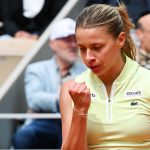
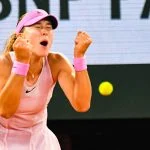

The contest was tight throughout the first set and one-sided in the second. Chwalinska, the left-hander whose backhand slice and tactical variety have unsettled five higher-ranked opponents in the past nine days, ran the first-set tie-break 7-4 after a set in which Shnaider had broken at the start (3-1) but couldn’t consolidate.
The second set was far tighter than the scoreline might suggest. Both players exchanged breaks in the opening two games: Shnaider lost her serve immediately in the first game on a single break point at 15:40, but broke right back in the next game, also on her first break point at 40:30. From 1-1 onward, serving became routine – both held without much drama through eight consecutive service games, reaching 4-4 with neither player giving an inch.
The set turned in the ninth game. Shnaider, serving at 4-4, lost her way quickly – 15:30, 15:40, and broken on the first break point, almost a carbon copy of how she’d lost her serve in the opening game. Chwalinska then stepped up to serve for the match at 5-4 and closed it out with authority, converting match point at 15:40.
The numbers around the fortnight are extraordinary. Chwalinska, who had never beaten a top-50 opponent before this tournament, has now produced four such wins in a row – Elise Mertens, Maria Sakkari, Anna Kalinskaya, Diana Shnaider – plus the opening-week win over Olympic gold medallist Zheng Qinwen.
9 matches, 1 set lost
She has played nine matches in Paris across qualifying and the main draw and won them all, losing only one set across the entire fortnight (to Sakkari in the third round). She is the fourth Polish woman in the Open Era to reach a Grand Slam semi-final, joining Agnieszka Radwańska, Iga Świątek and Magda Linette, and is now the first of them to reach a Roland-Garros final. She will leave Paris ranked no worse than No. 21 in the world when the new rankings publish on Monday, having entered the tournament outside the top 100.
In her on-court interview after the match, asked by Julien Benneteau how she felt physically and mentally three weeks into a tournament that had started in qualifying, she was direct. “Not great, I won’t lie. It’s so challenging to play against the best players in the world day by day, but it’s a Grand Slam, so you just gotta give your own and more. I’m not complaining at all.”
I’m crazy sometimes also. But I try to stay composed because I know that it’s the best way for me.
Asked about the calm and the composure she had shown across her nine matches, she described what was visible on the outside as the opposite of what was happening on the inside. “I’m crazy sometimes also. I try to stay composed because I know that it’s the best way for me. It helps me to play my best tennis. That’s what I’m trying to do, but inside there is a storm, believe me.”
She said she had spent some of the afternoon watching the first semi-final, in which 19-year-old Russian Mirra Andreeva had beaten Marta Kostyuk 6-1, 6-3 to set up Saturday’s contest. “I watched Mirra a bit playing before us, so I watched her game, and I mean it was incredible. So it’s just another great experience for me. I will for sure give my all. It’s a Grand Slam final.”
On how she planned to spend Friday, the answer was the one a player at the end of a 16-day Roland-Garros campaign would give. “I just want to rest a little, enjoy this today, and then just recover as much as I can, just to be able to give my all.”
She will face Mirra Andreeva in Saturday’s final. The two have never played before. The 2026 women’s Roland-Garros champion will be a first-time Grand Slam champion, the first such final since 2021.